
Reviewed · ANCIENT CITY TOURS
Half day tour – in Sacred city of Anuradhapura Or sacred city of Mihintale.
A half-day in Anuradhapura feels complete. This is a focused morning circuit in Sri Lanka’s sacred triangle, led by Travel With Lampa who explains the meaning behind each Buddhist site as you move through the ruins and temples. You start at the Jaya Sri Maha Bodhi, with pickup offered, and you’ll be done in about 3 to 4 hours.
I like two things most: Lampa’s good English and storytelling that connects history to what you’re seeing on the ground, and the fact that the tour is built for real sightseeing time, not long pauses. The one drawback to plan for is simple: admission tickets and other site fees are not included, so you may need to pay entry for some stops.
In This Review
- Key Things To Know Before You Go
- A Morning Circuit Through Anuradhapura’s Most Important Sacred Places
- Starting at Jaya Sri Maha Bodhi, the Symbol at the Center of the Story
- Lovamahapaya Brazen Palace, a Key Link Between Ruins and Meaning
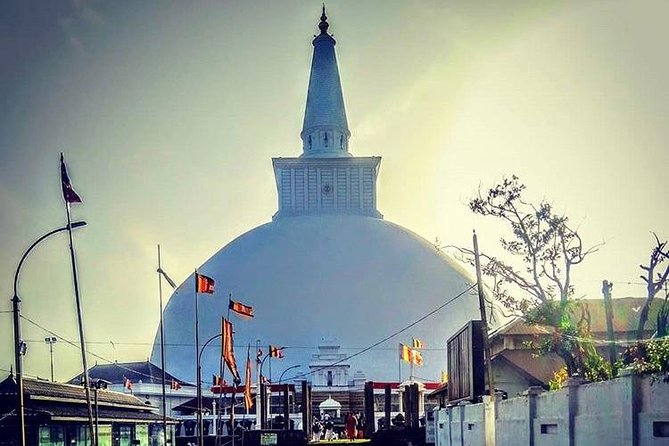
- Ruwanwelisaya Maha Seya, Relics and the Big Stupa Feeling
- Abayagiriya and Jetavanarama Ruins, When Scale Changes the Mood
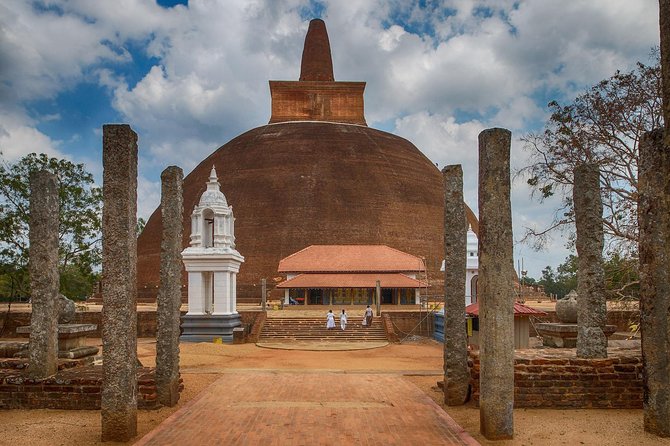
- Abhayagiri Dagaba and the Many Traditions of Anuradhapura
- Thuparama, Samadhi Buddha, and the Quiet Power of Meditation Forms
- Isurumuniya, Kuttam Pokuna, and Wessagiriya, Where Details Reward Patience
- Moonstone (Sandakada Pahana), the Stairway Symbol You’ll Want to See Up Close
- Timing, Pickup, and How to Make the Most of 3 to 4 Hours
- Value and Who This Tour Fits Best
- Should You Book This Anuradhapura Half-Day With Travel With Lampa?
- FAQ
- What time does the tour start?
- How long is the half-day tour?
- How much does it cost?
- Is pickup included?
- What is included in the tour price?
- Are admission tickets included for the monuments?
- Is the tour private?
- Where does the tour start and end?
- What happens if the weather is bad?
- What is the cancellation policy?
Key Things To Know Before You Go
- Licensed-guide explanations: Lampa is a Sri Lanka tourist guide license holder, with a clear focus on monuments, Buddhism, and history.
- Sacred sites, tightly grouped: The route concentrates on the major spiritual landmarks around Anuradhapura so you’re not spending half your time commuting.
- Mobile ticket convenience: You get a mobile ticket, and the tour confirms at booking.
- Snacks and water included: You’re not going into the heat empty-handed.
- Private tour format: It’s only your group, so you can ask questions without feeling rushed.
- Admission not included: Tickets and taxes are extra, so budget a bit beyond the listed price.
A Morning Circuit Through Anuradhapura’s Most Important Sacred Places
If you have only a few hours, this kind of half-day loop is the smart move. You get the feeling of Anuradhapura as a living Buddhist landscape, where big stupas sit near smaller, quieter sites that still matter to devotees. And because the timing is short, you’re less likely to feel fried before you reach the highlights.
The tour starts early, around 8:30 am, at Jaya Sri Maha Bodhi. That’s a good start point because it sets the theme for the morning: living sacred tradition alongside major monuments, relic culture, and the long history of Buddhist kingdoms in Sri Lanka.
You also get a practical bonus. The tour includes snacks and water, which helps when you’re walking between sites and dealing with changing weather light. In Sri Lanka, that small comfort makes a real difference.
And yes, the guide matters. Lampa is the kind of guide who doesn’t just point at ruins. He connects what you’re looking at to why people have cared about these places for centuries, with stories that keep the route feeling lively.
More ancient city trips:
- Private City Day Tour in Anuradhapura
★ 5.0 · 383 reviews - Explore & Ride the history of anuradhapura with Vogel Tours
★ 5.0 · 62 reviews - From Anuradhapura: All Inclusive Full Day Safari at Wilpattu
★ 4.4 · 50 reviews
Starting at Jaya Sri Maha Bodhi, the Symbol at the Center of the Story
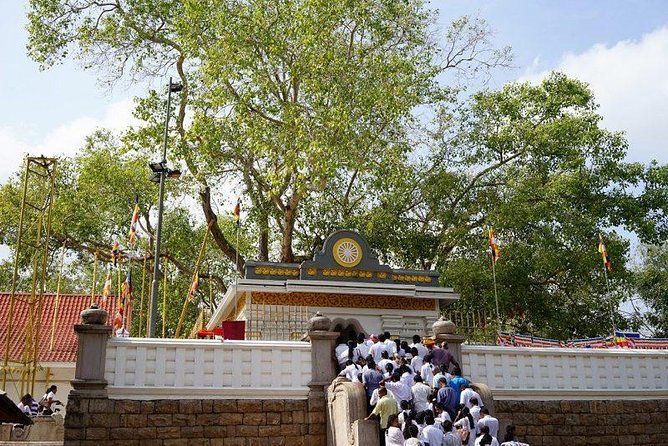
The morning begins at Jaya Sri Maha Bodhi, a sacred Bo tree (Ficus religiosa) in the Mahamewna Gardens. This is not treated like a normal tree stop. It’s a religious anchor, tied to the Buddhist tradition around Gautama Buddha and the idea of an authentic living link.
When you arrive, take a few moments before moving on. Look closely at how the place feels in use, not just how it looks in photos. Even if you’re not deeply religious, you’ll notice that this is a site people approach with intention.
What I’d do if I were planning your pace is simple. Spend your time here letting the guide’s explanation set the “why” for the whole route. Once you get that, the next monuments make more sense as a connected system of beliefs, relics, kingship, and pilgrimage.
Jaya Sri Maha Bodhi is also listed as about a 30-minute stop, which is the right amount of time to absorb it without dragging the schedule. Admission ticket is not included, so check what you’ll need to pay on arrival.
Lovamahapaya Brazen Palace, a Key Link Between Ruins and Meaning
Next comes Lovamahapaya, often called the Brazen Palace (Lohaprasadaya). It’s described as being situated between Ruwanweliseya and Sri Mahabodiya in the ancient city of Anuradhapura. Even with partial ruins, the name tells you what people once valued here: grandeur and a strong sense of permanence.
The guide’s job in a stop like this is important. When buildings are incomplete, it’s easy to see only broken stones. A good explanation helps you “read” what remains, including why the palace sits in this specific spot in relation to nearby sacred structures.
This is also a shorter stop, around 15 minutes. Use it to orient yourself. Ask yourself: how do sacred spaces cluster in this city? Lovamahapaya helps you see that the monumental sites were never isolated dots, they were part of a planned religious landscape.
Ruwanwelisaya Maha Seya, Relics and the Big Stupa Feeling
Then you reach Ruwanwelisaya, also known as Ruwanweli Maha Seya or the Mahathupa (the Great Thupa). This is the kind of stupa that makes your brain slow down, even if you’re moving briskly with a group.
The description notes it as a stupa containing relics, and it specifically mentions the idea of Buddha’s relics being enshrined there. That relic connection is key. In Buddhist art and architecture, the stupa is not just a monument, it’s a container for meaning.
This is about a 20-minute stop, so you’ll probably have time to get a decent look from your viewing position and understand what the guide is pointing out. If you enjoy details like symbolism and layout, spend those minutes watching for what stands between you and the central structure, and listen for what the guide highlights.
Again, admission is not included, so if you plan to enter areas around the stupa, budget for it.
A few more Anuradhapura trips to line up
- Minneriya National Park halfday Safari
★ 5.0 · 237 reviews - Minneriya National Park Elephant Jeep Safari Private Tour
★ 5.0 · 68 reviews - Minneriya National Park | Private Safari
★ 5.0 · 59 reviews - Wilpattu National park – Morning or Afternoon Safari
★ 4.3 · 57 reviews
Abayagiriya and Jetavanarama Ruins, When Scale Changes the Mood
The next stop is Abayagiriya Stupa, also associated with Jetavanarama (Jetavanaramaya). The information you’re given frames it as a stupa within the ruins of Jetavana monastery, and it notes those ruins as part of UNESCO World Heritage.
This is one of those places where the ruins feel bigger than the individual items. Even if you can’t picture the ancient monastery perfectly, the scale helps. Your eyes keep traveling outward, because the architecture is designed to make you feel small in a meaningful way.
Lampa’s history-and-Buddhism focus is especially useful here, because the guide can translate the ruins from “random remains” into “a site with a role in a larger religious world.”
Plan on about 30 minutes here. That’s just enough to see the stupa, understand the context, and get back on track without skipping other major points.
Abhayagiri Dagaba and the Many Traditions of Anuradhapura
After the Jetavanarama area, you move to Abhayagiri Dagaba. This site is described as part of Abhayagiri Vihara, a major monastery site connected with multiple Buddhist traditions, including Mahayana, Theravada, and Vajrayana.
That detail matters because it tells you Anuradhapura wasn’t just one style of Buddhism. Over time, different schools influenced what was built and practiced. When you’re standing in ruins, it’s easy to assume the past was simple. This stop argues for the opposite.
This is about 20 minutes, so you won’t get lost in one spot. Instead, the guide’s explanation helps you treat these ruins as evidence of religious evolution.
If you like your historical sites with a “people and ideas” angle, this is a strong stop. It gives you something to carry forward as you head to the smaller temples and well-preserved features later.
Thuparama, Samadhi Buddha, and the Quiet Power of Meditation Forms
Next comes Dagoba of Thuparama, tied to Thuparamaya, described as the first Buddhist temple constructed after the arrival of Mahinda Thero in Sri Lanka. The description also places it in the Mahamewna park area.
Even if you’re not trying to memorize early chronology, you’ll feel the difference between a “first temple” and a later monument. It’s a reminder of how Buddhism took root through specific early figures and the structures built around their arrival.
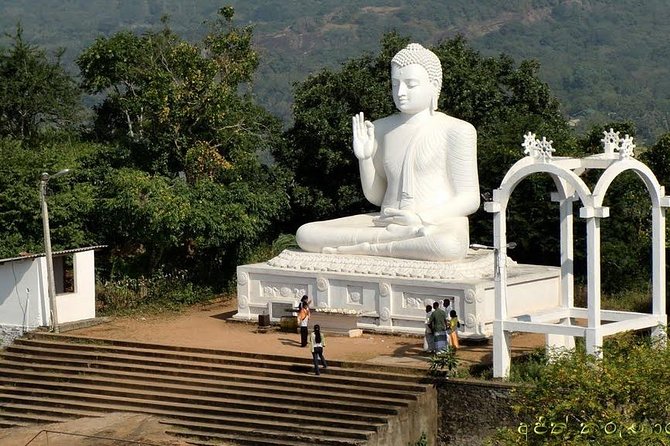
This stop is about 20 minutes, and it pairs well with the next one: the Samadhi Statue. Here, you’re told the statue depicts the Buddha in Dhyana Mudra, a posture of meditation linked to his early spiritual life and first teachings.
That’s a great pairing because it changes your pace. After bigger stupa energy, you shift to an image of inward focus. If you like religious art, look at the posture and how the statue is presented in its space. Let the guide explain what meditation gestures mean in Buddhist iconography.
Samadhi is about 15 minutes, so it works as a reset before you reach the more human-scale sites.
Isurumuniya, Kuttam Pokuna, and Wessagiriya, Where Details Reward Patience
Now the route turns toward sites where you’ll notice older features and more tactile details.
First is Isurumuniya Temple, identified with Meghagiri Vihara (Meygiri Vihara) in the description. It’s connected to King Devanampiya Tissa (307 BC to 267 BC). This adds a “king and Buddhism” layer to what you’re seeing, and it helps explain why certain monuments are treated as legacy markers.
Isurumuniya gets about 30 minutes. Use it to slow down slightly. When a stop is longer, it’s usually because there’s more to observe, like carved elements and how the site fits into its environment.
Then you visit Twin Baths (Kuttam Pokuna), two well-preserved bathing ponds built by the Sinhalese. This stop is only about 15 minutes, but it’s one of those “quiet wow” moments. Instead of focusing only on stupas, you get daily-life Buddhist infrastructure, the kind of place that tells you pilgrims, monks, or caretakers needed water and routine.
After that comes Wessagiriya, described as an ancient Buddhist forest monastery and part of the ruins of Anuradhapura. It’s positioned about half a mile south of Isurumuniya in the description.
Wessagiriya is about 20 minutes, and it’s a good final walk within the loop because it feels different from the more monumental sites. Even if it’s mostly ruins, the idea of a forest monastery changes the mood from ceremonial to contemplative.
Moonstone (Sandakada Pahana), the Stairway Symbol You’ll Want to See Up Close
Before the tour ends, you reach the Moonstone, also called Sandakada pahana. The description calls it a unique feature of Sinhalese architecture, usually a carved semi-circular stone slab placed at the base of stairways.
This is the sort of stop that’s short, around 20 minutes, but it can be a highlight because it’s specific and crafted. If you like architecture details, spend your time here looking at the carving style rather than rushing for a wide photo.
The guide’s explanation makes it easier to understand why locals cared about these decorative architectural borders. They weren’t just decoration, they were part of how sacred entryways were framed.
Timing, Pickup, and How to Make the Most of 3 to 4 Hours
This tour is designed to be efficient. You’re looking at about 3 to 4 hours total, and the stops are timed from roughly 15 to 30 minutes each. That means you won’t have hours to linger, but you will see the major landmarks in a single morning.
Pickup is offered, which is helpful if you’re staying a bit outside the center. The tour also uses a mobile ticket, so it’s simple to keep your proof of booking accessible.
One practical note: admission ticket costs are not included. The tour price covers the guiding and the tour services, but you may still need to pay for entries at some stops. If you want to avoid surprises, carry cash and expect some extra spending.
Finally, the experience is described as requiring good weather. If the weather is poor, you should expect a different date or a full refund offer.
Value and Who This Tour Fits Best
At $30 per person, this half-day is priced like a solid first-sightseeing option. You’re paying for a licensed guide’s explanations and a route that hits a lot of Anuradhapura’s key sacred points without wasting time.
You’ll get the best value if you want:
- A guided understanding of Buddhist meanings, not just photos.
- A focused morning plan starting near Jaya Sri Maha Bodhi.
- A private format where questions are welcome within a short schedule.
This tour is also described as suitable for most travelers, and it’s a private activity, meaning only your group participates. That makes it easier if you want a calmer pace than a crowded group tour.
If you’re the type who loves ruins but also wants context, this fits you. If you only want to “see and go,” you might feel you’re paying for explanation you don’t fully use. But with Lampa’s style, the explanations are the point, and the route is built to support them.
Should You Book This Anuradhapura Half-Day With Travel With Lampa?
Yes, I’d book it if you want a compact, meaningful introduction to Anuradhapura’s sacred sites. Lampa’s background as a tourist guide license holder, and his focus on Buddhism and Sri Lankan history, is exactly what turns a list of monuments into a connected story. Add in the practical touch of snacks and water, plus a start point that makes sense for the day, and it becomes an easy “good use of limited time” choice.
Skip it only if you’re specifically looking for a deep architectural study that takes all day, or if you prefer self-guided wandering where you can spend 40 minutes on one detail. For a first pass through the highlights, this morning circuit is a strong match.
FAQ
What time does the tour start?
The tour starts at 8:30 am.
How long is the half-day tour?
It runs about 3 to 4 hours (approximately).
How much does it cost?
The price is $30.00 per person.
Is pickup included?
Pickup is offered.
What is included in the tour price?
It includes snacks and water, and you’ll receive a mobile ticket.
Are admission tickets included for the monuments?
No. Admission tickets are not included, and all fees and taxes are not included either.
Is the tour private?
Yes. It’s a private tour/activity, so only your group participates.
Where does the tour start and end?
It starts at Jaya Sri Maha Bodhi (listed location: 89VW+VV5, Anuradhapura) and ends back at the meeting point.
What happens if the weather is bad?
The experience requires good weather. If it’s canceled due to poor weather, you’ll be offered a different date or a full refund.
What is the cancellation policy?
You can cancel for free up to 24 hours in advance for a full refund. If you cancel less than 24 hours before the start time, the amount paid is not refunded.
Recent additions in Anuradhapura
- Yala National Park: 7 hours or 12 hours Leopard Wild Safari★ 4.7 · 11 reviews
- Wilpattu National Park: Private Safari★ 4.4 · 38 reviews
- Wilpattu National park – Full day Safari (06:00am – 18:00pm)★ 4.5 · 38 reviews
- Sri Lanka: Wilpattu National Park Safari Tour in a 4WD Jeep★ 4.4 · 4 reviews
- Wilpattu National park: Morning or Afternoon PRIVATE Safari★ 3.5 · 3 reviews
- Wilpattu: Jeep Safari Day Tour From Sigiriya or Dambulla★ 4.2 · 7 reviews
- Wilpattu National park : Full day Safari (06:00am – 18:00pm)★ 4.7 · 6 reviews
- Wildlife experience at Minneriya National Park Safari★ 5.0 · 4 reviews
Ancient City Tours, compared.
Explore & Ride the history of anuradhapura with Vogel Tours
Read our review →
Polonnaruwa Day Tour With Minneriya NP Elephant Safari
Read our review →
Private Polonnaruwa Sightseeing Day Tour from Sigiriya
Read our review →
Sigiriya, Polonnaruwa & Dambulla “Trilogy” Day Tour from Colombo
Read our review →Browse the lists this tour appears in