
Reviewed · ANCIENT CITY TOURS
Day tour sigiriya to anuradhapura
Temple ruins and sacred trees, in one long day.
This Sigiriya to Anuradhapura day tour is a smart way to see Sri Lanka’s religious heart, without juggling transport. You pair the dramatic Sigiriya Rock Fortress with Anuradhapura’s temple zones, stupa ruins, and symbolic sacred trees, all in a route that keeps moving. The best part for many people is the small size, a maximum of three travelers, so the day feels calmer than a big bus crawl.
I particularly like how the tour builds in a more intimate pace with round trip transfers taken care of from your chosen Sigiriya address. I also like the site choices, because you do not just hit the headline stoppers. You also get stops such as Kuttam Pokuna (Twin Baths) and the carved moonstone (Sandakada pahana), which are the kind of details that make ancient sites feel real.
One thing to consider is that the itinerary packs in a lot of stops across a full day, and entrance fees are at your own expense. Plan for sun, walking, and separate ticketing for major sites, especially if you are factoring in Sigiriya’s entrance costs for foreign visitors, which have been reported as steep and with limited basic facilities at times.
In This Review
- Key things to notice before you go
- Why this Sigiriya to Anuradhapura day tour is worth your time
- Sigiriya Rock Fortress: the climb, the views, and the practical tips
- The long day rhythm: how the nine Anuradhapura stops feel in real time
- Thuparamaya and Ruwanwelisaya: start with Sri Lanka’s early Buddhist anchors
- Jaya Sri Maha Bodhi and the Jetavana stupa ruins you should recognize
- Isurumuniya, Kuttam Pokuna, and the moonstone at stair entrances
- Abhayagiri Dagaba and Mihintale: when the ruins get bigger
- Price and budgeting: is $120 good value for this day?
- Who this tour fits best
- Should you book this Sigiriya to Anuradhapura day tour?
- FAQ
- What is the duration of the Sigiriya to Anuradhapura day tour?
- How much does the tour cost?
- Is a mobile ticket included?
- Are entrance fees included in the price?
- How many people are in the group?
- Where does the tour start and end?
- What is included in the tour besides the planned stops?
- What if the weather is poor?
Key things to notice before you go
- Max of three travelers, so you get a small-group feel instead of a herd
- Direct round trip transfers from your chosen Sigiriya address, which saves time and confusion
- Mobile ticket included, so you spend less time sorting paper
- A mix of big stupa sites and fine details like Twin Baths and the moonstone
- Sacred tree stop (Jaya Sri Maha Bodhi), a living link to a major Buddhist tradition
- Bottled water provided (two bottles), helpful on a hot, long day
Why this Sigiriya to Anuradhapura day tour is worth your time
If you have only one full day for the UNESCO-level stuff, this tour is built for focus. Sigiriya brings the drama, the sheer scale of the rock fortress and its ancient planning. Anuradhapura brings the spiritual zoning, the kind of place where you can feel how religious life shaped the city over centuries.
What makes this day work well is the pairing. Sigiriya is visually unforgettable and physically memorable. Anuradhapura is visually quieter, but full of meaning, with sacred trees, major dagobas, monastery ruins, and architectural details like stone moonstones at stair entrances.
Small groups matter here. With up to three travelers, you are less likely to feel rushed through each checkpoint and more likely to get time for the photos you actually want, not just a quick snapshot while someone herds you forward.
More Sigiriya bookings:
- From Colombo: Sigiriya and Dambulla Day Trip with Safari
★ 4.7 · 842 reviews - From Kandy: Sigiriya Rock & Dambulla Cave Temple Adventure
★ 4.9 · 785 reviews - Organic cooking class sigiriya (kumara & family)
★ 5.0 · 650 reviews
Sigiriya Rock Fortress: the climb, the views, and the practical tips
This is the start of your day, and it sets the tone. Even if you are not a hiker, Sigiriya’s ascent is the kind of climb that rewards steady effort: level after level, with ancient features along the way and open views as you gain height.
A few practical points come up again and again in real-world experience. Wear comfortable shoes with grip, because parts of the route can feel uneven. Bring water, because even in the morning you can feel the heat, and the day is long.
If you want the best shot at cooler temps, an early start is often the winning move. People frequently recommend starting around 6:30am for Sigiriya, mainly to beat the sun. That also tends to make the timing feel smoother, because Anuradhapura requires more walking later.
One budgeting note is worth your attention. At Sigiriya, foreigners are reported to face an entrance fee around US$35, and some visitors have complained about limited basic amenities, including toilets. That does not ruin the visit, but it can affect your comfort level if you were expecting more infrastructure.
If you get a good guide, Sigiriya becomes easier to understand on the climb itself. One guide name you may hear praised is Bandara, noted for strong English and even humor, which can help you connect the visible features to the story behind them.
The long day rhythm: how the nine Anuradhapura stops feel in real time
After Sigiriya, you shift into Anuradhapura mode, which is a different kind of travel. Instead of one big climb, you get a sequence of sacred sites, each with its own focus. The itinerary includes nine stops total in Anuradhapura and surrounds, with set time blocks like 30 minutes and one hour at each place.
Because you move from site to site, you should plan your day like a checklist but walk it like a museum: pause when something looks symbolic, read what you can, and stop photographing once your phone battery and your energy start arguing with you.
The tour provides bottled water (two bottles). Still, I suggest you treat hydration as a must, not a maybe, since you will be in bright light and walking between temples.
Also keep expectations realistic. Anuradhapura is ancient and spread out. Even with a streamlined plan, it is hard to feel truly relaxed if you pack the day with extra stops on your own. This tour is designed to give you the main hits and some of the finer details, and you will get more out of it if you let the schedule do the heavy lifting.
Thuparamaya and Ruwanwelisaya: start with Sri Lanka’s early Buddhist anchors
Your first Anuradhapura stop is Thuparamaya, timed at about 30 minutes. This is described as Sri Lanka’s first Buddhist temple, sitting in the Mahamewna park sacred area. The Thuparamaya stupa is said to be the earliest dagoba constructed in the island, connected to the reign of King Devanampiya Tissa (247 to 207 BC).
I like this stop because it is a clear starting point. Even if you do not know all the names, you can grasp the idea: this is not just an old building, it is an early marker of Buddhism taking root and being built into the landscape.
Next comes Ruwanwelisaya, about one hour. This stupa is hemispherical and considered sacred to Buddhists worldwide. It is associated with King Dutugemunu, built around 140 BC, and it is described as containing relics.
This is one of those places where you can feel the scale of religious devotion. Stupas like Ruwanwelisaya are not only about architecture, they are about how people return again and again. Even on a tour schedule, you can take a moment to watch the flow of worship and then look closely at the structure.
At both Thuparamaya and Ruwanwelisaya, remember entrance fees are not included, so bring whatever payment method the site accepts, and keep an eye out for lines. You will lose the most time at ticketing points, not at the viewing.
More ancient city trips:
- Private Polonnaruwa Sightseeing Day Tour from Sigiriya
★ 5.0 · 31 reviews - Sigiriya, Polonnaruwa & Dambulla “Trilogy” Day Tour from Colombo
★ 4.5 · 26 reviews - Day Tour from Colombo to Sigiriya, Dambulla & Polonnaruwa
★ 4.5 · 21 reviews - Polonnaruwa Sight Seeing Tour and Minneriya Elephant Safari
★ 4.8 · 18 reviews
Jaya Sri Maha Bodhi and the Jetavana stupa ruins you should recognize
Your tour then shifts to living symbolism with Jaya Sri Maha Bodhi, around one hour. This is a sacred fig tree in the Mahamewna Gardens. The key point is its lineage: it is said to be the southern branch from the historic Sri Maha Bodhi at Buddha Gaya in India.
This kind of stop hits differently than a ruin. Ruins are about what is gone. Sacred trees are about what continues. If you are the kind of traveler who likes meaning and symbolism, this is the moment you will remember, long after you forget a few stone carvings.
After that, you will see another major stupa site in the ruins area, with about 30 minutes allocated. The description points to the Jetavana monastery ruins and names Jetavanaramaya as a famous stupa. It is described as about 122 meters high and noted as the world’s tallest stupa in its era.
A quick tip for this stop: slow down at the sightline where the scale becomes obvious. When you are standing close to ruins, it is easy to miss how huge they were in their prime. Even if your time is limited, give yourself one minute to step back and take in proportions.
Isurumuniya, Kuttam Pokuna, and the moonstone at stair entrances
Next on your route is Isurumuniya Temple, about one hour. The site is linked to stories and sacred tradition: it is described as the place where Pulasthi Rishi lived and where King Ravana was born. It is also described as having around 5000 years of written history and being one of three star gates in the world.
You might find that some of these claims are presented more as religious tradition than as straightforward modern biography. That does not mean the stop is less valuable. It means your job is to watch how the place is framed. If you treat it as a story site with living significance, it becomes memorable instead of confusing.
Then comes Twin Baths (Kuttam Pokuna), about 30 minutes. This is one of the best specimens of ancient bathing tanks or pools in Sri Lanka, built by the Sinhalese in the ancient Anuradhapura kingdom. The twin pools make the site feel unusually practical, which I like. It is ancient life, not only grand ceremony.
Finally, you will see Anuradhapura Moonstone or Sandakada pahana, about 30 minutes. This carved semi-circular stone slab is typically placed at the bottom of staircases and entrances. The main idea is architectural symbolism, a design element that you notice only if you are looking down while walking.
This is a nice arc in the day. Temples can blend together when you are rushing. But Twin Baths and the moonstone force you to slow your attention to details of daily life and design.
Abhayagiri Dagaba and Mihintale: when the ruins get bigger
The next stop is Abhayagiri Dagaba, around one hour. The site is described as a major monastery location with connections to Mahayana, Theravada, and Vajrayana Buddhism. It is also described as one of the most extensive ruins in the world and one of the most sacred Buddhist pilgrimage areas.
I like this stop because it gives you a bigger view of how Buddhism in Sri Lanka evolved and overlapped. Even within a single city, you are seeing different streams shaping buildings and monasteries.
Then you move to Mihintale, about one hour. It is located about eight miles east of Anuradhapura near the Anuradhapura to Trincomalee road. Mihintale is tied to the mountainous peak area known as Missaka Pabbata, with a peak around 1000 feet.
The Mihintale stop gives you a change of pace. Instead of only focused temple structures, you start thinking about geography and movement. When you have a long list of sites, it helps to end with a place that feels like it has a wider frame.
Price and budgeting: is $120 good value for this day?
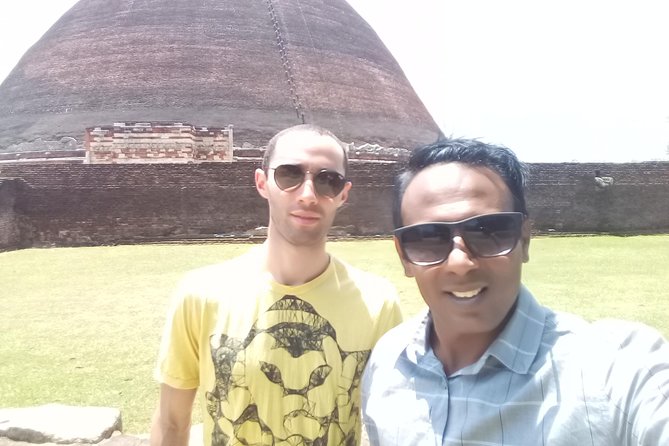
The tour price is $120, and that covers the planned experience and the included perks. What you do get is bottled water (two bottles), plus the stress-free, direct round-trip transfers from your selected Sigiriya address. You also get a mobile ticket.
What you do not get is admission. The tour explicitly notes that all fees and taxes are at your own expense. That matters because entrance costs can add up when your day includes major sites.
At Sigiriya, one reported foreigner entrance fee is around US$35, and some visitors mention limited basic amenities such as toilets. That means your total trip cost will likely be higher than the $120 headline price once you add separate tickets.
So is it still good value? For many people, yes, because the price is paying for logistics and time savings. A day trip that connects Sigiriya Rock Fortress with Anuradhapura’s major temples, plus structured stop times, saves you the headache of coordinating transport and ticket timing on your own. If you would otherwise spend energy figuring out routes, drivers, and pacing, the tour price is doing real work.
If you are traveling with someone and you can split costs, this becomes even easier to justify. If you are traveling solo, the small group limit still helps you avoid a chaotic day, which is hard to put a dollar value on.
Who this tour fits best
This tour suits you if you want a focused day in Sri Lanka’s ancient core, without turning it into a DIY project. It is also a good match if you like spiritual sites but still care about architecture details like stone carvings and bathing pools.
It is likely best for travelers who are comfortable with a full day schedule and moderate walking. The itinerary includes multiple one hour stops and several 30 minute stops, plus Mihintale’s hill area. If you have mobility issues, you might find the day demanding, so you should think carefully about your comfort.
You will especially appreciate this itinerary if you enjoy explanations and symbolic details. Stops like Jaya Sri Maha Bodhi and the moonstone at entrances reward attentive looking.
Should you book this Sigiriya to Anuradhapura day tour?
I think you should book it if you want an organized route that connects Sigiriya’s big wow factor with Anuradhapura’s religious heart, while keeping group size small. The transfers and the small group feel are the practical advantages that make the day smoother.
Book if you are also comfortable budgeting for entrance fees separately. The tour price is reasonable, but the headline number will not include the site costs once you are on the ground.
Do not book if you are hoping for a very slow, low-effort day. This is a nine stop sacred circuit, and even with good timing, you will still be on your feet and in bright light for much of the day.
FAQ
What is the duration of the Sigiriya to Anuradhapura day tour?
The tour runs about 8 to 10 hours.
How much does the tour cost?
It costs $120.
Is a mobile ticket included?
Yes, the tour features a mobile ticket.
Are entrance fees included in the price?
No. All fees and taxes are not included, so you will pay entrance costs on your own.
How many people are in the group?
The tour has a maximum of three travelers.
Where does the tour start and end?
It starts in Sigiriya, and it ends back at the meeting point, which corresponds to the starting area.
What is included in the tour besides the planned stops?
Bottled water is included, two bottles per traveler.
What if the weather is poor?
The experience requires good weather. If it is canceled due to poor weather, you will be offered a different date or a full refund.
Recent additions in Sigiriya
- Wilpattu: Jeep Safari Day Tour From Sigiriya or Dambulla★ 4.2 · 7 reviews
- Adventure trincomalee to sigiriya and wild safari ,village tour★ 5.0 · 5 reviews
- Night Hike to see Elusive & Rare Loris in Sigiriya★ 4.5 · 43 reviews
- Sigiriya Cycle Tour: Explore Village Life in Sigiriya & Enjoy a Village Lunch★ 5.0 · 3 reviews
- Malee Cookery Lessons★ 5.0 · 26 reviews
- Private Polonnaruwa Sightseeing Day Tour from Sigiriya★ 5.0 · 31 reviews
- Sigiriya Rock Climb, Village Tour+Cooking Class & Elephant Safari★ 5.0 · 9 reviews
- Sigiriya Entrance Ticket with Guided Tour★ 4.5 · 13 reviews
Ancient City Tours, compared.
Explore & Ride the history of anuradhapura with Vogel Tours
Read our review →
Polonnaruwa Day Tour With Minneriya NP Elephant Safari
Read our review →
Private Polonnaruwa Sightseeing Day Tour from Sigiriya
Read our review →
Sigiriya, Polonnaruwa & Dambulla “Trilogy” Day Tour from Colombo
Read our review →
Browse the lists this tour appears in