
Reviewed · ANCIENT CITY TOURS
Polonnaruwa Ancient City Private Day Tour (Hidden Gems)
Polonnaruwa can feel like a whole city frozen in time, and this private day tour helps you make sense of it fast. You get a dedicated guide who turns stone relics into stories you can actually follow, and I like the pacing that lets you linger where your curiosity lands. Two standouts for me are the big-ticket stops like Gal Vihara and the well-timed breaks, including a generous lunch stop. One thing to consider: it’s a long day, and a few segments involve short rides rather than continuous walking, so plan for some tired legs by late afternoon.
In This Review
- The small stuff that makes this feel worth it
- Key Highlights You’ll Care About
- Starting at the Archaeological Museum, where context matters
- Palace of King Parakramabahu I, from myth to stone
- Vatadage and the Sacred Quadrangle feel, circular and precise
- Hindu Temple, Pabalu Vehera, and Rankoth Vehera for the full religion mix
- Shiva Devalaya No. 2
- Pabalu Vehera
- Rankoth Vehera
- Alahana Pirivena and monastic education, where the city learns
- Gal Vihara, the rock-cut moment most people remember
- Thivanka Image House, the detail stop with payoff
- Lunch break on Priyamali Gedara Road, fuel for the second half
- Statue of Parakramabahu I, a landmark for the day’s theme
- Deepa Uyana, a pause that helps the ruins land
- Sunset at Parakrama Samudraya, the big sky finish
- Price, value, and what can surprise you
- What the guides do especially well (and why it matters)
- Who should book this private Polonnaruwa day and who might pass
- Should you book Polonnaruwa Ancient City Private Day Tour?
- FAQ
- How long is the Polonnaruwa Ancient City Private Day Tour?
- What is the price per person, and what does it not include?
- What is included in the tour?
- Where does the tour start and end?
- Is this tour private?
- Can I cancel for a full refund?
The small stuff that makes this feel worth it
A private format matters here because Polonnaruwa is spread out, and jumping between sites on your own can turn into guesswork. The guides credited by name, like Tharindu and Tarry/Tharry, are repeatedly praised for clear explanations and for handling questions without rushing you. The most practical drawback I’d flag is that guide English can vary by person, and the heat can add up, so wear something light and keep that bottled water close.
Key Highlights You’ll Care About
- A true private guide: Your group only, so questions never feel awkward.
- Major monuments plus smaller stops: You see the classics and the quieter religious sites.
- Gal Vihara and Thivanka Image House: Two of the most striking carved-figure moments in Polonnaruwa.
- A real meal break: Rice and curry gets built into the day, not tacked on last minute.
- Sunset at Parakrama Samudraya: A wide reservoir view that gives the ruins an evening mood.
- Air-con and tuk-tuk options show up in real use: Some tours run by car, others by tuk tuk, so confirm your ride style.
More ancient city trips:
- Private City Day Tour in Anuradhapura
★ 5.0 · 383 reviews - Explore & Ride the history of anuradhapura with Vogel Tours
★ 5.0 · 62 reviews - From Anuradhapura: All Inclusive Full Day Safari at Wilpattu
★ 4.4 · 50 reviews
Starting at the Archaeological Museum, where context matters
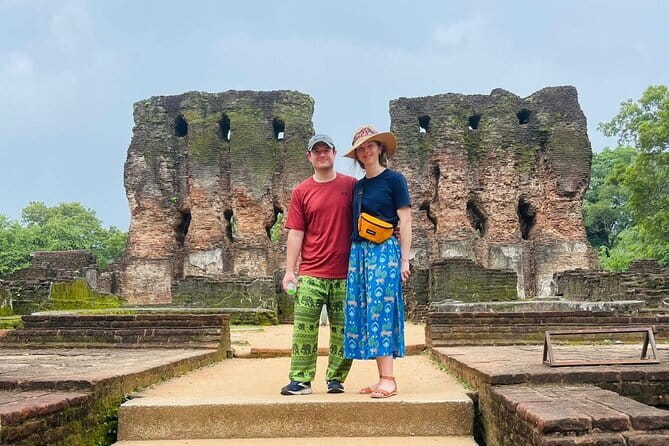
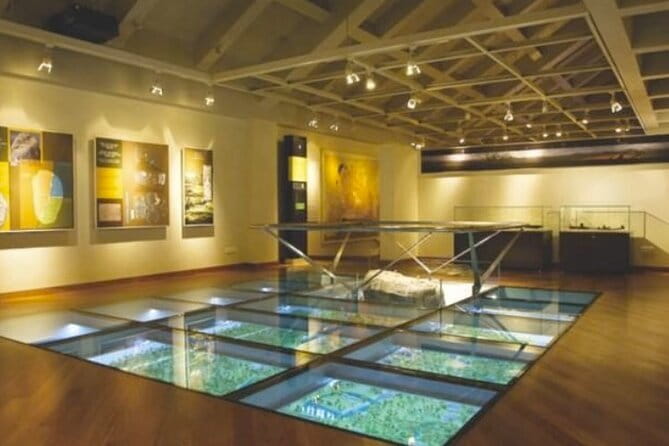
You begin at the Archaeological Museum in Polonnaruwa, right near the main entrance to the heritage zone. For me, starting here is smart. The museum doesn’t just list artifacts. It helps you build a mental map of what you’re going to see later, so the carved stone reliefs and religious structures stop feeling like random piles of rock.
The practical time hit is about 30 minutes, and the admission ticket is not included. If you’re price sensitive, it’s still a worthwhile first stop because it can prevent that common problem where you spend the day staring at ruins without knowing what you’re looking at.
A quick tip: if you prefer photos over reading, still spend a few minutes matching items in the museum to later places. Your brain does better when it can connect the dots.
Palace of King Parakramabahu I, from myth to stone
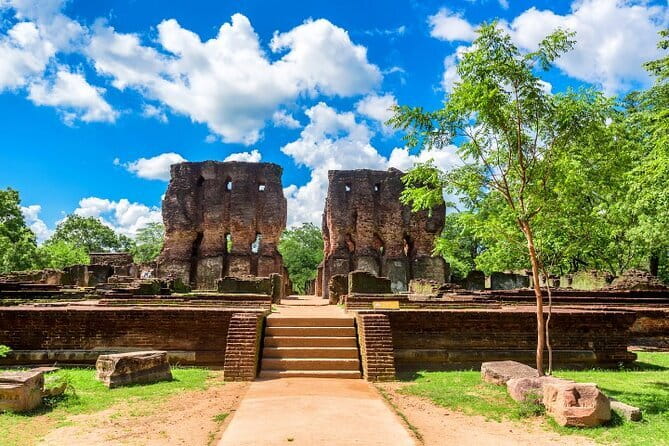
Next is the Palace of King Parakramabahu, a high-profile remnant tied to Sri Lanka’s medieval power. The big idea here is scale. The story goes that it was once a seven-story structure, now reduced to what you can see today. Your guide’s job is to help you picture how the royal court might have functioned in real daily life.
This stop is about 30 minutes and there’s no admission charge listed. That makes it a good pacing anchor early on, when your energy is still high. It’s also a great place to ask a “why does this matter” question, because Parakramabahu’s reputation shows up again and again around Polonnaruwa.
Vatadage and the Sacred Quadrangle feel, circular and precise
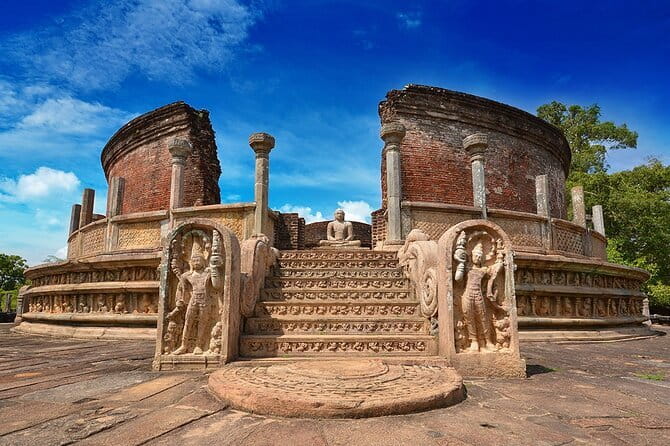
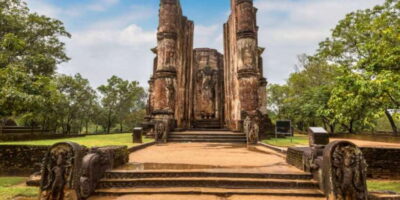
The Polonnaruwa Vatadage is a standout architectural feature in the Sacred Quadrangle. Expect a circular relic house designed to protect a sacred stupa, with detailed carving that rewards slow looking. The stop lasts about 45 minutes, and admission is not included.
This is the moment where a good private guide pays off. Polonnaruwa’s religious architecture can look similar at a glance, but the Vatadage has a distinct purpose and design logic. A guide will usually point out what makes the structure different and how it connects to the broader sacred layout.
If you’re photographing, bring patience. You’ll likely want a few angles, and there’s no point rushing this one.
A few more Sri Lanka trips to line up
- Kandy Private Guided City Tour by Tuk Tuk
★ 4.9 · 1,307 reviews - Sri Lanka Personal Tour Driver in private vehicle
★ 5.0 · 747 reviews - AirPort CMB to Colombo (Private Taxi 24/7) Car, Van, Minibus
★ 5.0 · 604 reviews - Colombo Private Tuk-Tuk City Tour with All Entry Fees Included
★ 5.0 · 524 reviews
Hindu Temple, Pabalu Vehera, and Rankoth Vehera for the full religion mix

Polonnaruwa isn’t only Buddhist big monuments. Your tour includes a Hindu shrine stop, plus several stupas tied to different reigns.
Shiva Devalaya No. 2
You’ll visit Shiva Devalaya No. 2, a well-preserved Hindu temple connected to Lord Shiva. The time here is about 15 minutes, with no admission listed. This quick stop is valuable because it shows the city’s multicultural religious footprint, not just one tradition.
One practical consideration: a 15-minute temple visit can feel fast, but it also works if your guide uses the time well with clear context. If you want longer here, tell your guide early.
Pabalu Vehera
Then comes Pabalu Vehera, a stupa with a unique design tied to King Parakramabahu I’s era. You get about 15 minutes. Admission is not included.
This stop is a nice palate cleanser between the larger complexes. It’s also a reminder that Polonnaruwa is not one highlight, it’s a chain of sites that each communicate something.
Rankoth Vehera
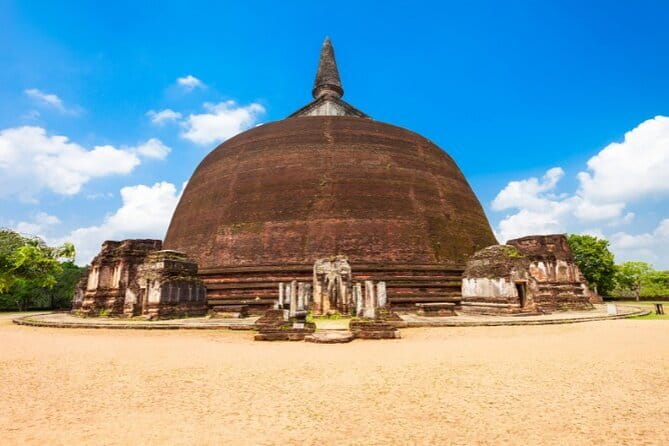
Finally, you’ll see Rankoth Vehera, the largest stupa in Polonnaruwa, linked to King Nissanka Malla in the 12th century. Time is about 15 minutes and admission is not included.
This is a good moment for a simple question: why build something so large? With the right explanation, you can go from awe to understanding. Without it, you’d just get the size and miss the meaning.
Alahana Pirivena and monastic education, where the city learns
The Alahana Pirivena Complex is a monastic site tied to the 12th century, connected to religious teaching and education. Your time is about 30 minutes, and admission is not included.
If your favorite kind of travel is “how people lived and worked,” this is the stop to linger on. Monastic colleges and learning centers shape the culture, not just the religion. This stop also gives your day a break from only statues and stupas, adding a learning-focused angle.
Gal Vihara, the rock-cut moment most people remember

Now you hit Gal Vihara, one of the most iconic scenes in Polonnaruwa: rock-cut Buddha statues from the 12th century. You get about 30 minutes, and admission is not included.
I like this stop because it’s both visual and explanatory. The carvings are striking, but they also raise questions about style, worship, and the workshop skill behind the work. A private guide makes it easier to understand what you’re seeing, and reviewers often describe Gal Vihara-style ruins as a highlight because the explanations connect directly to what your eyes catch.
Heat can be a factor here, so step into shade when you can and let your guide pace the group. It’s better to see fewer things clearly than to sprint and forget.
Thivanka Image House, the detail stop with payoff
The Thivanka Image House is next, with about 15 minutes on the clock. Admission is not included. This site is famous for the size of its structure and for detailed artwork.
Because your time is shorter here, you’ll want your guide to tell you where to look first. If they point out specific carvings or themes, you’ll feel like you “got” the place instead of just walking through it.
If you love interior details, ask for one extra angle before you move on. This is one of those sites where your second look often beats your first.
Lunch break on Priyamali Gedara Road, fuel for the second half
A big practical win is the lunch stop at Priyamali Gedara Road. Your time here is about 1 hour 30 minutes, and the meal is listed as free on the tour.
You’re served a traditional rice and curry set-up, typically steamed white rice with a spread of curries. Even if you’ve had Sri Lankan food before, I like this lunch slot because it’s timed to keep you going for the remaining temples, gardens, and the viewpoint.
Bring a bit of patience and don’t rush eating. A longer meal also gives your guide time to adjust the rest of the route if you’re tiring out or if the light is changing.
Statue of Parakramabahu I, a landmark for the day’s theme
You’ll then see the Statue of Parakramabahu I, a monumental tribute standing about 12 feet tall. The stop is 30 minutes, admission not included.
This is more than a photo moment. It ties the day together around one key theme: Parakramabahu’s influence across the city. If your guide points out which nearby sites connect to him, the statue becomes a navigation marker for meaning, not just a big figure.
Deepa Uyana, a pause that helps the ruins land
Next is Deepa Uyana, also known as King Nissankamalla’s pleasure garden. You get about 30 minutes.
Gardens can feel like filler on ruin tours, but this one helps because it offers a mental break from constant stone. Pleasure gardens were designed for retreat and relaxation, and that purpose matters. Even if you only sit for a few minutes, it resets your attention for the last stretch.
Admission is not included, so budget your time for the best use of the slot: slow walking, a few photos, and then stop and look back at the way the area is arranged.
Sunset at Parakrama Samudraya, the big sky finish
Your final listed stop is the Parakrama Samudraya View Point. This is your sunset moment over the reservoir, often called the Sea of Parakrama.
Time is about 30 minutes, and it’s free. If you like travel where the last hour creates a mood shift, this is it. Seeing ruins with evening light changes the experience. It’s also a chance to gather your thoughts before you head back.
Tip: wear something light for the day, but keep a thin layer handy for late evening air. The sun drops fast once you commit to this finish.
Price, value, and what can surprise you
The tour price is $30 per person, and it includes bottled water. The key catch is that site entry/admission fees are not included, listed at $30 per person. So in practice, plan for the tour cost plus site entry.
Is it worth it? For me, the value hinges on three things:
- You’re buying a private guide who helps you connect what you see, especially at the complex stops like Gal Vihara and the Sacred Quadrangle.
- The day includes a long meal break (rice and curry) so you’re not scrambling for food.
- You get a structured route that still allows a little flexibility, and guides like Tharindu and Tarry are praised for clear answers and pacing.
The one value concern is transportation. Private transportation and air-conditioned vehicle are listed as not included, so you should confirm what ride you’ll use between sites. The good news is that real past experiences mention tuk tuk tours and an air-conditioned car, so heat comfort is possible. Just don’t assume it automatically.
What the guides do especially well (and why it matters)
Across the guide feedback, three themes show up again and again.
First, guide explanations are praised as patient and clear, even when people struggle to catch every word due to accent. Second, the guides seem willing to answer questions beyond the basics, which changes how you remember the day later. Third, the best tours stretch time a bit when the guide wants you to see one more angle or one more related detail.
There’s one tradeoff: sometimes a tour can run long. If you have a hard dinner reservation later the same evening, build in breathing room.
Who should book this private Polonnaruwa day and who might pass
This tour is a strong fit if you:
- Want a private guide instead of piecing together ruins on your own.
- Appreciate religious architecture and details, not just broad sightseeing.
- Like a day plan that includes both major monuments and smaller stops without feeling like a sprint.
You might consider another option if you:
- Are sensitive to long days and end-of-tour fatigue. A few stops later in the day may feel tiring, especially under midday heat.
- Need fully continuous walking. Some parts likely require short rides, not uninterrupted walking between every point.
Should you book Polonnaruwa Ancient City Private Day Tour?
If you want Polonnaruwa to feel organized and meaningful, this is an easy “yes” for most people. The combination of major sights, temple variety, and a structured lunch break makes the day smoother than trying to manage it alone. The private guide is the main reason to book, especially if you care about understanding why these structures were built and what they represent.
Just do two things before you commit. Confirm how you’ll get between sites, especially whether you’ll have air-conditioned comfort in the hotter hours. And bring energy for a full day, since this experience is built to keep moving through a lot of important places. If that fits your travel style, you’ll likely leave with more than photos, you’ll leave with real context.
FAQ
How long is the Polonnaruwa Ancient City Private Day Tour?
The tour runs about 6 to 7 hours.
What is the price per person, and what does it not include?
The tour price is $30 per person. Site entry or admission fees are not included and are listed as $30 per person.
What is included in the tour?
Bottled water is included. You also receive a mobile ticket.
Where does the tour start and end?
It starts at WXRX+PHC Archaeological Museum, Polonnaruwa, Sri Lanka, and ends back at the meeting point.
Is this tour private?
Yes, it is a private tour/activity with only your group participating.
Can I cancel for a full refund?
Yes. You can cancel up to 24 hours in advance for a full refund. If you cancel less than 24 hours before the experience starts, the amount paid is not refunded.
Recent additions in Sri Lanka
- Yala Village Tour: Pottery Class, Lake and Temple Visits★ 5.0 · 5 reviews
- Zip Lining in Ella★ 4.5 · 16 reviews
- Yala Private Safari – Half Day or Full Day with Picnic Lunch★ 5.0 · 4 reviews
- Yala Safari All-Inclusive Package with Convenient Pick Up★ 4.4 · 3 reviews
- YALA SAFARI TOUR with Galle/Mirissa/Tangalle/Ella Transfers★ 5.0 · 3 reviews
- Yala National Park – Safari Tour with Hotel / Accommodation★ 4.7 · 31 reviews
- Yala National Park Wildlife safari from Mirissa★ 3.3 · 4 reviews
- Yala Safari : 7 hour & 12 hour Tours★ 3.8 · 6 reviews
Ancient City Tours, compared.

Explore & Ride the history of anuradhapura with Vogel Tours
Read our review →

Polonnaruwa Day Tour With Minneriya NP Elephant Safari
Read our review →
Private Polonnaruwa Sightseeing Day Tour from Sigiriya
Read our review →
Sigiriya, Polonnaruwa & Dambulla “Trilogy” Day Tour from Colombo
Read our review →Browse the lists this tour appears in