
Reviewed · WORKSHOPS
Interactive Batik Workshop and Lessons in Sri Lanka
Kandy gets quieter early, and this workshop uses that calm well. You spend about 3.5 hours learning traditional wax batik step by step in a home-studio setting, with plenty of time to ask questions. The biggest hook is simple: you are not just watching, you are making. You pick fabric, apply wax with traditional tools, dye using classic methods, then finish your piece so you can take it home.
I like that the instruction is hands-on and paced for a small group, up to 10 travelers. I also like that you cover the full workflow, from choosing fabric to waxing, dye mixtures, and finally de-waxing (wax burning and boiling). One thing to consider is that this is a craft session, so it can be a bit hands-on, time-based, and there is no lunch included.
In This Review
- Key Points at a Glance
- Your Morning in Kandy, Designed Around Traditional Wax Batik
- The Real Craft Session: Fabric Choice to Final Waxwork
- Picking and preparing the fabric
- Wax mixtures and waxing techniques
- Tools you will use: tjanting, funnel, and the Henry tool
- Designing Your Own Pattern, Not Copying Someone Else
- The Dye Stage: Naphthol, Vat, and Reactive Methods Explained
- De-Waxing: The Moment the Pattern Shows Up
- Refreshments, Small-Group Energy, and Why It Feels Like a Visit
- Price and Value: What $28 Buys You in Real Materials
- What to Bring (and What to Expect About Mess)
- Timing, Logistics, and Pairing It With Your Kandy Day
- Who Should Book This Batik Workshop?
- Should You Book This Batik Workshop in Kandy?
Key Points at a Glance
- Small group, close guidance with an instructor who helps each participant where needed
- Full wax-to-dye process from fabric selection through de-waxing
- Traditional tools get explained and used including tjanting, funnel, and the Henry tool
- You create and keep your own batik cloth as your souvenir
- Tea and a cozy home-studio feel with a long, relaxed morning pace
Your Morning in Kandy, Designed Around Traditional Wax Batik
This workshop starts at 8:00 am on Thalapiyannawa Road, and it ends back at the same meeting point. The early start matters more than you might think. Batik is detailed work, and when you begin on time, the session flows through the different stages without feeling rushed.
The setting is part of the charm. Instead of a showroom, you learn in a cozy home studio run by an experienced couple. That family-style environment tends to make the technical parts easier to absorb. When your instructor is working day to day, you learn what matters in real practice, not just the steps on a poster.
If you have the kind of curiosity that makes you ask why something works, this is a good fit. The workshop covers both the craft techniques and the reasoning behind them, like how wax forms the resist, and how dye behavior changes depending on the dye type.
A few more Kandy trips to line up
- Kandy Village Cooking Class
★ 5.0 · 536 reviews - Private Traditional Sri Lankan Cooking Class in Kandy with Hotel Transfers
★ 5.0 · 115 reviews - Kandy Cooking Class with Granny
★ 4.9 · 95 reviews
The Real Craft Session: Fabric Choice to Final Waxwork
The workshop is built like a guided production line, but with you controlling the key decisions. You’ll move through the end-to-end process, not a watered-down demo. Here is how the flow usually works during the interactive session.
Picking and preparing the fabric
You start with fabric selecting, which sets the stage for everything that follows. This is your first chance to understand that batik is not one-size-fits-all. Fabric choice affects how wax adheres and how dyes later take to the material. Expect time for explanation and then time to try your own selection and approach.
If you’ve never done textile work before, this is where you’ll feel the most benefit from the instructor’s close attention. The session is designed so you can ask questions while you are still at the step where answers actually help.
Wax mixtures and waxing techniques
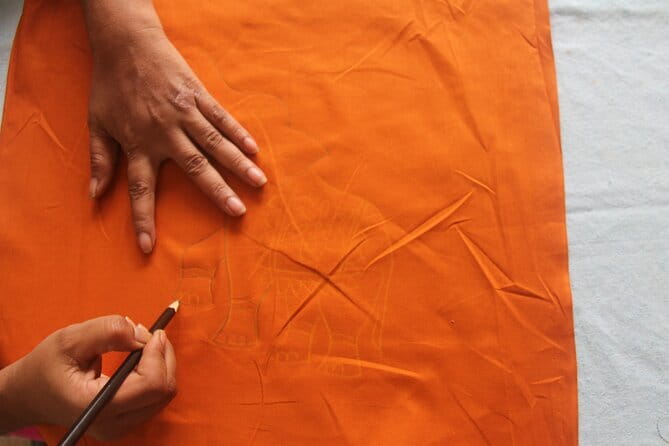
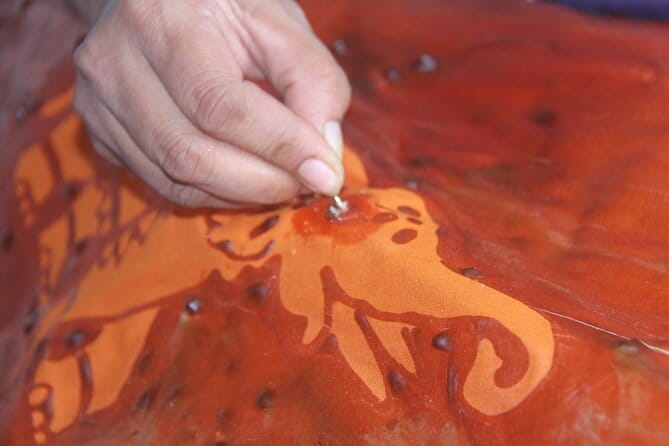
Next comes the core of batik: wax mixtures and waxing techniques. You will work with traditional tools, and you’ll learn that the wax is not just a barrier. It is a material you shape. You practice how wax is applied to create lines, shapes, and patterns.
The workshop also includes multiple methods so you can see how different effects come from different application styles. That includes wax spraying and stamping, alongside more direct line work.
Within the same drive of Kandy, but a different sort of day:
- Kandy Private Guided City Tour by Tuk Tuk
★ 4.9 · 1,307 reviews - From Kandy: Sigiriya Rock & Dambulla Cave Temple Adventure
★ 4.9 · 785 reviews - Kandy to Ella Train Tickets – Reserved Seats
★ 4.5 · 523 reviews - From Kandy: Pinnawala Day Tour
★ 4.8 · 331 reviews
Tools you will use: tjanting, funnel, and the Henry tool
The tool list matters because each tool tends to produce a different look.
- Funnel (often used for certain controlled pours and patterns)
- Tjanting (a classic tool for fine wax lines)
- Henry tool (another traditional tool included in the session)
You’ll likely get hands-on time with each, which helps you understand why batik artists choose a tool for the result they want. This is also where the small group size really pays off. Instead of watching one person use a tool, you get guided practice.
Designing Your Own Pattern, Not Copying Someone Else
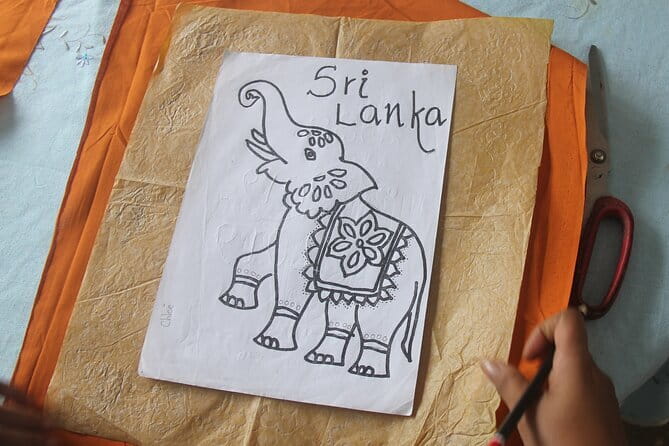
By the time you’re deep in the wax stage, the workshop shifts from technique to expression. You get to create your own design, guided by the instructor as you work. That is the part that turns a “class” into a keepsake.
You’ll work on elements like:
- Wax designing
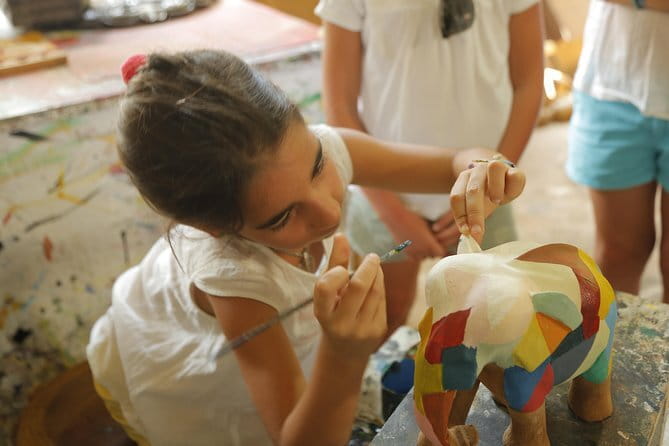
- Brush arts (so you can add detail beyond only lines and stamps)
- Cracking techniques (a classic batik effect)
Even if you are not a confident artist, cracking and brush arts are approachable when someone is standing next to you and showing what to do at each step. The key is that the instructor personally guides where you need help, rather than moving on when you are still figuring out the last step.
There is also a nice practical payoff here. Because you make the design yourself, your final cloth feels like a real souvenir. It is not just a product you bought. It is your process in fabric form.
The Dye Stage: Naphthol, Vat, and Reactive Methods Explained
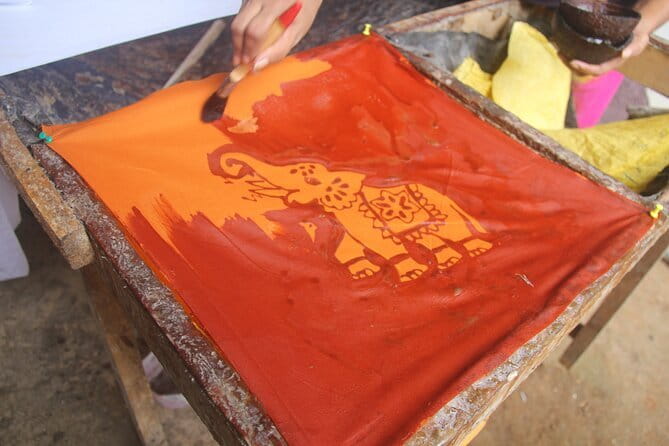
After waxing, you move into the dye portion, where batik becomes chemistry as much as craft. This workshop explicitly covers different dye approaches, including:
- Naphthol dyes
- Vat dyes
- Reactive dyes
You also learn about dye mixtures and techniques for how the colors behave. For you, the value is that you understand what to expect when you use different dye types. Color in batik is not only about picking shades you like. It is about how the dye reacts with the material and how the wax resist shapes the final pattern.
You’ll also encounter dye applications that connect back to earlier steps. For example, wax placement controls where color can move, and wax thickness or technique can influence texture. The workshop’s strength is that you are not learning dye as a standalone segment. You learn it as the next step in your own cloth.
De-Waxing: The Moment the Pattern Shows Up
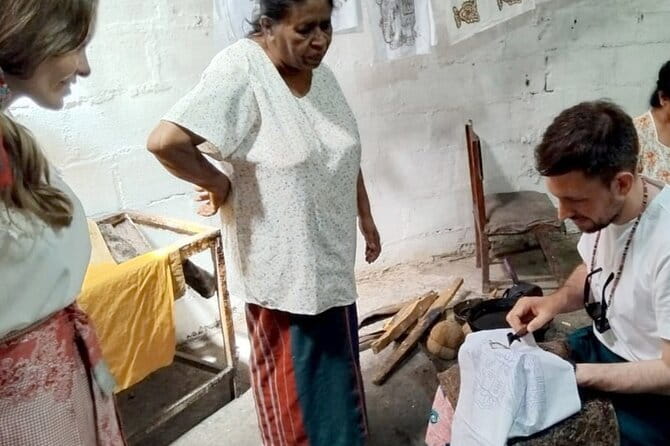
The final transformation happens with wax burning and wax boiling, sometimes described simply as de-waxing. This is the stage that turns wax marks into visible batik patterns.
In plain terms, you get to see the result of your work all at once. That is why this workshop is so satisfying, even if you started out nervous. Batik can feel slow while you are applying wax. When the wax comes off, your pattern suddenly makes sense as a finished textile.
This is also where the instructor’s role is important. You are working with a heat process at the de-waxing stage, so following their lead is crucial. The workshop is set up to guide you through the process from start to finish, so you are not left guessing what comes next.
Refreshments, Small-Group Energy, and Why It Feels Like a Visit
The workshop includes a refreshing herbal tea, and the overall vibe is friendly and home-based. Several people describe it as being welcomed into a family setting, where you can ask questions without feeling like you are interrupting.
That small-group limit of 10 travelers is a big deal for learning. Wax and dye techniques are hard to self-teach. You need quick corrections and immediate feedback, especially when you are handling wax and trying to get clean lines or controlled effects.
If you get anxious in group classes, this setup helps. It is structured, but it has breathing room. You are not stuck waiting for the instructor to finish teaching someone else.
Price and Value: What $28 Buys You in Real Materials

The price is $28 per person, and it is surprisingly good value for what you get.
You receive:
- All tools and equipment needed for the workshop
- Cloth and other materials you need
- All fees and taxes
Not included:
- Private transportation
- Lunch
When you think about it this way, the cost is paying for your hands-on access to the full materials and the instructor’s time. You are not just taking a photo with a finished batik. You are producing one piece and learning multiple techniques in the same session. That is hard to replicate on your own without sourcing tools, dyes, wax materials, and the know-how.
One practical point: because lunch is not included, you should plan to eat before or after. An early start at 8:00 am makes this easier. You can also treat it like your main morning activity and then plan an easy meal afterward.
What to Bring (and What to Expect About Mess)
Nothing in the details says the workshop provides aprons, extra clothes, or protective gear. So I’d plan like a real craft session is happening. Wax and dye can be messy. That does not mean you will walk out in a disaster, but it does mean you should wear clothes you do not mind getting stained.
You’ll likely want:
- Comfy clothes for a hands-on workshop
- Closed-toe shoes for standing and moving around
- A mindset that your first attempt might not be perfect, and that is part of the learning
Also, because the experience ends back at the meeting point, you are free to keep your morning plan flexible afterward.
Timing, Logistics, and Pairing It With Your Kandy Day
This is a half-day style activity at 3 hours 30 minutes long, starting at 8:00 am. The meeting point is Thalapiyannawa Road and the activity ends back at the same point.
Because transport is not included, you’ll want to handle getting there on your own. If you are already staying near central Kandy, this can be a straightforward add-on. If you are farther out, build extra time into your morning.
Pairing idea: make batik your “thinking and doing” activity. After that, you can shift into more casual sightseeing or a relaxed meal, since you will have spent the morning learning and creating.
Who Should Book This Batik Workshop?
This experience fits best if you want more than a quick souvenir stop. It’s ideal for:
- People who like hands-on workshops and want to learn technique, not just observe
- Travelers who enjoy asking questions and working at their own pace
- Anyone who wants a meaningful, personal souvenir from Kandy
It’s also a good option for a wide range of skill levels. The details say that most travelers can participate, and the instructor guides each participant where help is needed.
If you are short on time, you may also like that it is only a single session, not a multi-day course. But if you are expecting a totally hands-off experience, you might find this more work than you planned.
Should You Book This Batik Workshop in Kandy?
Yes, if you want a real craft session with a finish you can take home. The combination of small group size, hands-on wax and dye practice, and learning across the full process makes this one of the better-value cultural workshops in the Kandy area. Just plan for mess potential, and remember that lunch is not included.
If you love traditional crafts and you want to understand how batik is made, this is a morning well spent.
Recent additions in Kandy
- Udawalawe National Park Private Full-Day Safari★ 5.0 · 3 reviews
- Tuk Tuk Kandy City Tour By Local Guide★ 5.0 · 3 reviews
- White Water Rafting Kitulgala★ 4.5 · 4 reviews
- Tour to the Hidden Waterfalls around Kandy (Knuckles Range)★ 5.0 · 6 reviews
- Kandy City Tour & Famous Ambuluwawa Tower with Friendly Chauffeur★ 5.0 · 11 reviews
- Wasgamuwa National Park Safari from Kandy★ 5.0 · 3 reviews
- Waterfall Abseiling in Kitulgala★ 4.5 · 3 reviews
- Udawalawe Safari Day Tour From Kandy★ 4.5 · 3 reviews
Workshops, compared.

Organic cooking class sigiriya (kumara & family)
Read our review →

Sri Lankan Cooking Class with Neranji at Homestay
Read our review →

Traditional Jewelry Making Workshop with Transfers
Read our review →Browse the lists this tour appears in