
Reviewed · COOKING CLASSES
Kandy Village Cooking Class
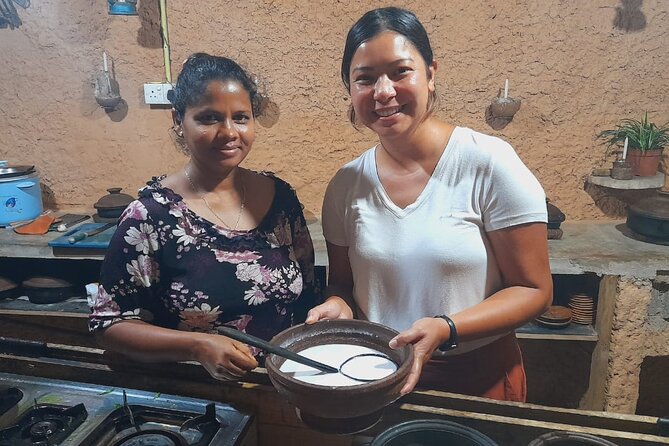
Curry starts at the market. This Kandy experience blends a guided ingredient hunt with traditional village cooking and real local hospitality in a home-style kitchen. You also get a taste of Kandy culture along the way, not just a classroom lesson.
I love that you do true hands-on cooking after picking what goes into the meal, including choosing five vegetables and deciding on chicken or fish. I also like that the goal is a full, satisfying meal you make yourself, not just samples. One thing to consider, if you’re tight on timing or expecting door-to-door certainty, is that transport details can vary, so confirm what return looks like for your exact pickup.
In This Review
- Quick things to know before you go
- Market shopping at Kandy Municipal Central Market: picking flavor building blocks
- The Kandy cultural stops while you’re in transit
- Heads into the countryside: what the village visit adds
- Hands-on Sri Lankan cooking: how the class works in real steps
- The meal: what you’re likely to eat after all that work
- Value check: is $25 per person worth it in Kandy?
- Who should book this (and who might not love it)
- Small logistics that matter: time, transport, and comfort
- Should you book the Kandy Village Cooking Class?
- FAQ
- Where is the Kandy Village Cooking Class meeting point?
- How long does the experience take?
- Do they pick you up?
- What do you do during the market visit?
- Is there a village visit included?
- What is the maximum group size?
- Is there any cultural activity besides cooking?
- Are service animals allowed?
Quick things to know before you go
- Start at Kandy Municipal Central Market, where you learn what to buy and why.
- Pick five vegetables, plus choose chicken or fish for your dishes.
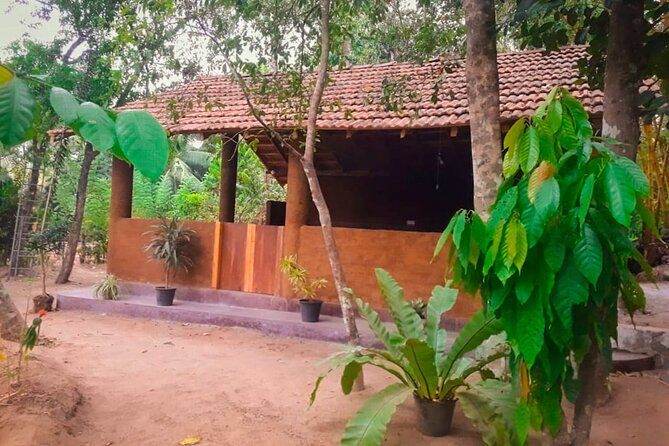
- Cook with a host family in a traditional home kitchen setting.
- Expect a multi-dish Sri Lankan meal, often including curries and finishing sweets.
- Small group size caps at 15 travelers, so it stays friendly and active.
Market shopping at Kandy Municipal Central Market: picking flavor building blocks
The experience starts at the Kandy Municipal Central Market, and that matters. Sri Lankan cooking depends on fresh produce and spice combinations, so the class begins by helping you choose ingredients that actually make the final food taste right. I like that you are not handed a shopping list, you learn to look, ask, and decide.
During the market visit, you’ll be guided to select five vegetables. You’ll also have the choice of preparing chicken or fish, which changes the direction of a few key dishes. Along the way, the guide explains spices and other ingredients as you see them in action, which is way more useful than reading recipe notes later.
Practical tip: wear clothes you can move in. Markets in Kandy are busy, and you’ll likely do a fair amount of walking and standing while you pick ingredients.
More Cooking Classes in Kandy
- Private Traditional Sri Lankan Cooking Class in Kandy with Hotel Transfers
★ 5.0 · 115 reviews - Cooking With Village Family
★ 5.0 · 104 reviews - Kandy Cooking Class with Granny
★ 4.9 · 95 reviews
The Kandy cultural stops while you’re in transit
This activity is built around being in Kandy, and the route includes several quick cultural stops. You’ll pass through areas like the city center and Kandy Lake, with a view point and a stop at Kandy Lake Club for a cultural dance show. There’s also a stop at the Temple of the Sacred Tooth Relic, one of the most recognizable landmarks in Kandy.
Because the whole experience is listed at about 3 hours, the cultural stops tend to be short. Think of them as context boosters, not a full sightseeing day. The real payoff is still the food portion, and the cultural stops help you understand what you’re eating in a bigger picture.
If you hate quick stops, you’ll still enjoy the food. If you love Kandy sights, this format can feel efficient because it combines food learning with key highlights in one go.
Heads into the countryside: what the village visit adds
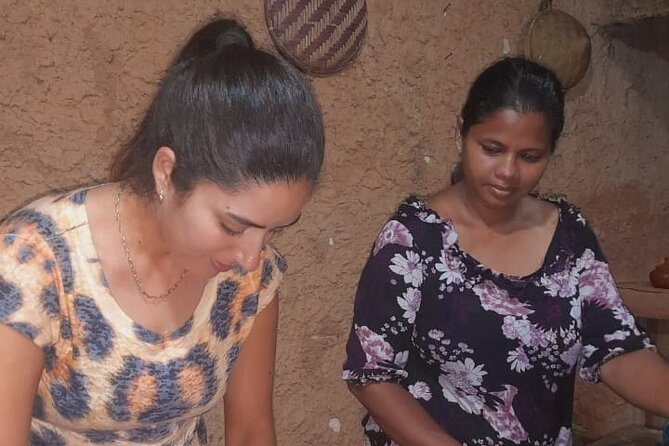
After the market choices, you move to the cooking area, described as a village setting and a nearby village visit as part of the day. This is where the experience turns from “lesson” to “local life.” One of the standout themes from the best feedback is the warm, family-style welcome, and the fact that the class happens in a real home environment rather than a staged facility.
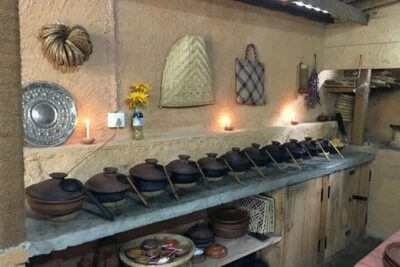
You might see a traditional clay house and an outdoor or traditional kitchen setup. People repeatedly highlight the natural setting, with the cooking space described as colorful, practical, and clearly part of everyday life. Even if you don’t care about decor, that setting affects the pace. It feels less like a performance and more like you’re joining a family for cooking and lunch.
Hands-on Sri Lankan cooking: how the class works in real steps
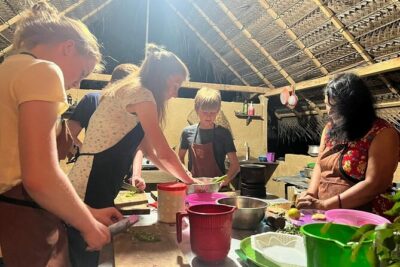
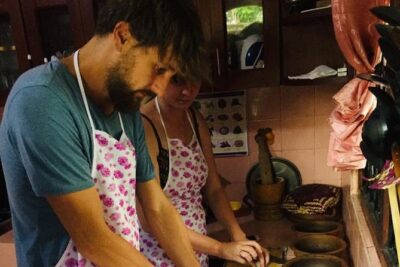
The cooking section is the heart of this experience. The format is simple: you prepare and cook dishes with guidance, you ask questions, and you get hands-on with the methods.
Here’s what I’d expect you to focus on while you cook:
- Spice use and balance, not just which spice goes in.
- Chopping and layering ingredients in the order that matters for flavor.
- Coconut milk and rice-and-curry style techniques, which show up often.
From guest feedback, the teaching is very interactive. You choose ingredients, then learn how to turn them into multiple dishes. Many classes include a wide spread of curries, with some reports mentioning around 8 to 11 dishes depending on the group and what you selected. That’s a lot for a half-day class, and it’s why the market part is so important. You’re not just cooking pre-bought ingredients, you’re learning how the shopping choices connect to the final meal.
Also, pay attention to coconut-based methods. Multiple reviews mention coconut milk made from scratch, which is exactly the kind of step that makes later home cooking work. Even if you never make it perfectly the first time, you’ll understand what the process is doing.
If you have dietary restrictions, plan ahead. One review mentioned no gluten-free options were available, but some ingredients were removed for the participant. If you need strict gluten-free cooking, tell the organizers clearly before you go and treat it as something you have to confirm, not assume.
Within the same drive of Kandy, but a different sort of day:
- Kandy Private Guided City Tour by Tuk Tuk
★ 4.9 · 1,307 reviews - From Kandy: Sigiriya Rock & Dambulla Cave Temple Adventure
★ 4.9 · 785 reviews - Kandy to Ella Train Tickets – Reserved Seats
★ 4.5 · 523 reviews - From Kandy: Pinnawala Day Tour
★ 4.8 · 331 reviews
The meal: what you’re likely to eat after all that work
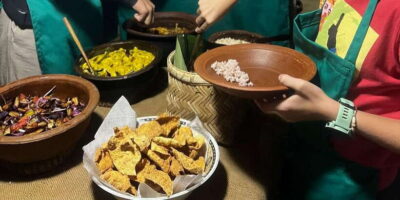
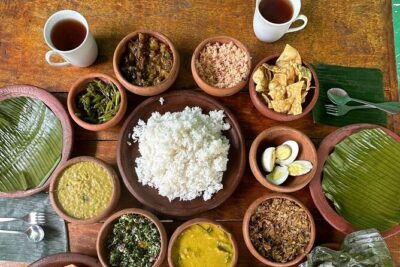
The goal is not just cooking practice. You finish by eating a full meal you helped create. Expect rice-and-curry style dishes and several curries, often including sambal and options that can feature aubergine and chicken or fish depending on what you choose at the market.
You’ll likely get a mix of flavors and textures, because the cooking session usually covers more than one style: something spicy, something creamy from coconut, and something that brings heat through chutney-style components. People also highlight that the food is genuinely good, not just a token meal after a quick demo.
Dessert may show up too. One review specifically called out caramel pancakes with coconut. You might not get exactly the same dessert every time, but it’s a common “finish strong” moment that makes the whole day feel complete.
Value check: is $25 per person worth it in Kandy?
At $25 per person, this class can be a standout value in Kandy, mainly because you get several components that usually cost more when bought separately:
- a guided market visit,
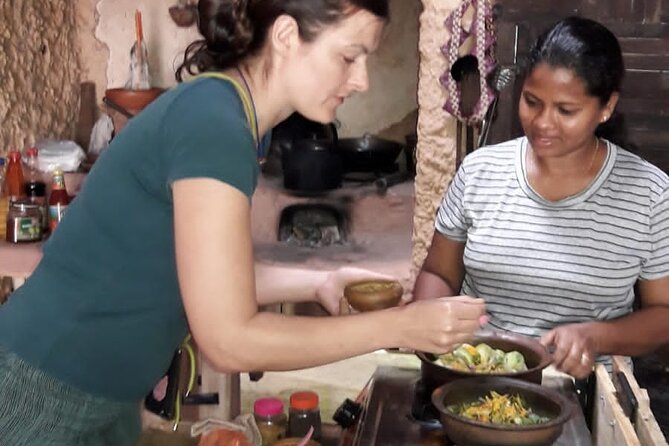
- hands-on cooking with real ingredients,
- and a shared meal made from what you purchased.
You’re also paying for local knowledge, which is hard to replicate with a recipe book. If you’ve ever cooked curry badly at home, you know the issue is often not the ingredients, it’s the order, the timing, and the way spices interact. This class tries to fix that through practice.
It’s not a “quick tasting tour.” It’s an active food-making workshop. If you enjoy cooking, you’ll likely feel the money was used well. If you want passive entertainment only, you may want something more sightseeing-focused instead.
One more value point: the group size max of 15 travelers helps keep it interactive. It’s easier to ask questions and get help while you’re chopping and stirring.
Who should book this (and who might not love it)
This is a great fit if you:
- want a practical food skill you can repeat at home,
- enjoy talking with a host family and learning through doing,
- like the idea of choosing ingredients at the market instead of following a fixed menu.
It might not be perfect if you:
- need a very rigid schedule with no cultural add-ons,
- get impatient with hands-on tasks,
- require strict dietary accommodations that are not clearly supported ahead of time.
If you’re traveling solo, you can still feel included. The best feedback repeatedly mentions that people felt welcomed and engaged, not left standing around.
Small logistics that matter: time, transport, and comfort
Pickup is offered from a designated point for the market visit, and the experience ends back at the meeting point. The experience is listed at about 3 hours, so expect a pace that moves from market to cooking without a long gap for rest.
Comfort items to pack:
- comfortable shoes for market walking,
- light layers, since kitchens and outdoor areas can feel different,
- and a reusable bag for any extra produce you might want to carry.
If you’re planning other Kandy stops the same day, keep a little buffer time. Market browsing and cooking take longer than you think when the guide is explaining spices and you’re actually participating.
Should you book the Kandy Village Cooking Class?
Yes, I think it’s worth booking if you want an authentic, hands-on Sri Lankan food experience in Kandy. The market ingredient selection, the family-style welcome, and the fact that you cook multiple dishes and then eat them are exactly the kind of travel payoff that stays with you.
Skip it only if you want a purely sightseeing outing or you’re not interested in cooking at all. Otherwise, this is one of the most practical ways to spend a few hours in Kandy, because you leave with food knowledge you can actually use.
FAQ
Where is the Kandy Village Cooking Class meeting point?
The class starts at Kandy Municipal Central Market, at 144 Central Maket, Kandy 20000, Sri Lanka. It ends back at the meeting point.
How long does the experience take?
The cooking class experience is listed at about 3 hours.
Do they pick you up?
Pickup is offered from a designated point for the market visit, and the experience includes pickup.
What do you do during the market visit?
You visit the local market, learn about spices and ingredients, and select five vegetables. You also choose either chicken or fish for the dishes.
Is there a village visit included?
Yes. The experience includes a brief visit to a nearby village.
What is the maximum group size?
The tour/activity has a maximum of 15 travelers.
Is there any cultural activity besides cooking?
Yes. The route includes a stop at Kandy Lake Club for a cultural dance show, plus a stop at the Temple of the Sacred Tooth Relic.
Are service animals allowed?
Yes, service animals are allowed.
Recent additions in Kandy
- Udawalawe National Park Private Full-Day Safari★ 5.0 · 3 reviews
- Tuk Tuk Kandy City Tour By Local Guide★ 5.0 · 3 reviews
- Kandy City Tour & Famous Ambuluwawa Tower with Friendly Chauffeur★ 5.0 · 11 reviews
- White Water Rafting Kitulgala★ 4.5 · 4 reviews
- Tour to the Hidden Waterfalls around Kandy (Knuckles Range)★ 5.0 · 6 reviews
- Wasgamuwa National Park Safari from Kandy★ 5.0 · 3 reviews
- Waterfall Abseiling in Kitulgala★ 4.5 · 3 reviews
- Udawalawe Safari Day Tour From Kandy★ 4.5 · 3 reviews
Cooking Classes, compared.
Organic cooking class sigiriya (kumara & family)
Read our review →
Sri Lankan Cooking Class with Neranji at Homestay
Read our review →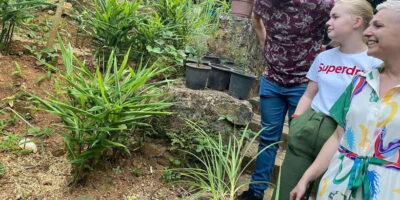
Browse the lists this tour appears in