
Reviewed · COOKING CLASSES
Ella: Sri Lankan Authentic Cooking expirience
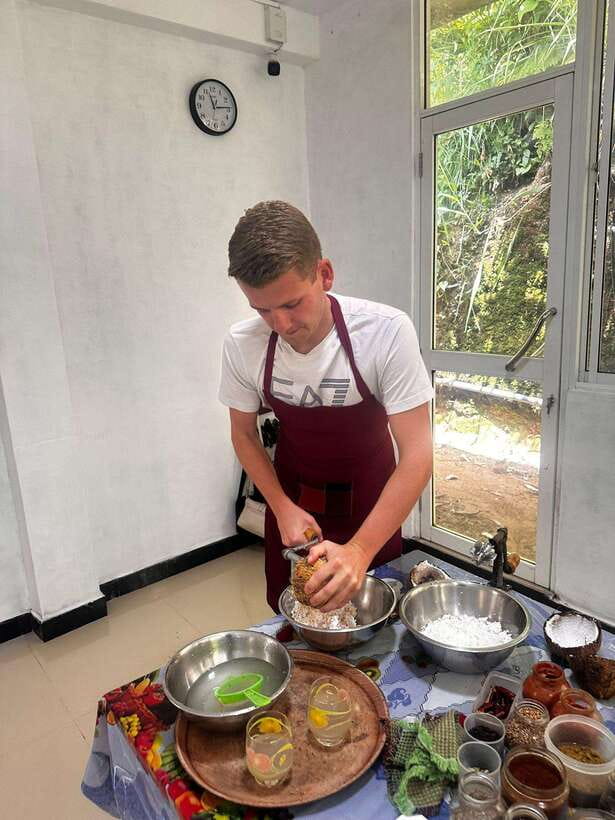
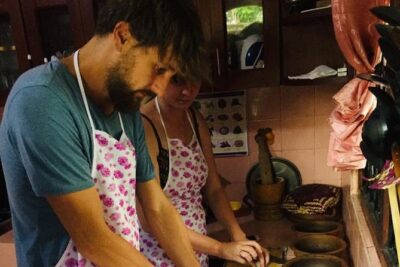
Coconut cracking kicks off the flavor lesson. In Ella, you cook in a traditional Sri Lankan home, learn the basics of Sri Lankan spices, and make a full meal including coconut roti. I love that you do real work, like preparing fresh coconut milk, not just watching. One consideration: you’re responsible for getting yourself to the class location, so factor in local transport.
You get a small-group setup (up to 10) with a fluent English-speaking local woman host, and you’ll be in the kitchen for about 2 hours. Expect multiple dishes, from rice and papadam to curries like dhal and pumpkin, then sit down to eat what you cooked.
In This Review
- Key points worth knowing
- Inside a traditional Sri Lankan home in Eastern Province
- Where the class starts: spices first, then your hands take over
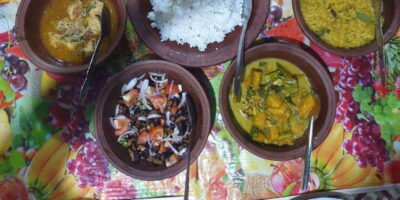
- The food you’ll cook: rice, modju, curries, sambal, roti, and papadam
- Rice, the backbone you’ll learn to pair
- Aubergine modju, a vegetable curry with coconut flavor
- Multiple curries with different flavor profiles
- Coconut sambal, bright and punchy
- Coconut roti, where technique beats guesswork
- Papadam, the easy crunch that makes the meal feel complete
- Why the coconut milk work changes everything
- Eating what you cooked: dinner at the end of class
- Recipes by email: your real souvenir is the cooking you can repeat
- Price and value: $22 for a full home-cooked lesson
- Who this class is best for
- Quick practical tips so you enjoy the full 2 hours
- Should you book Ella: Sri Lankan Authentic Cooking experience?
- FAQ
- How long is the cooking class?
- Where does the class take place?
- What is the price per person?
- What dishes are included in the lesson and meal?
- Is the class hands-on or mostly watching?
- Who teaches the class, and what language is it in?
- Is upcountry black tea included?
- Do you get recipes after the class?
- Is transportation provided to and from the class?
- Can I cancel or change plans?
Key points worth knowing
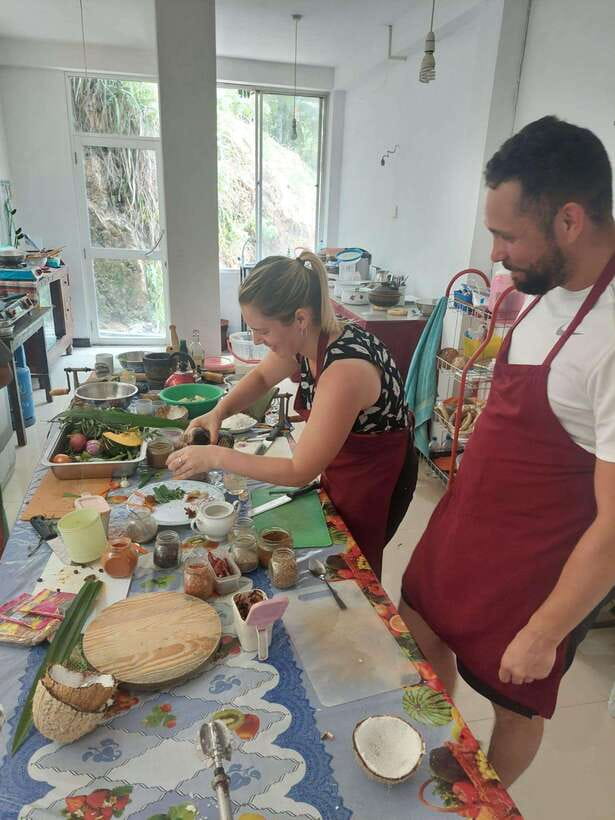
- Traditional home setting: You cook in an actual Sri Lankan household kitchen, not a studio.
- Hands-on spice learning: You get a brief intro to Sri Lankan spices, then use them immediately.
- Full spread of dishes: Rice, aubergine modju, dhal curry, pumpkin curry, beans curry, coconut sambal, coconut roti, plus papadam.
- Coconut work from scratch: You crack coconuts and help prepare fresh coconut milk for dishes.
- Small group vibe: Limited to 10 participants, so you get chances to participate.
- Recipes after class: You receive recipes by email, so you can cook again at home.
Inside a traditional Sri Lankan home in Eastern Province
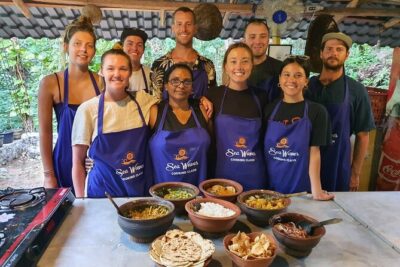
This cooking class, run by Honey Bee Garden Cooking Class, is based in the Eastern Province of Sri Lanka. The setting is a traditional Sri Lankan home, which matters because it changes the whole feel of the experience. You are learning how home cooks actually build flavor, not how a demo kitchen performs.
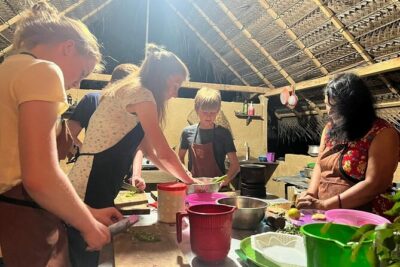
The group stays small, capped at 10. That size is big enough to make it lively, but small enough that your host can guide you while you cook. The class runs about 2 hours, and it’s taught in English by the local woman who hosts the session. From the way the class is described, the host is hands-on with explanations, and she also keeps things moving so you can complete the full meal.
More Cooking Classes in Ella
- Ella: Traditional Sri Lankan Cooking Class
★ 4.9 · 788 reviews - Ella: Sri Lankan Cooking Class with Neranji at Homestay
★ 5.0 · 276 reviews - Ella : Cooking class with amazing Spice Garden Tour
★ 5.0 · 239 reviews
Where the class starts: spices first, then your hands take over
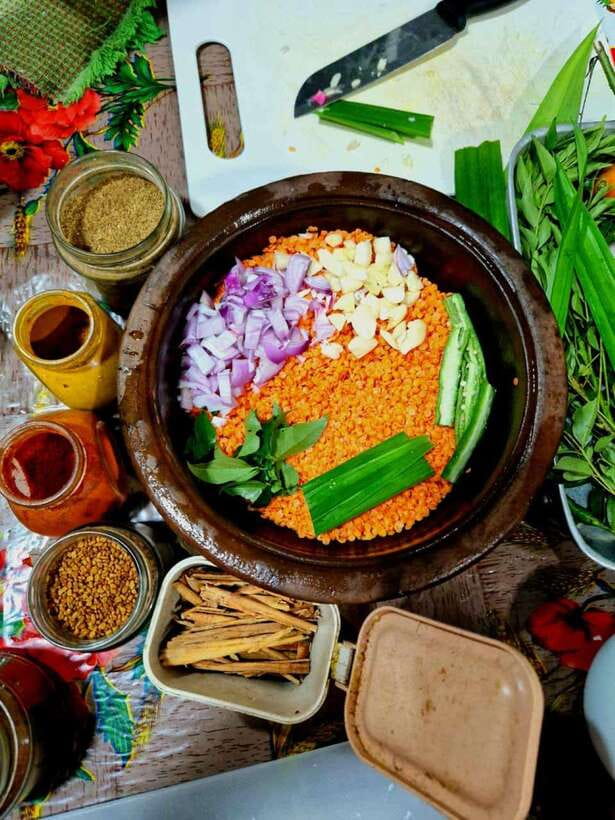
You begin with a brief introduction to Sri Lankan spices. The goal is practical. Instead of memorizing names, you learn how spices function in curries and condiments, and how the same spice can behave differently depending on what you pair it with.
Then the class turns hands-on quickly. You don’t just chop. You participate in the workflow. Some people start in vegetable prep. Others get involved in sauce building. And because Sri Lankan cooking leans heavily on coconut, you’ll likely handle the coconut steps, including cracking coconuts, scraping them, and helping prepare fresh coconut milk.
That matters for two reasons:
- You understand what makes coconut-rich dishes taste specific, because you see the process that creates the base.
- You build confidence. If you can learn the coconut step in a real home, the rest of the curries start to feel more repeatable later.
The host encourages you to actively take part, and private sessions are available on request with time adjustments if you want a slower pace or a more tailored menu.
The food you’ll cook: rice, modju, curries, sambal, roti, and papadam
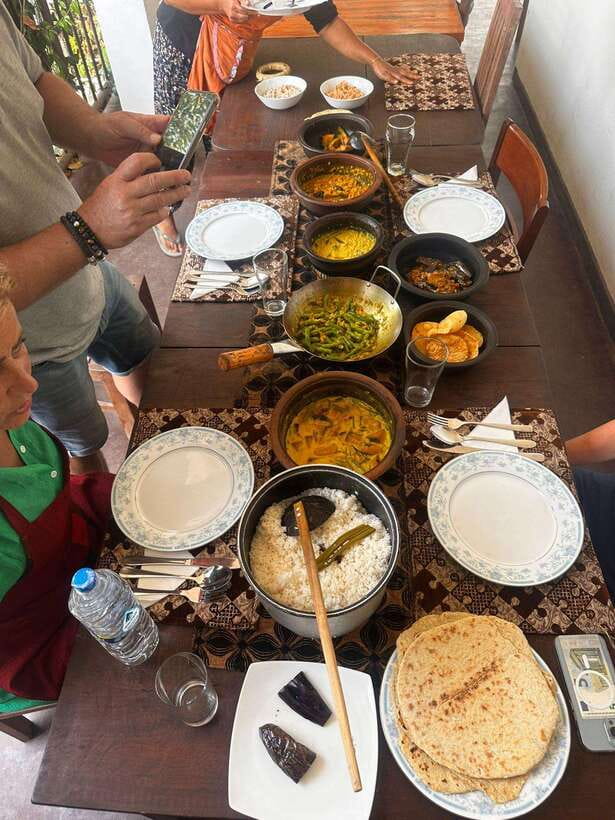
This is not a single-dish class. You’ll work through a full table of Sri Lankan comfort food. Based on the listed menu, here’s what you can expect to cook:
Rice, the backbone you’ll learn to pair
Rice is included in the meal, and it’s one of the foundations for enjoying curries properly. Even if you already cook rice at home, learning it in this context helps you understand timing and portioning so everything lands together at the end.
More cooking classes in Ella Sri Lanka:
- Ella Sri Lanka : Mom’s Kitchen Cooking class
★ 5.0 · 113 reviews - Private cooking class – Personalized classic menu
★ 5.0 · 5 reviews - Organic cooking class sigiriya (kumara & family)
★ 5.0 · 650 reviews - Kandy Village Cooking Class
★ 5.0 · 536 reviews
Aubergine modju, a vegetable curry with coconut flavor
The class includes aubergine modju. Since the name points to eggplant, you can expect to work with that vegetable as part of a spiced curry style that fits the Sri Lankan table. You’ll be learning how eggplant softens into the sauce rather than staying crisp.
Multiple curries with different flavor profiles
You’ll prepare several curries, including:
- Dhal curry
- Pumpkin curry
- Beans curry
Having more than one curry is a big value point. You’ll see how spice blends shift across ingredients like lentils, pumpkin, and beans. It also makes dinner at the end feel like a proper spread, not a “taste and go” situation.
Coconut sambal, bright and punchy
Coconut sambal is included, and this is where you’ll likely notice how coconut can taste both soothing and lively. Sambal-style sides often bring heat and tanging flavors, and in a coconut sambal you’ll be working toward that balance.
Coconut roti, where technique beats guesswork
Coconut roti rounds out the meal. This is one of the dishes that tends to benefit from step-by-step help because the dough texture and cooking method can make or break the results. You’ll be learning it in the classroom, with ingredients and equipment provided.
Papadam, the easy crunch that makes the meal feel complete
Papadam is also part of the meal. You might find it becomes the “I get it” moment, because it instantly turns a plate of curry into a full Sri Lankan dining experience.
Why the coconut milk work changes everything
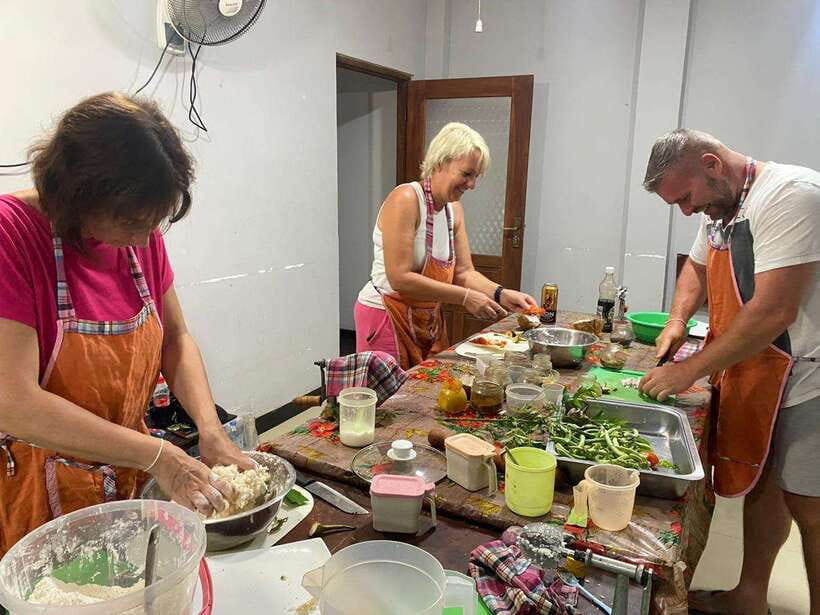
A lot of cooking lessons stop at seasoning. This one leans deeper into the ingredient base, especially coconut. You’ll be involved in cracking coconuts, scraping them, and helping prepare fresh coconut milk. That’s not just a fun cultural activity. It directly affects how the final curries taste.
Fresh coconut milk can feel different from packaged alternatives. It tends to give curries that creamy body and a flavor that stays more “coconut-forward.” For dishes like dhal curry and the curry styles in your class spread, that coconut base is a major part of why the meal works as a set.
If you take one takeaway from this class, I’d make it this: learn the base first. When you understand the coconut step, you’ll be better able to adjust spices and vegetables later, even if you can’t source every Sri Lankan ingredient at home.
Eating what you cooked: dinner at the end of class
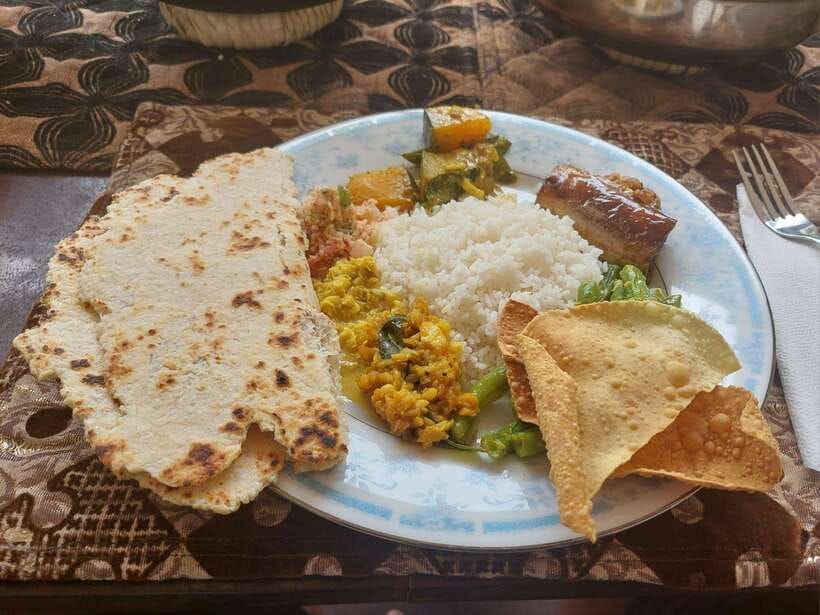
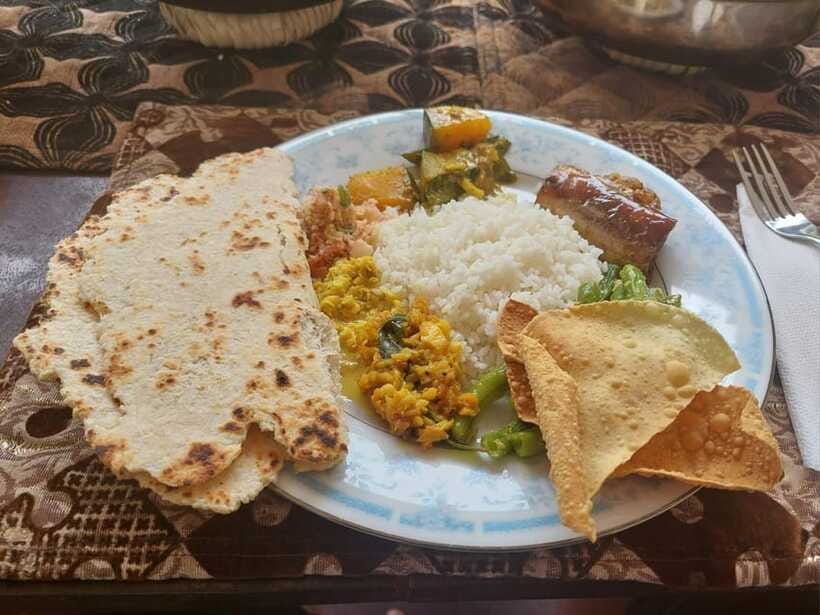
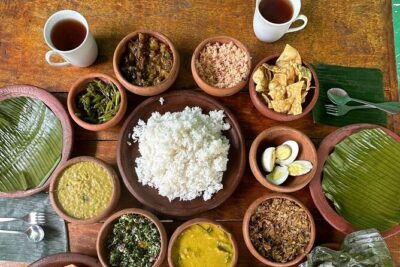
At the end of the session, you sit down and eat the dishes you prepared. The meal includes rice, aubergine modju, beans curry, dhal curry, pumpkin curry, coconut sambal, coconut rotti, and papadam.
This part is practical. It’s not a separate “tourist lunch” somewhere else. You get to judge what you made while it’s still fresh and at its best. You can also taste and compare the curries you worked on, so the lesson sticks faster.
Dietary needs are mentioned as something you should flag in advance. The class is described as being able to accommodate dietary restrictions if you tell the host ahead of time. If you’re vegetarian or have an allergy, message your host before you arrive so adjustments can be made early.
Recipes by email: your real souvenir is the cooking you can repeat
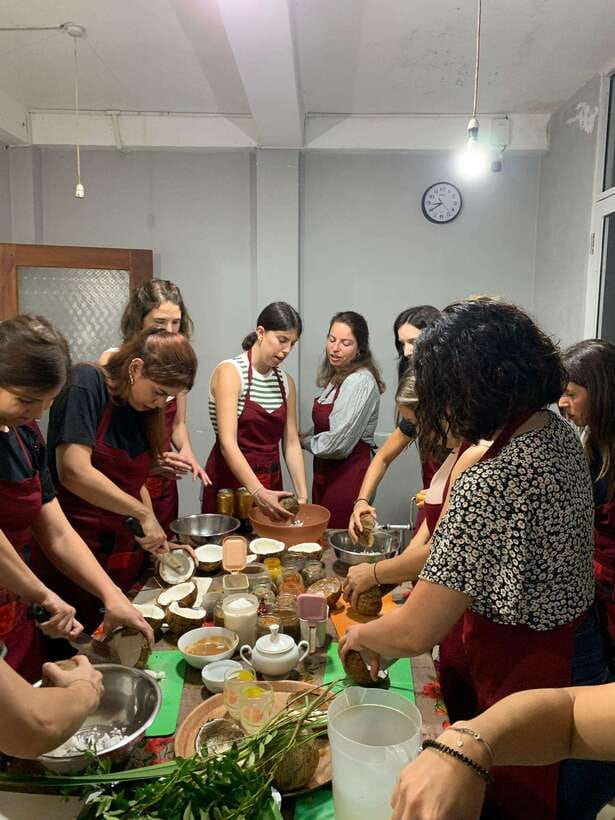
You don’t just leave with memories. You receive recipes for the dishes you learned, sent via email after the class. That’s a big deal if you want your holiday to keep paying off after you get home.
Even if you can’t find the exact ingredients, the recipe list plus what you practiced in class can help you recreate the structure:
- how spices get combined
- how curries are built around their base
- how coconut-based elements connect across multiple dishes
Also, there’s practical value in timing. Since you cook several dishes in one session, you’ll see how different parts of the meal work together. That makes it easier to plan a dinner at home that doesn’t collapse into chaos.
Price and value: $22 for a full home-cooked lesson
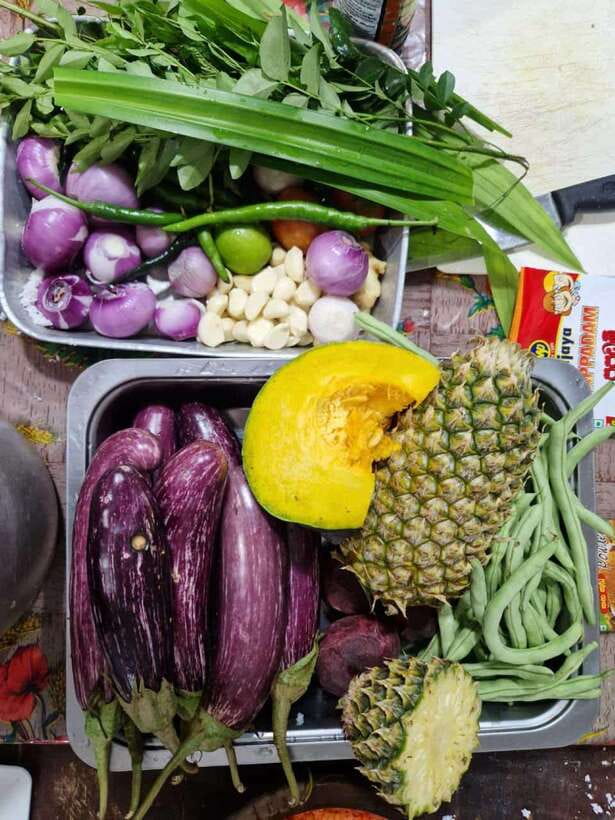
At $22 per person for a 2-hour class, this is good value if you’re aiming for hands-on cooking rather than sightseeing-only time. Here’s why it feels like more than a bargain class:
- Ingredients and equipment are included.
- You make multiple dishes, not a single demo plate.
- You eat the meal at the end.
- You get recipes by email to keep learning.
The main cost consideration isn’t the class price. It’s getting yourself to the location. Transportation to and from the cooking class isn’t included, so plan for local travel costs if you’re staying farther away.
If you’re comparing value, think in terms of meal quality plus skill gained. For the same price elsewhere, you might get a meal. Here you get a meal plus the cooking process behind it.
Who this class is best for
This cooking class is a strong fit if you want real food skills and a home-kitchen experience. It’s especially good for:
- Couples or small groups who want a shared activity in English and a meal at the end
- Food-focused travelers who like learning what goes into dishes, not just tasting them
- Vegetarian-minded diners, since dietary restrictions are something the host asks you to inform ahead of time
- Wheelchair-access needs, since wheelchair accessibility is listed
It also works well if you’re new to cooking. The class is designed for participation, and the included equipment and ingredients remove the guesswork.
If you hate getting your hands dirty or you want a purely observational experience, you might find the active format less comfortable. This one is built around participation.
Quick practical tips so you enjoy the full 2 hours
A few common-sense moves will help you make the most of the session:
- Plan your transport first. Transportation isn’t included, so confirm how you’ll get there from your base in advance.
- Tell the host about allergies and dietary needs early. The class explicitly asks you to inform the host in advance.
- Request upcountry black tea if you want it. It’s included upon request.
- Wear something you can work in. You’ll be chopping, stirring, and likely handling coconut.
- Go hungry for the end of class. This is a full meal, and it’s part of the learning loop.
If you’re booking a private session on request, you can ask for time adjustments based on how you learn. Private sessions are listed as available, which can help if you want a calmer pace or extra attention.
Should you book Ella: Sri Lankan Authentic Cooking experience?
Yes, I’d book it if your goal is a hands-on introduction to Sri Lankan cooking in a real home setting. The combination of spice learning, coconut milk prep, multiple curries, coconut roti, and a sit-down meal gives you both skills and a satisfying dinner in one go.
Skip it only if you already know you want a passive experience, or if you don’t want to handle the logistics of getting to the location yourself. Otherwise, this is the kind of class that leaves you with real technique, not just photos.
FAQ
How long is the cooking class?
The class lasts 2 hours.
Where does the class take place?
It takes place in the Eastern Province of Sri Lanka, in a traditional Sri Lankan home.
What is the price per person?
The price is $22 per person.
What dishes are included in the lesson and meal?
You’ll prepare and eat dishes including rice, aubergine modju, dhal curry, pumpkin curry, beans curry, coconut sambal, coconut rotti, and papadam.
Is the class hands-on or mostly watching?
It’s hands-on. Guests are encouraged to actively participate in the cooking process.
Who teaches the class, and what language is it in?
The instructor is an English-speaking local host.
Is upcountry black tea included?
Upcountry black tea is included upon request.
Do you get recipes after the class?
Yes. Recipes are sent via email.
Is transportation provided to and from the class?
No. Transportation to and from the cooking class location is not included.
Can I cancel or change plans?
Free cancellation is available up to 24 hours in advance for a full refund. Reserve now & pay later is also offered.
Recent additions in Ella Sri Lanka
- Zip Lining in Ella★ 4.5 · 16 reviews
- Yala National Park – Safari Tour with Hotel / Accommodation★ 4.7 · 31 reviews
- Yala Block 5: Private Morning or Evening Safari★ 4.3 · 4 reviews
- Sri Lanka private tour package 10 Days. and luxury hotel★ 5.0 · 3 reviews
- Sri Lanka Private 10-Day Round Tour Car, Guide, Hotels, Food★ 4.8 · 10 reviews
- Private cooking class – Personalized classic menu★ 5.0 · 5 reviews
- Get a private driver for day tours around Sri Lanka★ 5.0 · 18 reviews
- From Tangalle/Hiriketiya: Ella Transfer & Udawalawe Safari★ 4.7 · 12 reviews
Cooking Classes, compared.
Organic cooking class sigiriya (kumara & family)
Read our review →
Sri Lankan Cooking Class with Neranji at Homestay
Read our review →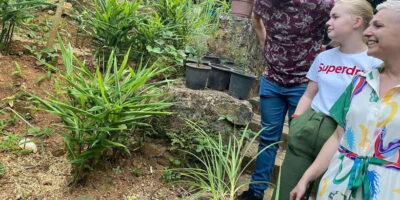
Browse the lists this tour appears in