
Reviewed · ANCIENT CITY TOURS
Colombo To Polonnaruwa,Dambulla,Sigiriya & Kandy 3 Day Tour
Sri Lanka’s Cultural Triangle hits hard in just three days. This Colombo to Polonnaruwa, Dambulla, Sigiriya, and Kandy tour strings together UNESCO World Heritage sites you can explore at your own pace. I like that you get pickup and an English-speaking driver, so you spend less time figuring out logistics and more time actually looking at what matters. The one thing to plan for is that entrance fees and meals are not included, so your day budget will grow once you’re on the ground.
You’ll start early, then bounce between four major heritage areas, with time set aside for Polonnaruwa’s ruins, Sigiriya’s rock fortress, Dambulla’s cave temple complex, and Kandy’s Temple of the Sacred Tooth Relic plus the Royal Botanical Gardens. I also like the added stop for learning about Ayurveda, herbs, and spices, because it adds a practical, sensory layer beyond temples and stone. One consideration: the schedule is packed, with long sightseeing blocks, so if you hate early starts and prefer slow travel, you may feel rushed.
In This Review
- Quick highlights
- How this 3-day tour works, without feeling like a cattle run
- What you should pack mentally
- Day 1 in Polonnaruwa: Royal Palace first, then Vatadage
- The Royal Palace area: where the scale shocks you
- Polonnaruwa Vatadage: Buddhist architecture in a defined quadrangle
- A practical tradeoff
- Day 2: Sigiriya’s rock fortress and Dambulla’s cave temples
- Sigiriya: ancient urban planning, seen from above
- Dambulla Cave Temple: five caves, lots of Buddha imagery
- Watch your energy
- Day 3 in Kandy: Temple of the Sacred Tooth Relic plus Royal Botanical Gardens
- Temple of the Sacred Tooth Relic: the tooth of Buddha in gold
- Royal Botanical Gardens: more than pretty scenery
- A balanced final day, if you manage your pace
- The Ayurveda garden stop: herbs, spices, and everyday takeaways
- Price and value: what $340 covers, and what you must budget
- How to judge value for your group
- Guide support and real-world experience: what to expect
- Who this tour suits best, and who might want a different style
- Should you book this Colombo to Polonnaruwa, Dambulla, Sigiriya, and Kandy 3-day tour?
- FAQ
- What time does pickup start?
- What’s included in the price?
- What is not included?
- Which UNESCO World Heritage sites does the tour include?
- Do you get a guide inside the sites?
- Can I get a refund if I cancel?
Quick highlights
- Self-paced site exploring while the driver handles timing and transport
- Four UNESCO stops across Polonnaruwa, Sigiriya, Dambulla, and Kandy
- Sigiriya first-timer friendly with a full block to take in the fortress viewpoint
- Dambulla Cave Temple layout focused on five main caves and major Buddha imagery
- Kandy plus nature with the Royal Botanical Gardens and plant diversity
- Ayurveda garden visit for a hands-on look at herbs and spices
How this 3-day tour works, without feeling like a cattle run
This is a private 3-day setup, meaning it’s just your group and you’re not merging with strangers all day long. You also get an air-conditioned vehicle and an English-speaking driver, which matters in Sri Lanka when roads, traffic, and timing can shift. The big design choice here is that you explore the UNESCO sites independently, without a guide talking at you in every room.
That independence is a plus if you like to move at your own speed. Some people want to linger on carvings and inscriptions. Others want photos, wide views, and then a quick lap. This format works well for both.
At the same time, it’s still structured. Expect a very early start (6:00 am), plus blocks of time at each stop. The itinerary lists substantial time at each site, so you should treat this as an active itinerary, not a relaxed sightseeing cruise.
More Dambulla trips:
- From Colombo: Sigiriya & Dambulla Day Tour with Safari
★ 4.7 · 189 reviews - From Colombo: Sigiriya and Dambulla Day Trip and Safari
★ 4.5 · 132 reviews - Sigiriya and Dambulla Private Full-Day Tour
★ 4.3 · 120 reviews
What you should pack mentally
Because meals and entrance fees aren’t included, you’ll want to think ahead:
- Budget extra for entry tickets once you arrive
- Plan lunch on-site, since you’ll need to buy it
- Bring a water bottle and sun protection, especially for Sigiriya and outdoor segments in Polonnaruwa and Kandy
Day 1 in Polonnaruwa: Royal Palace first, then Vatadage
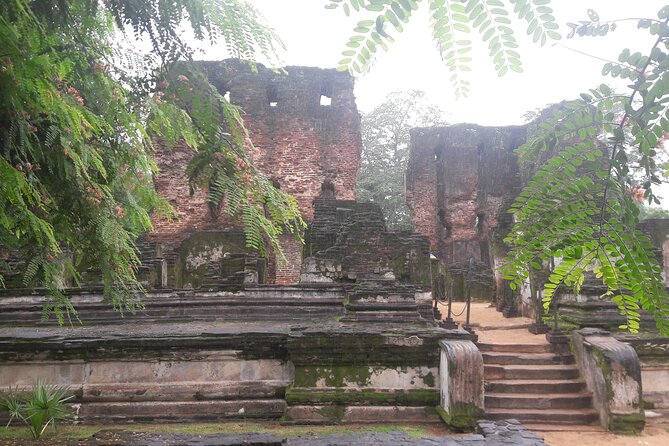
Polonnaruwa is one of Sri Lanka’s best places to see how power and religion shaped the built environment. You’re not just visiting one temple. You’re walking through a former city layout where stone structures still hint at court life and Buddhist practice.
The Royal Palace area: where the scale shocks you
The day opens at Polonnaruwa’s Royal Palace of King area, described as a striking emblem of grandeur. Even if you don’t know every detail of the reign, the site gives you something useful quickly: scale. This is the kind of place where you can feel how ambitious ancient urban planning was, and how the court expected visitors and residents to move through space.
One smart way to use your time here is to take a slow perimeter loop first, then return to the spots that catch your eye. That keeps your photos honest and helps you avoid rushing while still seeing the highlights.
More Sigiriya bookings:
- Private Day Trip to Sigiriya, cave and National park Safari Tour
★ 4.5 · 143 reviews - Sigiriya Rock and Dambulla Cave All Inclusive Private Day Trip
★ 4.5 · 80 reviews - Sigiriya Rock Fortress and Cave Temples Day Trip
★ 4.5 · 73 reviews - 03 Days Highlights Of Sigiriya,Kandy,Nuwara Eliya ,Ella & Udawalawe
★ 5.0 · 61 reviews
Polonnaruwa Vatadage: Buddhist architecture in a defined quadrangle
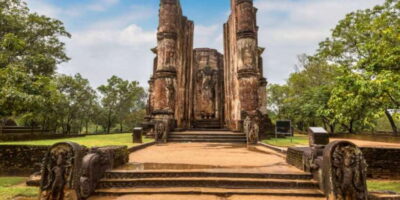
Next up is Polonnaruwa Vatadage, a well-preserved vatadage in the Dalada Maluwa quadrangle. Vatadages are typical Buddhist structures in Sri Lanka, and here you get a clear example of how these buildings functioned as part of a broader religious complex.
The Vatadage stop is valuable because it shifts your brain from royal planning to ritual space. If you’re the type who enjoys noticing design patterns, this one is good. It also tends to be easier to experience at your own pace than a site where you feel pressured by a crowd or a timed guided tour.
A practical tradeoff
Day 1 is long. Two major Polonnaruwa stops plus travel time can feel intense, even though each stop is allocated around a half-day block. If you want downtime, build it in mentally. Don’t schedule extra plans later that evening.
Day 2: Sigiriya’s rock fortress and Dambulla’s cave temples
Day 2 is the day most people talk about. It’s iconic Sri Lanka, with a strong mix of views and sacred interiors.
Sigiriya: ancient urban planning, seen from above
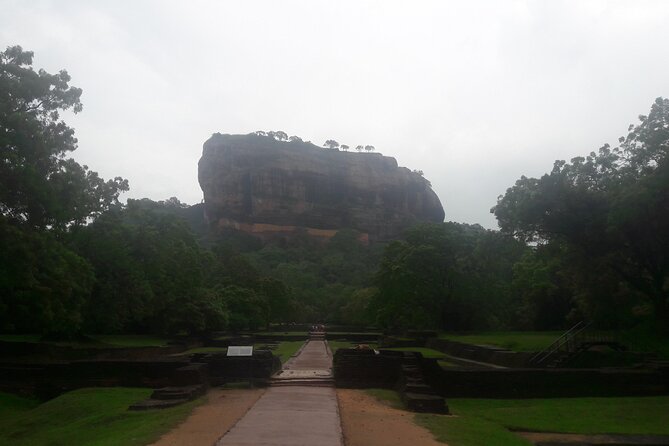
Sigiriya, the Ancient Rock Fortress is UNESCO listed and often treated like the must-see of the country. The key value of going is not only the dramatic rock. It’s the way Sigiriya demonstrates ancient urban planning, meaning it wasn’t a random fort. It was an engineered place, built to control movement and to support a whole life up on the rock.
You’ll want to pace yourself. The site includes both steep and uneven walking depending on what parts you choose to cover, and the heat can hit if you’re not ready. Start early, take breaks when you need them, and treat views as your main reward.
A good strategy for self-paced exploring is to choose your priorities before you go: viewpoints first, then remaining areas. That keeps you from getting distracted and skipping the best sightlines.
Dambulla Cave Temple: five caves, lots of Buddha imagery
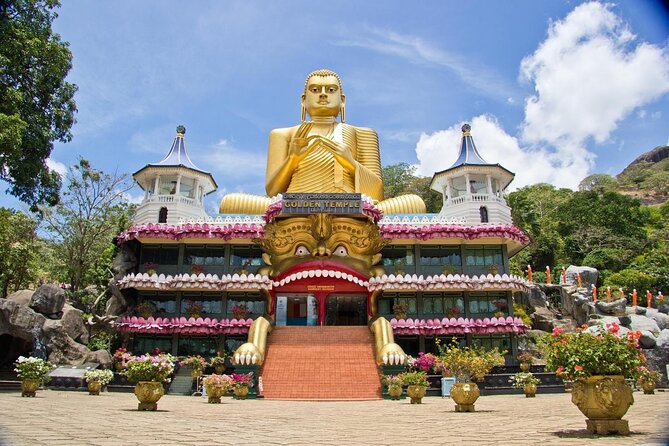
Then you move to Dambulla Cave Temple, described as the best-preserved and most extensive cave temple complex in Sri Lanka. What stands out in your itinerary description is the structure: five main caves, with numerous statues of Lord Buddha, plus some figures of kings and statues of Lord Vishnu.
That mix gives Dambulla extra weight. It’s not only a single-style Buddhist shrine. It’s a layered visual record that can help you understand how different forms of devotion sat side by side. The cave setting also helps in real travel terms, because you’re often moving from intense daylight into cooler, enclosed interiors.
Watch your energy
Sigiriya plus Dambulla in the same day is ambitious. You’ll be doing outdoors and then indoors, and you’ll likely feel the day in your legs. If your group has different stamina levels, decide early who will prioritize the climb and who will prioritize slower walking.
Day 3 in Kandy: Temple of the Sacred Tooth Relic plus Royal Botanical Gardens
Day 3 gives you both the sacred center of Kandy and a calmer change of pace with gardens and plants.
Temple of the Sacred Tooth Relic: the tooth of Buddha in gold
Your first stop is the Temple of the Sacred Tooth Relic, also called Sri Dalada Maligawa. This is presented as the most sacred Buddhist temple in the world, and it houses the tooth of Buddha in a golden chamber. It sits within the royal palace complex, which matters because it links religious importance to the former power center of the city.
If you like to understand why a place feels important, this is one of those stops. Even when you’re not focused on every ritual, you can sense the atmosphere is built around veneration and tradition.
Royal Botanical Gardens: more than pretty scenery
Next is the Royal Botanical Gardens, located 5 km west of Kandy. The standout detail is scale and variety: the gardens are home to more than 4,000 species of plants, including orchids, spices, medicinal plants, and palm trees.
This is where your senses get practical. Instead of only looking at carvings and ruins, you’re seeing living plants linked to traditional uses. And it pairs nicely with the Ayurveda theme in the broader tour concept.
If you want photos, go slow on pathways where you can frame multiple layers. If you want understanding, spend time near areas that focus on medicinal or spice plants, since that ties into what you learn later at the Ayurveda garden visit.
A balanced final day, if you manage your pace
Kandy can feel like a big finish line. The best way to enjoy it is to keep your expectations realistic: you’ll see major icons, but you won’t have infinite time to wander. Use your allocated blocks well, take short rests, and don’t cram extra stops after the last garden walk.
The Ayurveda garden stop: herbs, spices, and everyday takeaways
One of the tour’s most interesting additions is the Ayurvedic garden visit, where you learn about Ayurveda, herbs, and spices. This is valuable because it adds context for what you’ll see in daily life across Sri Lanka. Even if you don’t follow a specific herbal routine, you’ll start to recognize that plants here are not just decoration. They’re part of how people understand health, flavor, and everyday remedies.
Since you won’t have a guide driving your questions at each UNESCO site, the Ayurveda portion is a chance to focus your attention on something more interpretive. Expect it to be sensory, with smells and textures likely playing a bigger role than stone carvings.
Practical tip: take a few notes on what you find interesting. Later, when you smell a spice or tea in a shop, you’ll have a reference point.
Price and value: what $340 covers, and what you must budget
At $340 per person, this tour is priced like a logistics-first package. It includes:
- Fuel surcharge
- An English-speaking driver
- Pickup and drop-off from designated meeting points
- Transport by air-conditioned vehicle
It also offers group discounts and comes with a mobile ticket. The big value here is that you’re paying for smooth movement between four UNESCO sites without needing to drive yourself.
What is not included:
- Lunch or other meals and drinks
- Accommodation
- Entrance fees
This is the part you should take seriously when doing value math. Because entrance fees and meals are not included, your total trip cost depends on how you eat and what you pay at each site. Accommodation can also change your final spend a lot.
So is $340 a good deal? For many people, yes, because the tour covers transport and driver service across long distances. The price becomes less attractive if you were already planning to self-drive or if your group wants a lot of added comfort upgrades outside the stated inclusions.
How to judge value for your group
Before you book, ask yourself:
- Do you want an AC vehicle and a driver handling the route?
- Are you okay exploring independently rather than having a guide explain every monument?
- Can your group handle a packed schedule from 6:00 am onwards?
- Do you budget separately for meals, lodging, and entry tickets?
If most answers are yes, this is a solid way to cover huge sights with less friction.
Guide support and real-world experience: what to expect
Even though you explore on your own, the driver matters. Having an English-speaking driver makes a difference when you need help finding entrances, dealing with timing, or getting practical direction.
One guide name that comes up in the company’s prior experiences is Terrance, which suggests the staff team can be friendly and attentive. I can’t promise who you’ll get for your dates, but it’s a good sign the provider cares about service quality.
Also, you should consider what that means for your experience: you’ll likely get helpful coordination more than a lecture. If you want a strict commentary tour, this may not be the best fit. If you like autonomy and personal pacing, it’s a good match.
Who this tour suits best, and who might want a different style
This 3-day plan fits best if you:
- Want to hit four UNESCO sites without sacrificing mobility
- Prefer to explore at your own pace rather than follow a constant narration
- Like history and sacred sites but also want a nature break in Kandy
- Want an Ayurveda education angle alongside the monuments
- Travel with family or friends and want a private group setup
You might consider another format if you:
- Get cranky with early starts and long days
- Want every stop guided and explained
- Have limited mobility and find uneven walking tough at major heritage sites
A packed itinerary is not automatically bad. It’s only good if it matches your travel personality.
Should you book this Colombo to Polonnaruwa, Dambulla, Sigiriya, and Kandy 3-day tour?
I think you should book if your goal is clear: see the big UNESCO hits fast, with comfortable transport, and keep site time flexible enough to linger. The combination of Polonnaruwa ruins, Sigiriya’s iconic rise, Dambulla’s cave complex, Kandy’s sacred tooth relic, and the Botanical Gardens gives you variety you don’t always get on heritage-only trips. Add the Ayurveda garden stop, and you get more than stones and temples.
Book it with two conditions in your head: budget extra for entrance fees and meals, and be ready for a very active schedule starting at 6:00 am. If you can handle that, this is a strong value way to cover a lot of Sri Lanka without turning the trip into a logistics headache.
FAQ
What time does pickup start?
The tour start time is 6:00 am. Pickup is from designated meeting points.
What’s included in the price?
Included are fuel surcharge, an English-speaking driver, pickup and drop-off from designated meeting points, and transport by air-conditioned vehicle.
What is not included?
Lunch or other meals and drinks are not included. Accommodation and entrance fees are also not included.
Which UNESCO World Heritage sites does the tour include?
The tour visits UNESCO World Heritage sites at Sigiriya, Dambulla Cave Temple, Polonnaruwa, and Kandy.
Do you get a guide inside the sites?
You explore independently at your own pace, without input from a guide.
Can I get a refund if I cancel?
No. The experience is non-refundable and cannot be changed for any reason. If you cancel or ask for an amendment, the amount you paid will not be refunded.
More Ancient City Tours in Colombo
- Sigiriya, Polonnaruwa & Dambulla “Trilogy” Day Tour from Colombo
★ 4.5 · 26 reviews - Day Tour from Colombo to Sigiriya, Dambulla & Polonnaruwa
★ 4.5 · 21 reviews - Day Tour Anuradhapura from Kandy by Lux Tours Lanka
★ 4.5 · 5 reviews - Day Trip to the Ancient Capital of Polonnaruwa From Colombo
★ 5.0 · 4 reviews
Recent additions in Colombo
- Yala Safari All-Inclusive Package with Convenient Pick Up★ 4.4 · 3 reviews
- Wilpattu: Private Safari Day Trip with Lunch & Entry Fees★ 4.6 · 9 reviews
- Visit sri Lanka 7 Days Round Trip★ 5.0 · 18 reviews
- Tuk Tuk Tales of Colombo From Cruies★ 4.6 · 4 reviews
- Tuk Trip is Very Cheap in Colombo (All-inclusive ) city tour★ 4.5 · 5 reviews
- Tuk Trip is Very Cheap in Colombo (All-inclusive ) city tour★ 3.4 · 5 reviews
- Colombo Shore Excursion from Cruise Port – Private Small Group★ 5.0 · 6 reviews
- Yala National Park Full-Day Jeep Safari with Lunch★ 5.0 · 8 reviews
Ancient City Tours, compared.
Explore & Ride the history of anuradhapura with Vogel Tours
Read our review →
Polonnaruwa Day Tour With Minneriya NP Elephant Safari
Read our review →
Private Polonnaruwa Sightseeing Day Tour from Sigiriya
Read our review →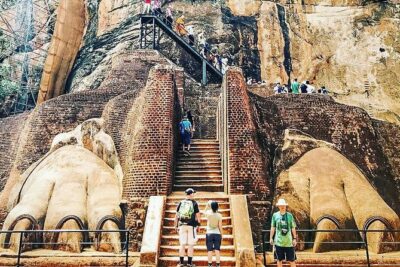
Sigiriya, Polonnaruwa & Dambulla “Trilogy” Day Tour from Colombo
Read our review →Browse the lists this tour appears in