
Reviewed · COOKING CLASSES
Hands-On Cooking Class in Anuradhapura: Cook Like a Local
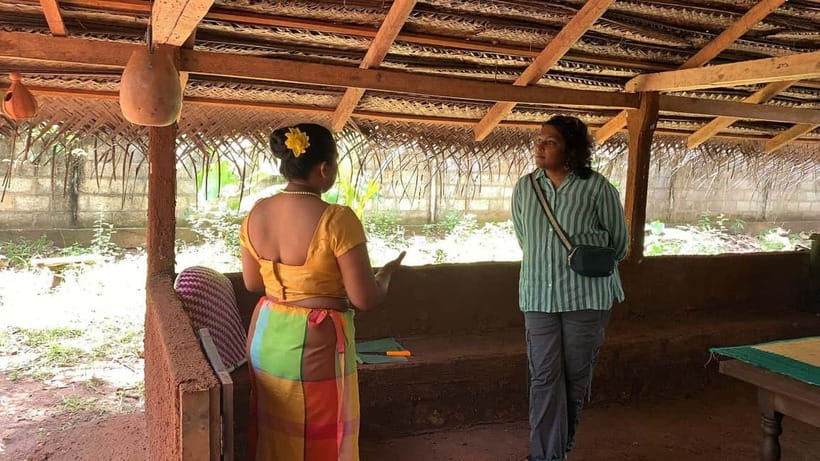
Cooking smells better when you make it yourself. This hands-on class in Anuradhapura has you working with the tools and rhythms of daily village cooking, not just watching. It is set in a clay kitchen under a coconut-leaf shelter, and the menu is built around foods you actually find in Sri Lankan homes from the Rajarata region.
I love two things right away. First, you get real practice with traditional techniques like grinding spices on a miris gala (stone grinder) and cooking on a wood-fired stove. Second, the class ends with a full, sit-down tasting of local dishes that feel connected to what you just did at the stove.
One thing to consider is the pace and the heat. You will be cooking over fire and handling ingredients, so if you prefer air-conditioned, low-effort activities, this might feel a bit rustic and warm.
In This Review
- Key highlights you will feel in your hands
- A Clay-Kitchen Setup in Anuradhapura’s Village Style
- What I liked about the format
- A small consideration
- From Coconut to Spices, the Class’s Real Rhythm
- Welcome drink, then you start building the meal
- Picking your own coconut (tree to table)
- Grinding spices on the miris gala
- Scraping coconut with a hiramanaya
- Cooking over a traditional wood-fired stove
- The Rajarata Menu: What You Will Cook and Taste
- The rice base: yellow or white rice
- Ambarella curry, a fruit that acts like a vegetable
- Banana blossom curry: earthy, floral, and textured
- Lake fish curry with coconut milk
- Kathurumurunga mallum, Sri Lankan greens
- Coconut sambal: spicy, limey, and simple
- Pumpkin curry, creamy comfort
- Sweet finish: curd & treacle plus ripe papaya
- Value Check: Is $40 Worth It?
- Who This Tour Fits Best
- Practical Tips So You Have an Easy Time
- Should You Book This Cooking Class in Anuradhapura?
- FAQ
- How long is the cooking class?
- Where does the class take place?
- What is the price per person?
- Is the class taught in English?
- Is this experience private or group-based?
- Is the cooking class wheelchair accessible?
- What cooking tools and methods are included?
- What food will be cooked and served?
- Are there any drink or welcoming items included?
- Is cancellation free and how far in advance can you cancel?
Key highlights you will feel in your hands
- Miris gala stone grinding: you grind your own spices, then use them in the food
- Pick your own coconut: tree to table, with a practical sense of how ingredients travel
- Hiramanaya coconut scraping: a fun, satisfying skill that many Sri Lankan home cooks know
- Wood-fired stove cooking: smoky aroma and direct fire flavor while you cook
- Rajarata-style menu: curry dishes built around fruit, greens, fish, and rice
- Mozzie repellent helps: bring it, since you are in a village setting
A Clay-Kitchen Setup in Anuradhapura’s Village Style
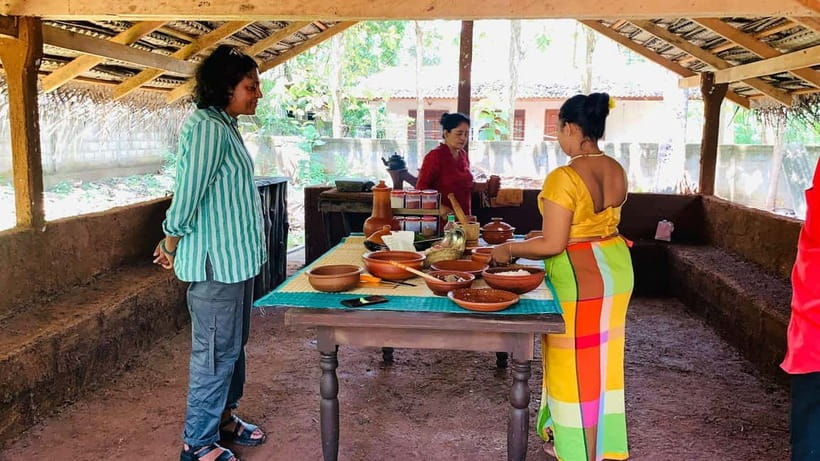
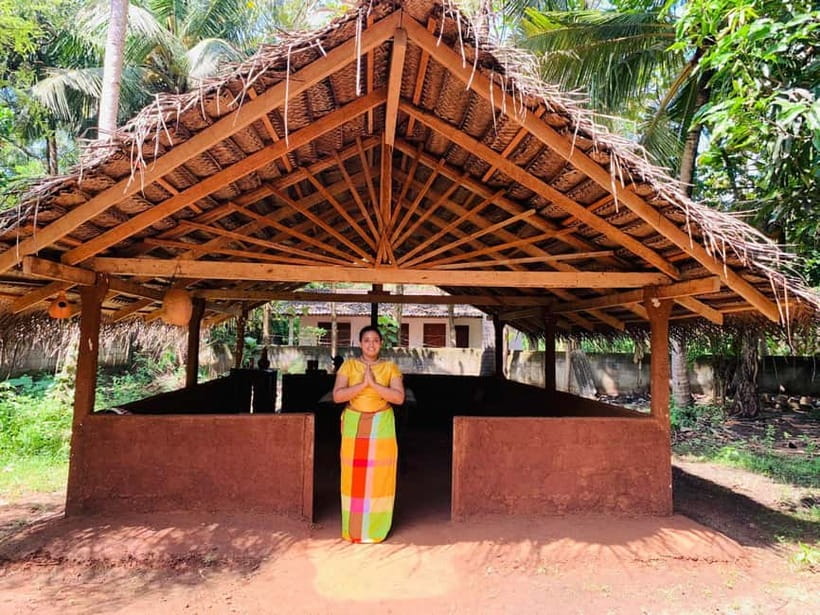
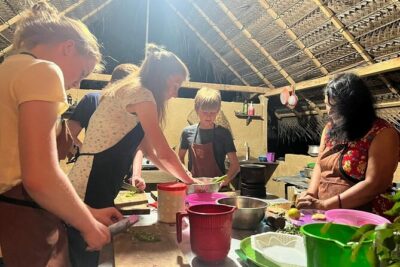
This is the kind of cooking class that makes you slow down and pay attention. You meet at a clay house kitchen shaded by a traditional coconut-leaf shelter, with a calm, nature-close feel. That setting matters because it changes the whole experience from a studio lesson to something closer to how meals happen at home.
The tone is practical. You are not just learning recipes, you are learning why certain flavors work in Sri Lanka’s everyday cooking. The class also leans into the story of Rajarata, the ancient region associated with the Rajarata Kingdom, so the techniques feel intentional, not random. When you grind spices on a stone grinder and then cook right away over a wood-fired stove, you start to understand what cooks mean when they say fresh spice aroma is part of the dish, not an optional extra.
You also have the comfort that the instructor teaches in English, and the tour is set up as a private group. Private usually means less waiting and more hands-on time, which is exactly what you want in a class like this.
More ancient city trips:
- Private City Day Tour in Anuradhapura
★ 5.0 · 383 reviews - Explore & Ride the history of anuradhapura with Vogel Tours
★ 5.0 · 62 reviews - From Anuradhapura: All Inclusive Full Day Safari at Wilpattu
★ 4.4 · 50 reviews
What I liked about the format
The flow is guided but not stiff. You get to do the work yourself, and the tools are the real thing, not pretend replicas. And when you finally eat, the meals do not feel like an afterthought. They feel like the point.
A small consideration
Because this is village-style and fire-based cooking, you should expect to smell smoke and spend some time in a warmer environment. Wear something breathable, and plan to get a little kitchen-dust on your clothes.
From Coconut to Spices, the Class’s Real Rhythm
The class runs for about 3 hours, and that time is used efficiently. You start with a welcome local drink, then you move into ingredients and tools fast. You will likely get that sense of momentum that makes food lessons fun instead of slow.
Here is how the experience typically unfolds, in the order that makes sense for cooking:
More cooking classes in Anuradhapura:
- Ella: Traditional Sri Lankan Cooking Class
★ 4.9 · 788 reviews - Organic cooking class sigiriya (kumara & family)
★ 5.0 · 650 reviews - Kandy Village Cooking Class
★ 5.0 · 536 reviews - Sea waves sri lankan cooking class
★ 5.0 · 467 reviews
Welcome drink, then you start building the meal
Before you touch anything, you get a refreshing local drink. It helps you transition from travel mode into cooking mode. Then the class shifts into preparation, where the biggest focus is on ingredients: coconut, spices, greens, and the curries built from them.
Picking your own coconut (tree to table)
One of the standout parts is picking your own coconut. Even if you have seen coconuts before, doing it yourself gives you a grounded view of where ingredients come from. In a class like this, that step makes later coconut work feel purposeful, not decorative.
It also sets expectations. This is not a class that treats coconut as a garnish. Coconut shows up in the dishes through milk, sambal, and practical cooking flavors.
Grinding spices on the miris gala
Next comes one of the hands-on highlights: grinding spices on a miris gala, a stone grinder. This is where the class becomes sensory in a big way. You can smell the spices changing as they get ground, and you get a feel for the texture you are creating.
That matters because spice grinding is not just about flavor. It affects the curry body and how spices blend into coconut milk and rice. When you have done it yourself, you will know what to aim for next time you cook.
Practical tip: go slow. Stone grinders reward patience. If you rush, the mix will feel uneven, and you may not get the aroma that everyone is chasing.
Scraping coconut with a hiramanaya
Then you learn how to scrape coconut using a hiramanaya. This is one of those everyday skills many people never try until they are forced to, and then it becomes strangely satisfying. It also connects coconut to texture. You are not just adding coconut milk from a carton; you are understanding how coconut becomes part of the cooking process.
If you like interactive activities, this is a great moment to enjoy. You get immediate feedback: the coconut shreds turn into something you can actually work with in the sambal and curries.
Cooking over a traditional wood-fired stove
Finally, you cook on a wood-fired stove. This is where the class earns its authenticity. Wood fire changes everything: you get smoky aroma, you watch heat behavior in a different way, and you learn timing based on flame and simmer.
You will likely notice that Sri Lankan curries often rely on layered spices plus coconut. Cooking over fire helps those components meld.
The Rajarata Menu: What You Will Cook and Taste
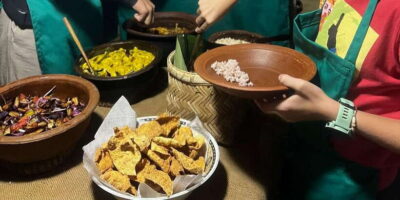
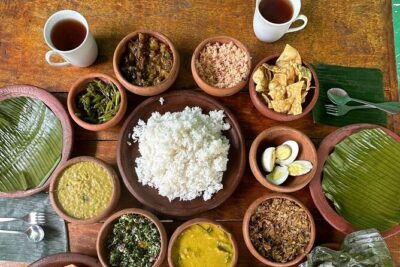
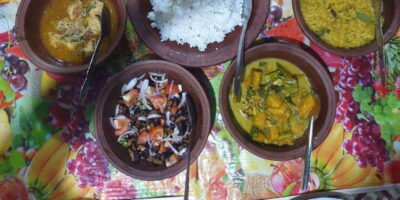
This is not a buffet of random snacks. You cook and taste a traditional spread that covers rice, curries, greens, sambal, fish, and a fruit-based twist, then finishes with something sweet.
The rice base: yellow or white rice
You start with yellow rice/white rice, described as the heart of a typical Sri Lankan meal. Even if you do not cook every single rice step, this part anchors the menu. Sri Lankan curries are often built to pair with rice, so learning the base helps you understand the rest of the plate.
If you are someone who gets lost in spice-heavy dishes, rice is the comfort you need. It also makes it easier to judge curry flavor balance.
Ambarella curry, a fruit that acts like a vegetable
Next is ambarella curry, using a local fruit cooked in a savory way. It is a classic idea in Sri Lanka: fruits showing up as curries with tang and bite. This is the kind of dish that makes you say, Wait, I get why they do this.
Expect tangy, mouthwatering flavors. The fruit’s character gives the curry a lively edge.
Banana blossom curry: earthy, floral, and textured
Then you cook banana blossom, turned into a curry that feels earthy and textured. Banana blossom has a unique bite, and curry spices help it taste like part of the whole meal, not a strange experiment.
If you are picky about vegetables, this might still win you over because it is cooked down and seasoned as a real curry, not a side salad.
Lake fish curry with coconut milk
You also get lake fish curry, made with locally caught lake fish simmered in rich spices and creamy coconut milk. This is one of the more satisfying mains because it brings both protein and depth.
The fish curry is a good checkpoint. When the coconut milk and spices are right, you get a balanced sauce that clings to the food and tastes rounded instead of sharp.
Kathurumurunga mallum, Sri Lankan greens
Another dish is Kathurumurunga mallum, greens mixed with coconut and spices. “Mallum” styles are common in Sri Lanka, and they tend to feel lighter than heavier curries while still being flavorful.
This is a good dish if you want variety. It also helps you see how Sri Lankan cooks use greens without making them bland.
Coconut sambal: spicy, limey, and simple
You will also make coconut sambal, built from freshly grated coconut, red chili, lime, and onion. This is one of those recipes that sounds straightforward, then tastes like a lot is happening.
Sambal is also a useful skill for you. If you ever want to recreate a Sri Lankan flavor profile at home, sambal is a practical place to start.
Pumpkin curry, creamy comfort
Then comes pumpkin curry, slightly sweet, gently spiced, and creamy. Pumpkin brings soft sweetness that rounds out chili heat and spice intensity.
If your curry tolerance is still building, pumpkin is often the dish that helps your palate adjust without losing excitement.
Sweet finish: curd & treacle plus ripe papaya
You finish with fresh curd and treacle plus ripe papaya. This kind of ending matters. It cools the spice, adds a dairy sweetness, and gives you a fresh fruit lift.
In a class that teaches spice work, this last section is the reward that makes the flavors feel complete.
Value Check: Is $40 Worth It?
At $40 per person for about 3 hours, this sits in the “good value if you want hands-on learning” category. Here is why.
You get more than a recipe and a plate. You use the traditional tools, grind spices, scrape coconut, and cook over a firewood stove. That is labor, equipment access, and ingredient preparation, plus the full meal at the end.
Most cooking classes either focus on tasting or focus on theory. This one does both, but it weights the experience toward doing. If you like cooking activities and want skills you can use later, you will likely feel it is worth the price.
If you are only hungry and want a quick meal, you might find cheaper ways to eat in Anuradhapura. But if your goal is learning the process, the value shifts in your favor.
Who This Tour Fits Best
This class is a strong match if you:
- want hands-on cooking rather than a watch-and-take-photos lesson
- enjoy traditional methods like stone grinding and fire cooking
- like learning how local ingredients turn into everyday meals
- prefer a private group where you can ask questions and work at your own pace
It might be less ideal if you have low tolerance for smoke, spice, or active kitchen time. You should also think about comfort with fruit-based curries, since ambarella curry and banana blossom are part of the menu.
Practical Tips So You Have an Easy Time
A few small things can make a big difference in a village kitchen:
- Bring mosquito repellent, since you may be outdoors or near natural areas around the cooking space. One helpful tip from a past participant was that repellent was useful.
- Wear breathable clothes you do not mind getting a little smudged. Fire and spice cooking can be messy.
- Plan to eat the full meal. The class is built around cooking and tasting, not snacks.
- If you care about photos, do it between steps. Once you are grinding or stirring over fire, you will want to focus, not juggle a camera.
Should You Book This Cooking Class in Anuradhapura?
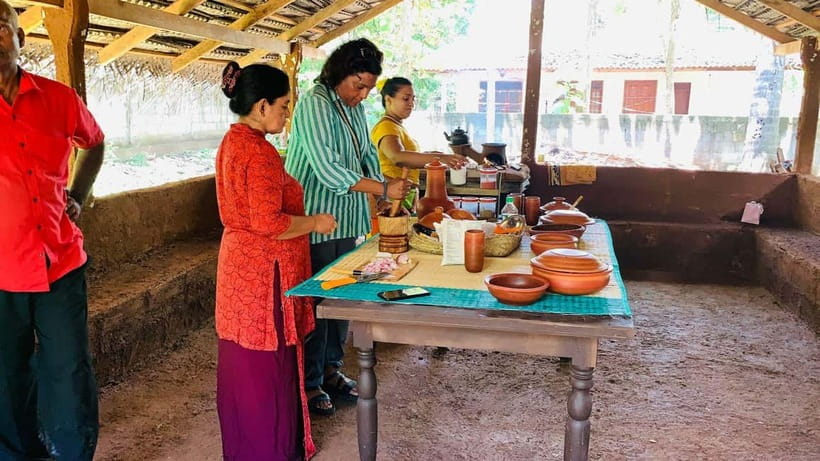
I think you should book if you want a genuine, hands-on Sri Lankan food experience in a setting that feels like a working village kitchen. The combination of coconut to stove cooking, stone-ground spices, and a full Rajarata-style menu makes this more than a meal. It is a skills lesson you can carry home.
Skip it if you strongly prefer air-conditioned spaces, low mess, or you are not interested in learning techniques. The wood-fired cooking and rural setting are part of what you are paying for, so you need to be comfortable with that vibe.
If you are excited by practical cooking skills and want to taste what you helped make, this one is an easy yes.
FAQ
How long is the cooking class?
The experience lasts about 3 hours.
Where does the class take place?
All activities happen at the clay house kitchen, shaded with a traditional coconut leaf shelter.
What is the price per person?
The price is listed as $40 per person.
Is the class taught in English?
Yes, the instructor teaches in English.
Is this experience private or group-based?
It is offered as a private group.
Is the cooking class wheelchair accessible?
Yes, it is listed as wheelchair accessible.
What cooking tools and methods are included?
You will grind spices on a miris gala (stone grinder), scrape coconut with a hiramanaya, and cook over a traditional wood-fired stove.
What food will be cooked and served?
The menu includes rice (yellow/white), lake fish curry, ambarella curry, Kathurumurunga mallum, coconut sambal, pumpkin curry, banana blossom mallum, and sweet finish with curd and treacle plus ripe papaya.
Are there any drink or welcoming items included?
Yes, you are welcomed with a refreshing local drink.
Is cancellation free and how far in advance can you cancel?
Free cancellation is available up to 24 hours in advance for a full refund.
Recent additions in Anuradhapura
- Yala National Park: 7 hours or 12 hours Leopard Wild Safari★ 4.7 · 11 reviews
- Wilpattu National Park: Private Safari★ 4.4 · 38 reviews
- Wilpattu National park – Full day Safari (06:00am – 18:00pm)★ 4.5 · 38 reviews
- Sri Lanka: Wilpattu National Park Safari Tour in a 4WD Jeep★ 4.4 · 4 reviews
- Wilpattu National park: Morning or Afternoon PRIVATE Safari★ 3.5 · 3 reviews
- Wilpattu: Jeep Safari Day Tour From Sigiriya or Dambulla★ 4.2 · 7 reviews
- Wilpattu National park : Full day Safari (06:00am – 18:00pm)★ 4.7 · 6 reviews
- Wildlife experience at Minneriya National Park Safari★ 5.0 · 4 reviews
Cooking Classes, compared.
Organic cooking class sigiriya (kumara & family)
Read our review →
Sri Lankan Cooking Class with Neranji at Homestay
Read our review →
Browse the lists this tour appears in