
Reviewed · KANDY TOURS
Flavours of Sri Lanka
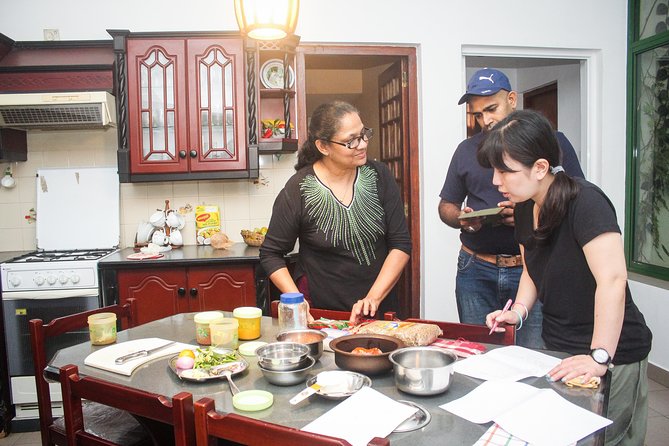
Spices, coconuts, clay pots, and conversation. This small-group Sri Lankan cooking class in Kandy with Chitra is built around doing the work, from picking veggies in a home garden to learning the traditional way to make curry powder. I love that it stays hands-on the whole time, and I love that you end by eating what you cook, family-style with your instructor. One thing to consider: it starts at 3:30 pm, so you’ll want to plan your day around a late afternoon meal.
You’ll also get a clear, practical structure for learning Sri Lankan flavors. Expect an ingredient walk in Chitra’s home garden, then an ingredient-and-spice intro focused on curry-making, including the process behind homemade curry powder. The class also uses traditional clay pots, which changes how curries cook and tastes more “real” than many home-style versions.
The best part for many people is that the menu can match your needs. There are vegan and gluten-free options, so you’re not just swapping one ingredient and calling it done. The only drawback worth flagging is that alcoholic drinks aren’t included, so if that matters to you, plan accordingly.
In This Review
- Key points to know before you go
- A Sri Lankan cooking class where you actually learn the steps
- The 3:30 pm timeline: garden to curry powder to dinner
- First stop: Chitra’s home garden and ingredient picking
- Curry basics: ingredients, spices, and curry powder tradition
- Coconut milk from scratch: crack, scrape, extract
- Clay-pot curries: the hands-on cooking portion
- The typical meal you’ll cook: rice with 5 curries
- How the class keeps you engaged
- Dietary needs handled with real cooking choices
- Eating your own meal: dinner, conversation, and closure
- Price and value in Kandy: what $25 really buys you
- Who this class is best for (and who should skip it)
- Practical tips to make your cooking day smoother
- Should you book Flavours of Sri Lanka in Kandy?
- FAQ
- How much does the Flavours of Sri Lanka cooking class cost?
- How long is the cooking class in Kandy?
- What time does the class start?
- Where does the class meet?
- Is the class limited to a small group?
- Can you accommodate vegan and gluten-free diets?
- What’s included, and is alcohol provided?
- What is the cancellation policy?
Key points to know before you go
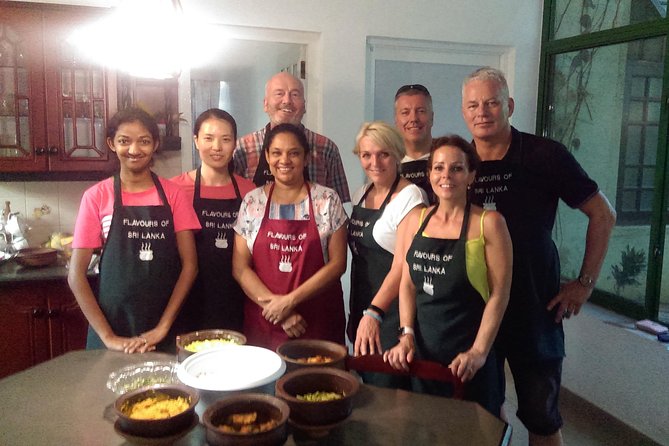
- Small group size up to 8 keeps the class interactive and lets you ask questions.
- Chitra leads the cooking from her home, with a focus on tradition and practical technique.
- Home garden picking means you start with fresher ingredients and a better sense of the dishes.
- Coconut milk from scratch includes cracking, scraping, and extracting, not just opening a carton.
- Homemade curry powder + clay pots gives you a more authentic curry base.
- You eat your meal at the end, with time for chat about Sri Lankan life and culture.
A Sri Lankan cooking class where you actually learn the steps
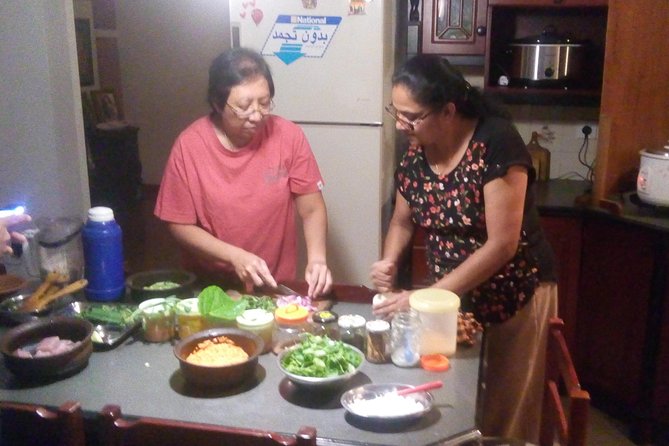
This is the kind of class that makes sense even if you cook at home already. You’re not just watching someone spoon curry into bowls. You pick ingredients, prep components, and work through a typical Sri Lankan meal so you learn why things go in when they do, and what makes the flavor base work.
The host, Chitra, is the anchor here. Multiple people highlight her warmth and the fun, welcoming vibe, which matters in cooking classes. You get a calmer, more personal pace, and you’re more likely to remember the details later when you recreate the dishes at home.
The meal format is straightforward: you’ll cook rice plus five curries, tailored to your dietary preference. You’ll also learn the curry powder method, which is one of the biggest “unlock” skills for getting Sri Lankan flavor right.
A few more Kandy trips to line up
- Kandy Private Guided City Tour by Tuk Tuk
★ 4.9 · 1,307 reviews - From Kandy: Sigiriya Rock & Dambulla Cave Temple Adventure
★ 4.9 · 785 reviews - Kandy Village Cooking Class
★ 5.0 · 536 reviews
The 3:30 pm timeline: garden to curry powder to dinner
The day begins at Glory Homestay, 46 Meda Bowala Rd, Kandy (start time 3:30 pm). The activity ends back at the meeting point. That loop matters because you can plan an easy afternoon without complicated transport logistics.
Here’s how the experience unfolds, and why each part is worth your attention.
First stop: Chitra’s home garden and ingredient picking
You’ll start with a guided walk in Chitra’s home garden, where you pick fresh vegetables, herbs, and ingredients that will go into your dishes. This isn’t just a photo moment. Fresh herbs and produce can mean more fragrance in the final curry, and you also learn what ingredients are commonly used in Sri Lankan home cooking.
Practical benefit: you’ll leave with a clearer picture of which herbs and veg to look for when you try this again outside Sri Lanka. If you’ve ever cooked from a recipe and wondered what was missing, this first step helps close that gap.
Possible drawback: garden picking is hands-on prep. Wear shoes that can handle uneven ground and bring a light layer, because weather and humidity can shift in Kandy.
Curry basics: ingredients, spices, and curry powder tradition
After the garden, you get an introduction to curries, including the ingredients and spices you’ll use. The focus is also on the traditional approach to preparing curry powder, including the secrets behind it.
This matters because curry powder isn’t one fixed thing. In practice, Sri Lankan curry flavor often depends on the mix and the way it’s handled. Learning the method gives you a workable baseline rather than only a memorized ingredient list.
What I like about this structure: you get the “why” and “how” early, so when you start cooking, you’re not lost. You know what you’re aiming for.
Within the same drive of Kandy, but a different sort of day:
- Kandy to Ella Train Tickets – Reserved Seats
★ 4.5 · 523 reviews - From Kandy: Pinnawala Day Tour
★ 4.8 · 331 reviews - Kandy to Ambuluwawa & Kandy City Guided Tuk Tuk Day Tour
★ 4.8 · 270 reviews - Day tour to Sigiriya & Dambulla from Kandy
★ 5.0 · 252 reviews
Coconut milk from scratch: crack, scrape, extract
Next comes one of the most tactile Sri Lankan cooking skills in the whole class: you’ll crack coconuts, scrape them, and extract coconut milk. It’s an important ingredient across Sri Lankan cuisine, and doing it yourself helps you understand how the milk behaves in cooking.
Why it’s valuable: coconut milk changes texture and richness. When you make it, you can see the difference between watery coconut extraction and thicker, more flavorful milk. That can help you adjust consistency at home later.
If you’re sensitive to messy tasks, this is the messiest portion, by design. Expect some coconut work that gets your hands dirty.
Clay-pot curries: the hands-on cooking portion
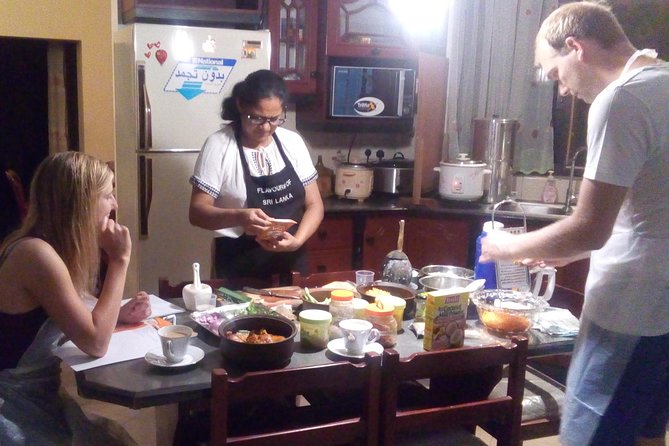
Once the groundwork is done, the class shifts into active cooking. You’ll have hands-on involvement with every step of preparation, not just one or two tasks. That’s key for real learning.
The typical meal you’ll cook: rice with 5 curries
You’ll cook a typical Sri Lankan meal, rice with five curries, based on your dietary preference. All curries are cooked in traditional clay pots and use homemade curry powder.
Clay pots matter more than many people expect. They tend to cook in a way that feels slower and gentler than some other cookware, which can affect how flavors merge. The result is usually a more rounded curry mouthfeel.
How the class keeps you engaged
The class is designed so you are doing the prep alongside the instructor. That means you get experience with practical steps like measuring ingredients, handling spices, and building curry flavor in sequence.
If you learn best by doing, you’ll like the rhythm. If you prefer watch-and-take-notes only, you might find the pace more active than you’re used to. Still, the small group size helps you keep up.
Dietary needs handled with real cooking choices
One of the smartest things here is that dietary needs aren’t treated like a side note.
You can choose meal options for vegan/vegetarian or gluten-free diets. And because you’re cooking together step by step, the kitchen can adapt choices without you being stuck with a plain fallback dish.
Practical advice for you: when you book, be clear about your dietary preference so the class can plan around it. Also let them know if you have strong restrictions, like severe gluten intolerance, so you get meals that match your needs.
Eating your own meal: dinner, conversation, and closure
After the cooking, you sit down and enjoy the meal you made. This includes the rice and the curries, plus some good conversation.
What makes this ending feel special is the mix of food and context. You’ll get to talk with Chitra and your fellow students about history, culture, and lifestyle of Sri Lankan people. That turns the meal from “just dinner” into a cultural moment.
This also helps your learning stick. When you taste the curry after making the curry powder and coconut milk, you can connect flavor to action. You’re more likely to remember the steps next time you cook.
Price and value in Kandy: what $25 really buys you
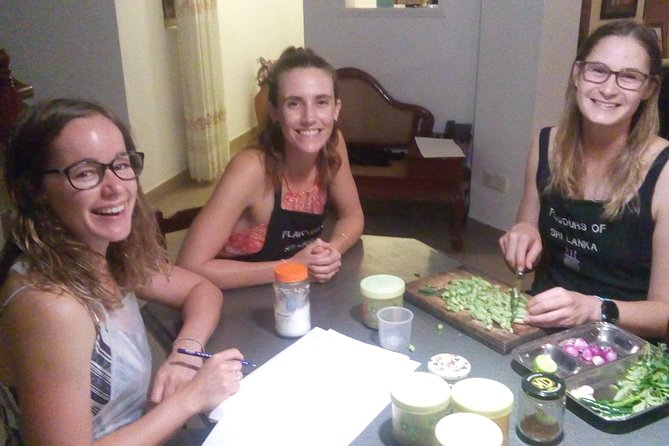
At $25 per person for about 3 hours, this can be excellent value if you want more than a food show.
Here’s what you’re getting for the price:
- Dinner included (the meal you cook)
- All necessary kitchen equipment
- Unlimited spring water, boiled and filtered
- Meals aligned with your dietary preference (vegan/vegetarian or gluten-free)
You’re also getting time with an experienced instructor who walks you through curry powder, coconut milk extraction, and clay-pot curries. That’s not something most people can recreate easily on their own at home without a lot of trial and error.
A realistic consideration: your personal value will depend on how much you enjoy hands-on cooking. If you’d rather observe, you might feel the cost is more “activity” than “tour.” But if you want skills you can use later, it’s strong.
Who this class is best for (and who should skip it)
This is a great fit if you:
- Want a hands-on Sri Lankan cooking class in Kandy instead of a passive tasting
- Enjoy learning by doing, especially curry powder and coconut milk techniques
- Care about dietary options like vegan/vegetarian or gluten-free meals
- Prefer a small group up to 8 where you can ask questions
You might skip it if:
- You dislike messy kitchen work (coconut prep can be hands-on)
- You can only travel early in the day, since the start time is 3:30 pm
- You want an alcohol-included experience, since alcoholic beverages are not included
Practical tips to make your cooking day smoother
A few small choices can make a big difference.
- Wear comfy shoes. The garden and prep areas can involve uneven surfaces.
- Bring a light layer. Even with tropical warmth, kitchens can cool down when windows are open.
- If you’re gluten-free, confirm your needs while booking so the kitchen can plan correctly.
- Expect an active pace. You’ll be doing steps, not just tasting and watching.
Also, the class uses a mobile ticket. Save it on your phone and keep it accessible at the start.
Should you book Flavours of Sri Lanka in Kandy?
If you want an authentic Sri Lankan food experience you can learn from, not just eat, this is an easy yes. The combination of home garden picking, homemade curry powder, coconut milk extraction, and cooking rice with five curries in clay pots gives you real technique, not only recipes.
One final check for you: are you happy with a 3:30 pm start and about three hours in a kitchen? If that timing works, you’ll probably come away with stronger confidence about Sri Lankan flavors and a meal you can tell people you made with your own hands.
If you’d rather browse a city or visit temples instead, then this may not be the right use of your time in Kandy. But for food lovers, this is one of the most memorable ways to experience the region.
FAQ
How much does the Flavours of Sri Lanka cooking class cost?
The price is $25.00 per person.
How long is the cooking class in Kandy?
It runs for about 3 hours.
What time does the class start?
The start time is 3:30 pm.
Where does the class meet?
The meeting point is Glory Homestay, 46 Meda Bowala Rd, Kandy 20000, Sri Lanka.
Is the class limited to a small group?
Yes. The class has a maximum of 8 travelers.
Can you accommodate vegan and gluten-free diets?
Yes. Vegan/vegetarian options and gluten-free options are available, and meals are prepared according to your dietary preference.
What’s included, and is alcohol provided?
Dinner is included, along with all necessary kitchen equipment and unlimited spring water (boiled and filtered). Alcoholic beverages are not included.
What is the cancellation policy?
Free cancellation is available up to 24 hours in advance for a full refund. If you cancel less than 24 hours before the start time, you will not receive a refund.
Recent additions in Kandy
- Udawalawe National Park Private Full-Day Safari★ 5.0 · 3 reviews
- Tuk Tuk Kandy City Tour By Local Guide★ 5.0 · 3 reviews
- Tour to the Hidden Waterfalls around Kandy (Knuckles Range)★ 5.0 · 6 reviews
- Kandy City Tour & Famous Ambuluwawa Tower with Friendly Chauffeur★ 5.0 · 11 reviews
- White Water Rafting Kitulgala★ 4.5 · 4 reviews
- Wasgamuwa National Park Safari from Kandy★ 5.0 · 3 reviews
- Waterfall Abseiling in Kitulgala★ 4.5 · 3 reviews
- Udawalawe Safari Day Tour From Kandy★ 4.5 · 3 reviews
Kandy Tours, compared.





Kandy to Ambuluwawa & Kandy City Guided Tuk Tuk Day Tour
Read our review →

Kandy to Sigiriya Day Tour and Dambulla cave temple with private vehicle
Read our review →Browse the lists this tour appears in