
Reviewed · NEGOMBO TOURS
PADI Advanced Open Water Diver Course
Three days underwater, and your skills level up.
This PADI Advanced Open Water Diver course in Unawatuna, near Galle, is built around getting you supervised while you practice real-world specialties. I like the mix of site types they use, from reef life (including lots of macro critters) to wrecks at set depths like the Rangoon at about 30 m. I also like the teaching style that comes through in instructor feedback, calm, patient, and safety focused, with names like Leon, Tarush, Supun, and Hans showing up again and again. One consideration: the course fee does not include the extra PADI fee of 70 Euros for the manual and certification materials (even if you do eLearning).
If you want a course that feels organized instead of chaotic, you will like how they run the days. Expect registration at 8:30 am for mornings, or 1:30 pm for afternoons, and a max group size of 8 students, which usually means more time with your instructor. Bottled water, snacks, coffee and tea, and SCUBA equipment are included, but lunch is not, so plan for a midday snack routine.
In This Review
- Key Highlights You Should Know
- PADI Advanced Open Water in Unawatuna: What You’re Really Buying
- Getting There: Unawatuna Meeting Point, Timing, and How to Avoid First-Day Stress
- Inside the Course: Theory, No Exam, and the Two Required Skill Modules
- Picking Your Optional Specialties: Wreck, Buoyancy, and Fish ID
- The Underwater Locations Around Unawatuna and Galle: Reef, Rocks, Wrecks, and Night Sessions
- Reef and macro life at shallower depths
- Deeper rocky areas with valleys
- Wreck training near Galle harbor
- Night sessions as an option
- Price and Value: What the $225.51 Includes, and What Costs Extra
- Gear, Comfort, and Safety: A Calm, Patient Teaching Style
- Who Should Book This Course (And Who Might Want to Adjust Expectations)
- Should You Book? My Straight Answer
- FAQ
- What is included in the course price?
- How long is the PADI Advanced Open Water Diver course in this program?
- What are the mandatory course components?
- What time do I need to arrive for registration?
- What is the minimum age requirement?
- Do I need to be a certified Open Water Diver?
- Is the PADI fee included in the course price?
- Is lunch included?
- What is the maximum group size?
- What should I consider regarding weather?
Key Highlights You Should Know
- Deep and navigation are mandatory, so you are not just collecting specialty checkboxes, you are practicing control and awareness
- 16 underwater locations around Unawatuna with depths from 6 to 30 m, meaning you are training on varied conditions
- Wreck options include the Rangoon (~30 m), SS Oreste (~22 m), and the Galle Ship Wreck (~18 m)
- Reef areas up to 18 m can be rich in macro life, like nudibranchs, plus Indian Ocean reef fish
- Small groups (up to 8) help you get personal coaching rather than being waved past a checklist
- Extra costs exist: PADI manual and certification materials are not included in the main price
PADI Advanced Open Water in Unawatuna: What You’re Really Buying
The PADI Advanced Open Water Diver course is not about doing more of the same. It is about upgrading your thinking underwater. You add specialties and practice skills that help you handle different underwater settings with more confidence, especially when depth, navigation, and buoyancy start to matter more.
At this center, the structure is clear. You will do theory for each adventure module (without an exam), usually for about half a day total, then you will complete 5 adventure training sessions across roughly 2 to 3 days. Two modules are required, deep skills and underwater navigation, and then you pick the remaining three specialties from options like wreck, boat, peak performance buoyancy, and fish ID.
Value-wise, the listing price of $225.51 per person is for the course delivery and logistics, and you do get practical extras like equipment use, snacks, and drinks. The tradeoff is that the 70 Euro PADI fee for the manual and certification costs is separate, and certificate materials are not included beyond what they say about eLearning. So your real budget is the base price plus that PADI add-on.
A few more Negombo trips to line up
- AirPort CMB to Colombo (Private Taxi 24/7) Car, Van, Minibus
★ 5.0 · 604 reviews - 8 Days tour in Sri Lanka with privet driver and accommodations
★ 5.0 · 472 reviews - Negombo city tour by Tuk Tuk Hotel Pickup & Guide
★ 5.0 · 221 reviews
Getting There: Unawatuna Meeting Point, Timing, and How to Avoid First-Day Stress
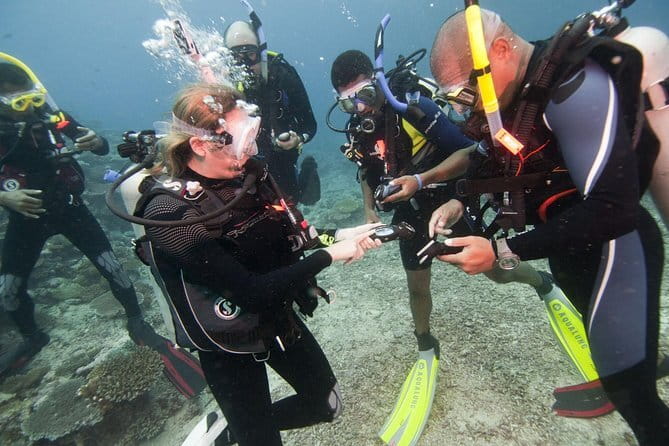
You start at DIVINGURU Unawatuna at 294 Matara Rd, Unawatuna 80600. The course notes mention pickup is offered, and it is near public transportation, which is helpful if you are not staying right next door. My practical tip: before you arrive, message them to confirm pickup boundaries and your exact pickup time, because “offered” can still mean a specific route.
For timing, the day starts with registration. If you choose a morning start, you need to be there at 8:30 am. For an afternoon start, registration is at 1:30 pm. If you show up late, your course flow can get messy fast, because theory blocks and gear checks are built around specific session timing.
Also note the group limit. With a maximum of 8 students, you are unlikely to be treated like a number, but you still want to be on time so your instructor can guide the whole group without delays.
Inside the Course: Theory, No Exam, and the Two Required Skill Modules
One of the calmer parts of this course is the theory setup. You will do short theory for each adventure module, and it is described as without an exam. That matters because it reduces the pressure. You can focus on understanding the purpose behind each skill, not cramming for a test.
The two mandatory parts are the heart of the course. First is the deep skills module. In plain terms, this is where you practice how your buoyancy, breathing, and decision-making change as depth increases. Second is underwater navigation. This is where you learn to manage direction and control effort underwater, so you do not rely on luck or hope.
These two modules are especially valuable here because the training area includes deeper locations, including wreck sites that go down to about 30 m. Deeper water punishes sloppy buoyancy and weak situational awareness. Navigation helps you plan, check, and keep control when your reference points are not obvious.
Picking Your Optional Specialties: Wreck, Buoyancy, and Fish ID
After the required deep and navigation modules, you choose three more adventure dives or specialties with one of the PADI instructors. The options they list include wreck, boat, peak performance buoyancy, and fish ID, plus other choices.
Here is how I would think about the choices:
- Wreck or boat-focused options fit the area well. The wrecks near Galle are a huge part of the underwater experience, with specific sites at around 30 m, 22 m, and 18 m. If you like the drama of manmade structures and want practice working around them, this is the easiest match.
- Peak performance buoyancy is the “control upgrade.” Even if you do not love gadgets or math, buoyancy practice usually improves everything else: your comfort, your safety margin, and how gently you move over coral and sand.
- Fish ID is for people who want the underwater world to feel less random. If you enjoy learning names and patterns, fish ID helps you notice behavior, body shape, and habitat clues.
If you are unsure, ask your instructor what will help you most with the skills you felt least confident about in your open water training. That usually leads to better choices than picking based only on what sounds fun.
Within the same drive of Negombo, but a different sort of day:
- Private Car & Driver for 07 Days Tour In Sri Lanka
★ 5.0 · 199 reviews - Most Popular Round Tour in Sri Lanka
★ 5.0 · 161 reviews - Sri Lanka Private Tour 8 days-Driver/vehicle/accommodation H/B
★ 5.0 · 161 reviews - 7 Days Round Tour in Private Car/Van with Chauffer
★ 5.0 · 122 reviews
The Underwater Locations Around Unawatuna and Galle: Reef, Rocks, Wrecks, and Night Sessions
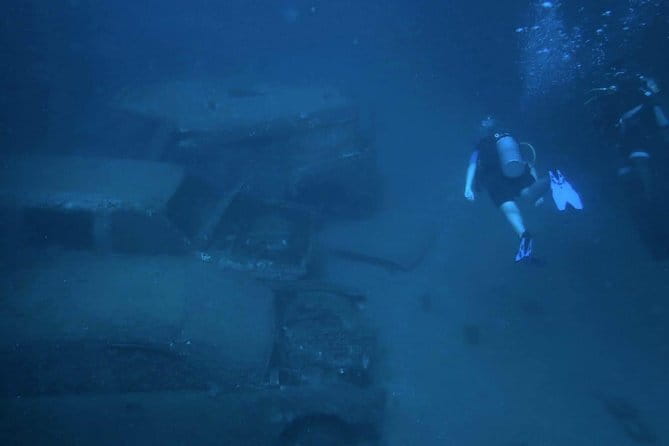
This course is practical because the underwater training matches the real variety around Unawatuna. They describe around 16 underwater sites with depths from 6 to 30 m, and different site types like reef, rocky areas, wreck areas, and night sessions.
Here’s what that variety means for you.
Reef and macro life at shallower depths
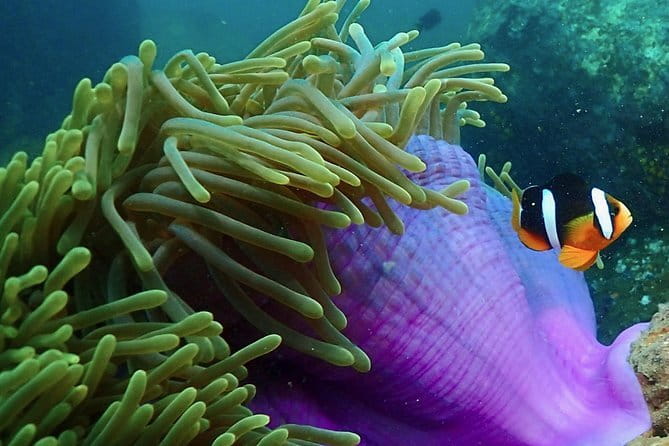
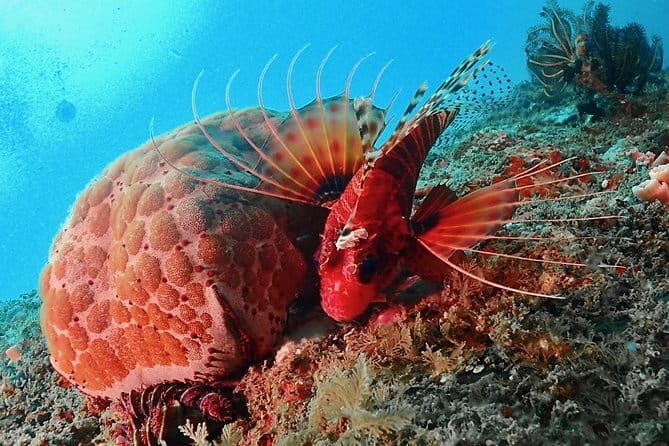
Reef locations are typically up to about 18 m. Hard and soft corals are mentioned as present at many reef sites, though they note these can be relatively rare. Even when coral is not the main show, these sites tend to be strong for macro life: nudibranchs, small critters, and plenty of Indian Ocean reef fish.
If you like slow, close-up watching, reef areas here are a good fit. You will also get a feel for staying comfortable at shallower depth, which matters for buoyancy and trim control.
Deeper rocky areas with valleys
At deeper sites, the underwater scene shifts to rocky terrain and deeper valleys to explore. That kind of bottom topography is useful training because it gives you more cues for depth and direction, but it also demands cleaner buoyancy. You do not want to hover wildly in space over a textured bottom.
Wreck training near Galle harbor
This is where the site list becomes very specific. They mention wreck locations on sandy ground near the Galle harbor, including:
- Rangoon, around 30 m
- SS Oreste, around 22 m
- Galle Ship Wreck, around 18 m
They also note that soft corals and fish life are especially strong at the two deeper wrecks. And they mention schools that can be huge, with hundreds and even thousands of sweet lips, plus other fish.
For a course, this matters because wreck areas give you a lot to practice: controlled hovering, careful path planning, and calm decision-making when visibility or light changes.
Night sessions as an option
Night sessions are listed among the types of specialty training you can experience. If you want a course that changes your senses, night is a great contrast. Just remember night settings often make you focus more on discipline, buoyancy, and staying close to your plan.
Price and Value: What the $225.51 Includes, and What Costs Extra
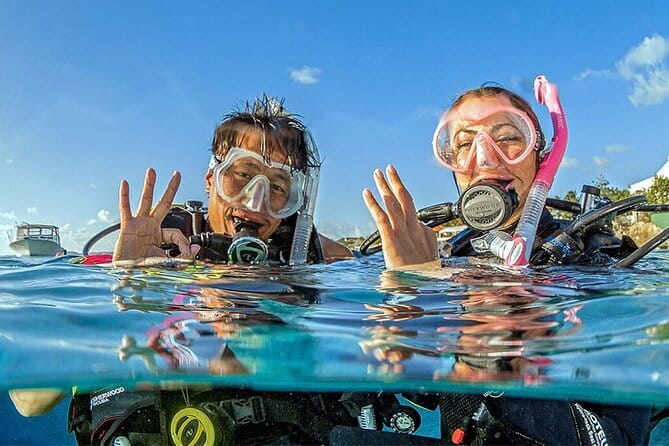
Let’s break down the money in a way that helps you plan, not just interpret.
Included in the course fee:
- Use of SCUBA equipment
- bottled water
- snacks
- coffee and/or tea
Not included:
- lunch
- certificate and teaching materials (with the note that PADI eLearning is handled separately)
- the PADI fee of 70 Euros for the manual and certification costs, which is specifically called out as not included
So your cost is not just the $225.51. It is $225.51 plus the 70 Euro PADI fee (unless you have already handled those PADI materials through eLearning).
If you do PADI eLearning online, the course instructions say you need to purchase it on the PADI website and register for it with the center, identified as Divinguru Unawatuna, PADI 5 Star Dive Resort, S-36133. They also mention the course material situation clearly: the PADI fee covers the manual and certification costs, and without eLearning, the missing teaching materials can be a separate expense.
My value takeaway: equipment, drinks, and snack support are covered, and the training comes with multiple supervised sessions and structured theory. The extras are the normal course add-ons, but you should budget for them early so you do not hit checkout surprises.
Gear, Comfort, and Safety: A Calm, Patient Teaching Style
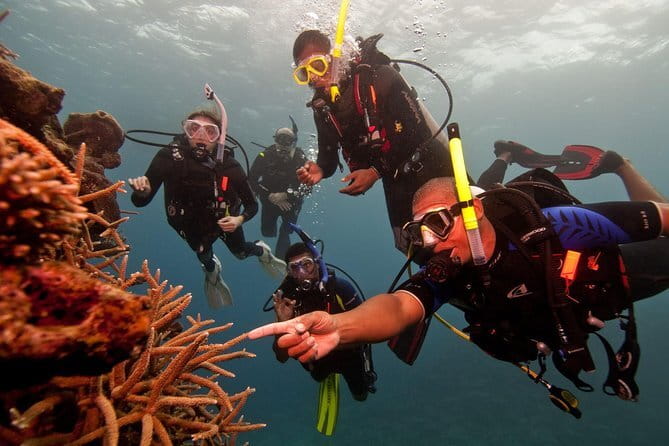
In the feedback you can see a pattern: people appreciated instructors who were calm, patient, and took instruction seriously. Names like Leon, Tarush, Supun, Norbert, Ellie, and Hans come up around professionalism and a fun atmosphere. In particular, the “safe and calm” angle is repeated, with people describing a sense of being at ease and being guided carefully.
Practically, that is what you want for an Advanced course. You are practicing deeper skills and navigation. Those are the two parts where nervousness usually shows up first if you are not used to thinking underwater. A patient instructor style helps you learn without panic.
Also, the kit is included, and equipment quality shows up in the center’s reputation. That matters because good gear reduces effort. You can focus on technique instead of fighting your setup.
Who Should Book This Course (And Who Might Want to Adjust Expectations)
This course is for certified Open Water Divers. They explicitly say prerequisites must be fulfilled and the minimum certification age is 12 years. So if you are new to scuba, you need the Open Water step first.
It also asks for a moderate physical fitness level. That does not mean you need to be an athlete, but you should be comfortable with water activities, staying steady on the surface, and handling a multi-session schedule.
This is a good match if you want:
- real variety, reef, rocky valleys, wreck areas, and night sessions
- hands-on coaching with small group size
- practical training modules, especially deep skills and navigation
If you want a mostly “see pretty fish” experience, this is still fun, but it is a training course first. You will be learning, practicing, and thinking, not just cruising on easy autopilot.
Should You Book? My Straight Answer
If you are already an Open Water Diver and you want a course that upgrades skills in a place with strong underwater variety, I think this is a smart choice. The combination of small group size, structured modules (deep plus navigation as required), and well-defined wreck options makes the course feel grounded in real underwater practice.
Book it if:
- you want supervised training that helps you control buoyancy and direction
- you like the idea of wreck locations like Rangoon and SS Oreste at planned depths
- you are budgeting for the separate 70 Euro PADI fee and understand lunch is not included
I would hesitate if:
- you are counting on the course price alone to cover everything PADI-related
- you are sensitive to the cost of course materials after you see the base price
If you do the math early and come prepared, this is the kind of course where your money turns into actual underwater ability, not just paperwork.
FAQ
What is included in the course price?
The course includes use of SCUBA equipment, bottled water, snacks, and coffee and/or tea. Lunch is not included.
How long is the PADI Advanced Open Water Diver course in this program?
It takes around 2 to 3 days and includes 5 adventure dives.
What are the mandatory course components?
Deep diving and underwater navigation are mandatory. You then choose three more adventure dives from available specialties such as wreck, boat, peak performance buoyancy, or fish ID.
What time do I need to arrive for registration?
For a morning start, registration is at 8:30 am. For an afternoon start, registration is at 1:30 pm.
What is the minimum age requirement?
The minimum certification age is 12 years.
Do I need to be a certified Open Water Diver?
Yes. The prerequisite says you must be an Open Water Diver, and prerequisites must be fully fulfilled.
Is the PADI fee included in the course price?
No. The PADI fee of 70 Euros for the Advanced Open Water Diver manual and certification costs is not included.
Is lunch included?
No, lunch is not included.
What is the maximum group size?
The experience has a maximum of 8 travelers.
What should I consider regarding weather?
The experience requires good weather. If it is canceled due to poor weather, you will be offered a different date or a full refund.
Recent additions in Negombo
- Visit sri Lanka 7 Days Round Trip★ 5.0 · 7 reviews
- Travel Srilanka WITH Shanaka★ 5.0 · 8 reviews
- Pinnawala private day trip from colombo or negombo★ 5.0 · 4 reviews
- Wonderful Srilankan 14 Days Tours★ 5.0 · 6 reviews
- Tailor-made Multi-day Private Tour Packages in Sri Lanka★ 5.0 · 19 reviews
- 9 Days Guided Tour Through Sri Lanka★ 5.0 · 4 reviews
- The Most popular Personalized round Tour In Sri Lanka-Day Charged★ 5.0 · 6 reviews
- Transfer between Colombo (CMB) Airport and Galle Face Hotel★ 5.0 · 4 reviews
Negombo Tours, compared.
8 Days tour in Sri Lanka with privet driver and accommodations
Read our review →Negombo city tour by Tuk Tuk Hotel Pickup & Guide
Read our review →
Private Car & Driver for 07 Days Tour In Sri Lanka
Read our review →

Sri Lanka Private Tour 8 days-Driver/vehicle/accommodation H/B
Read our review →
7 Days Round Tour in Private Car/Van with Chauffer
Read our review →
Wilpattu National Park Jeep Safari from Negombo / Waikkal (All Inclusive)
Read our review →
Browse the lists this tour appears in