
Reviewed · WALKING TOURS
Colombo Social and Political Walk
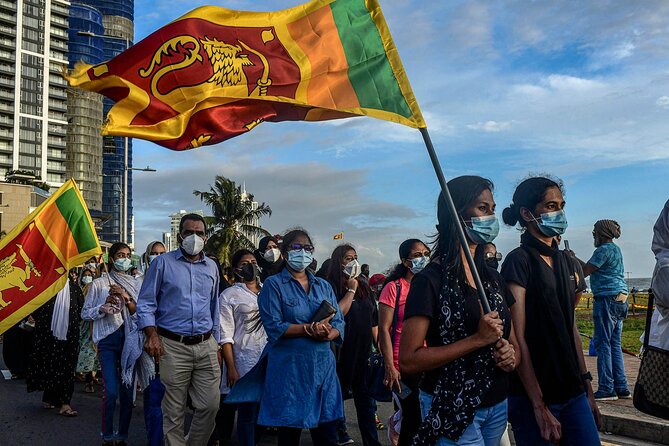
A city can feel like a headline, until you walk it. This Colombo walk turns politics and economics into something you can point at on the street, not just argue about at home. You move through places tied to trade, government, and public life, while the story is told like an information-heavy documentary, with a balanced look at both past and present.
I especially like the focus on Sri Lanka’s social and political threads, from the creation of the modern state to today’s headlines. I also like that the walk aims to help you form your own view through first-hand observation, not through one-sided talking points. One consideration: it is weather dependent, and it runs in the early evening, so plan for the conditions to shape what you can comfortably do.
In This Review
- Key highlights I found most compelling
- Why a 5 pm Colombo walk works so well
- Sri Lanka’s crisis becomes a street-level story
- Meeting at Kingsbury Colombo, ending at BMICH: a route with a point
- Colombo Port City: trade, development, and what power looks like
- Pettah Market and Good Market: where economics feels up close
- Tea Avenue at Dilmah and the World Trade Center: business stories with political weight
- Old Parliament and Independence Square: governance you can visualize
- BMICH at the end: conferences, decisions, and public life
- Price and value: what $35.99 buys you
- How to get the most out of the walk
- Who should book this Colombo Social and Political Walk
- Should you book this tour?
- FAQ
- What is the duration of the Colombo Social and Political Walk?
- What time does the tour start and where does it end?
- How much does it cost?
- How many people are in a group?
- Where does the tour start?
- What places are included on the route?
- Is the ticket mobile?
- What if the weather is bad?
- What is the cancellation policy?
Key highlights I found most compelling
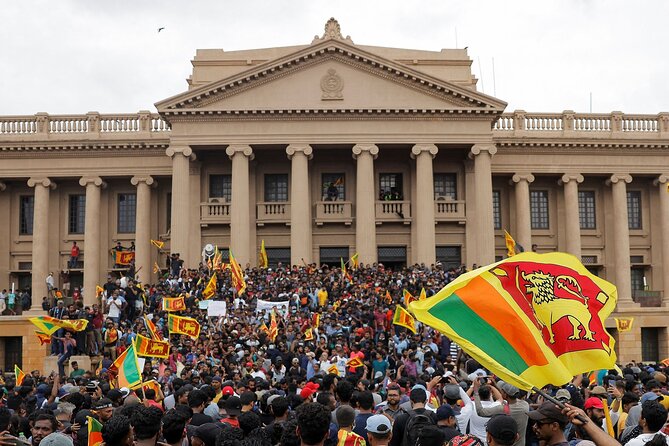
- A documentary-style format that ties political events to everyday life in Colombo
- Real places, not slides across Port City, Pettah, parliament, Independence Square, and BMICH
- Guide Chami’s clear explanations, including the social and economic “why” behind the story
- Balanced, non-biased framing so you can compare perspectives as you go
- A tight 2.5 hour route that’s long enough to connect themes, not so long you’re done early
Why a 5 pm Colombo walk works so well
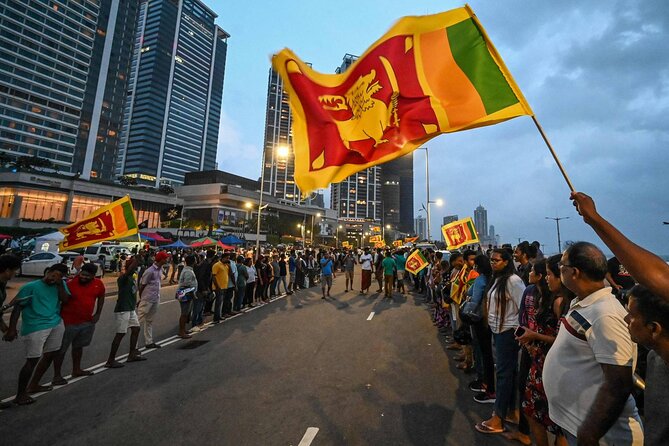
This is not a classic “see the sights” stroll. It’s a 2 hours 30 minutes, social and political walking experience that starts at 5:00 pm and ends at BMICH. That timing matters. In the late day light, Colombo’s public spaces feel more like places people actually use, not just stops on a photo list.
The group stays small, with a maximum of 25 people, which keeps the pace practical and helps the guide manage questions. You should expect a guided, interactive format where the story connects site to site. The tour description sets it up like a documentary, with a flow of information meant to help you make sense of what you’re seeing, rather than just hearing facts.
Also, I appreciate the “learn to look” angle. The goal is not to hand you a conclusion. It’s to give you a framework so you can research and decide for yourself. If you genuinely care about politics and economics, this kind of structure can turn an evening walk into a useful lesson in how power and everyday life overlap.
More Walking Tours in Colombo
- Colombo Walking Tour with Ajeet De Soyza
★ 5.0 · 43 reviews - Glimpse Of Colombo City Walk
★ 4.5 · 11 reviews - Colombo Walking Tour With Ayurveda One Hour Body Massage
★ 5.0 · 6 reviews
Sri Lanka’s crisis becomes a street-level story
Right up front, the experience is built around the idea that Sri Lanka is facing a severe crisis, with shortages of essential supplies like food, fuel, and electricity. The tour also points out how those shortages disrupt businesses and healthcare services. That’s a big deal, because it reframes politics from something abstract into something that shows up in daily routines.
What I like about this approach is that it gives you a reason to pay attention at each stop. You are not just learning names of places. You are connecting the dots between systems and outcomes. How does governance affect supply? How do economic pressures shape public life? How do historical decisions echo in current realities?
The walk also frames its storytelling as balanced and non-biased, which matters because Colombo is a city where different people see the same events through different lenses. Instead of pushing one storyline, the guide’s approach is designed to help you weigh what you hear against what you observe. That’s a better way to travel if your goal is understanding, not collecting opinions.
Meeting at Kingsbury Colombo, ending at BMICH: a route with a point
You’ll start at The Kingsbury Colombo, located at 48 Janadhipathi Mawatha. Then the route carries you across major parts of the city theme by theme, ending at BMICH, the Bandaranaike Memorial International Conference Hall, at Bauddhaloka Mawatha, Colombo 00700.
I like the setup because it feels like a full arc. You begin at a landmark hotel area and finish at a major conference venue. Even without getting lost in geography, that end point acts like a symbol: policy, public speaking, and public decisions all share space in the same city. The tour is also built as a loop of sorts in your head. You don’t just “visit” sites, you watch the story shift from everyday life toward governance and public institutions.
Since the tour runs on a specific schedule, do not treat it as optional. If you want the information-heavy experience to land, be ready at the start time. And because it is weather dependent, check the forecast the same day and dress for Colombo evenings, not midday comfort.
Colombo Port City: trade, development, and what power looks like
One of the first stops is Colombo Port City. Even if you know little about local urban projects, the name alone puts you in the right theme. Ports and development areas connect to trade, money, and the long-term decisions governments and business groups make.
This is where the tour’s structure helps. You don’t just look at the built environment. You get the political and social context that helps explain why a place like this exists and how it fits into the broader story of modern Sri Lanka.
A possible drawback here is that Port City can feel more “project-like” than “street-life” depending on what you’re able to see in your specific time window. If you are the type of traveler who wants constant market chaos or constant heritage texture, you might find this segment a bit more institutional. But the trade-off is that it sets up later stops where those institutions and policies touch daily economic life.
A few more Colombo trips to line up
- Private Colombo Walking Tour with a Local Guide
★ 5.0 · 3 reviews - Colombo Walking Tour With Ayurvedic Learning
★ 5.0 · 3 reviews - Half-Day Private Colombo Culture Walking Tour
★ 5.0 · 3 reviews - Galle Fort Walking tour
★ 4.9 · 285 reviews
Pettah Market and Good Market: where economics feels up close
Next you head to Pettah market, followed by Good market. Market areas are where economic and social realities stop being theory. Even from the outside, markets are a high-visibility way to see how shortages, business pressure, and consumer needs interact.
In a tour like this, the market stops work best when you treat them like research moments. Look at how the space is used. Listen to how people move and interact with sellers. Notice how business energy changes depending on conditions. The tour aims to help you connect those observations with political and economic explanations you’re getting from the guide.
One practical consideration: markets can be crowded and the walking can be dense. Since this is a 2.5 hour walk, you’ll want to keep your pace steady. Bring patience and expect that the “information-heavy documentary flow” may feel more active here, not less.
Tea Avenue at Dilmah and the World Trade Center: business stories with political weight
You then reach Tea Avenue – Dilmah Building. After that, the route includes the World Trade Center.
I like these stops because they connect two kinds of influence that often get separated in casual conversation. One is local economic identity through industry branding and corporate presence. The other is global positioning, where trade, finance, and diplomacy meet physical spaces.
The tea stop is a natural bridge between everyday life and the economic machinery behind it. Tea is a major product category in Sri Lanka’s broader economy in many people’s minds, and a branded business location turns that idea into something you can literally stand near. The tour uses these kinds of locations to show you how the economy is not just numbers, it is also messaging, infrastructure, and long-term planning.
Then the World Trade Center segment pulls the story outward. It helps you think about how Sri Lanka’s politics and economics fit into the wider world and how international expectations can shape local decisions. Even if you don’t memorize every explanation, you’ll walk away with a stronger sense of how global systems can filter down into local reality.
Old Parliament and Independence Square: governance you can visualize
After the business and trade stops, you shift to political identity and government space, visiting Old Parliament and Independence Square.
This is where the walk’s promise of social and political analysis gets real. These are not just scenic stops. They are places where national identity, civic power, and political change have a physical presence. The tour ties these spaces to the historical arc, including how Sri Lanka’s modern state came into being and how different eras shaped what the country looks like now.
Independence Square is particularly useful for this theme because it frames the idea of nationhood. You can see how public memory and political legitimacy overlap in public space. Old Parliament, as a concept, also helps you think about continuity and change, even if your personal politics lean one way or another. You’re not being told what to think. You’re being shown how the built environment can carry political meaning.
A quick heads-up: if you’re hoping for a quiet, photo-first heritage outing, this segment may feel more like a moving classroom. The payoff is that you’ll understand why people care about these sites beyond looks.
BMICH at the end: conferences, decisions, and public life
The walk finishes at BMICH, the Bandaranaike Memorial International Conference Hall. Convention and conference spaces can feel abstract on a map, but they are where major discussions happen. In the context of a social and political walk, ending here makes sense.
By the time you reach BMICH, you’ve already moved from markets and markets-adjacent economic life, through trade and business presence, and into governance and national symbolism. Ending at a conference venue gives the story a natural landing spot. It becomes easier to connect what you’ve learned about politics and economics to the kinds of meetings and public discussions that shape policy and public narratives.
If weather is rough, this end point also helps because a major indoor-capable venue is often easier to manage than an open-air final stop. Still, since the experience is weather dependent, you should stay flexible.
Price and value: what $35.99 buys you
The price is $35.99 per person for about 2 hours 30 minutes. On paper, that is not a budget deal. But the value equation looks different when you remember what you’re buying: guided, interactive political and economic analysis tied to real places across Colombo.
This is a small-group experience with a cap of 25 people. That kind of size usually means you’re not shouting over a crowd and you can actually get your questions answered. The description also says you get a mobile ticket, which tends to reduce friction on arrival.
I also think the “booked 19 days in advance on average” detail is worth noting. Demand suggests this is a popular format for people who want structured context without committing to a full day. If you are deciding last minute, you might find limited availability.
Is it worth it for you? If you like politics and economics and want a practical way to see how those forces show up in the city, it’s good value. If you only want viewpoints and photos, you may feel like you paid for an evening lecture with walking breaks.
How to get the most out of the walk
Because the tour is described as information-heavy and documentary-like, your job is not to memorize everything. Your job is to stay curious and let each stop answer a specific question you carry with you.
Here’s how I’d approach it:
- Go in with a theme, like shortages and public life, or how political decisions translate into economic outcomes.
- Ask follow-up questions when something feels unclear. A guide like Chami can help you connect dots on the spot.
- Take mental notes about what you see at markets versus what you see at government spaces. That contrast is the point.
One more tip: since this is weather dependent and you start in the evening, plan hydration and clothing you can adjust. Even a great guide can’t control rain, heat, or discomfort.
Who should book this Colombo Social and Political Walk
This experience fits best if you:
- have a real interest in politics and economics and want a structured way to learn
- want to connect historical events to current conditions in Sri Lanka
- prefer analysis that is framed as balanced and non-biased
- like the idea of doing some light first-hand research by looking at places tied to the story
It may not be the best fit if you want a laid-back sightseeing loop with minimal talk. The format is built to explain, not just to show.
Should you book this tour?
I’d book it if you want your Colombo evening to do more than entertain. For $35.99, you get a focused 2.5 hour route across meaningful sites, guided by someone described as very well informed (Chami), with a documentary-like flow that helps you connect politics, economics, and daily life. The small group size and the chance to form your own view through balanced framing are real advantages.
I would skip it if you’re not interested in political and economic context, or if you’re likely to bail when the weather turns. Since the experience depends on good weather, check forecasts and be ready to reschedule if needed.
If you do book, treat it like an assignment you actually want to complete: look carefully, ask questions, and let the city explain itself through the story.
FAQ
What is the duration of the Colombo Social and Political Walk?
The walk lasts about 2 hours 30 minutes.
What time does the tour start and where does it end?
It starts at 5:00 pm. It ends at BMICH (Bandaranaike Memorial International Conference Hall).
How much does it cost?
The price is $35.99 per person.
How many people are in a group?
The tour has a maximum of 25 travelers.
Where does the tour start?
The meeting point is The Kingsbury Colombo, 48 Janadhipathi Mawatha, Colombo, Sri Lanka.
What places are included on the route?
The walk includes Colombo Port City, Pettah market, Good market, Tea Avenue at the Dilmah Building, World Trade Center, Old Parliament, Independence Square, and BMICH.
Is the ticket mobile?
Yes, the experience uses a mobile ticket.
What if the weather is bad?
The experience requires good weather. If it’s canceled due to poor weather, you will be offered a different date or a full refund.
What is the cancellation policy?
Free cancellation is available up to 24 hours in advance for a full refund. If you cancel less than 24 hours before the start time, the amount paid is not refunded.
Recent additions in Colombo
- Yala Safari All-Inclusive Package with Convenient Pick Up★ 4.4 · 3 reviews
- Wilpattu: Private Safari Day Trip with Lunch & Entry Fees★ 4.6 · 9 reviews
- Visit sri Lanka 7 Days Round Trip★ 5.0 · 18 reviews
- Tuk Tuk Tales of Colombo From Cruies★ 4.6 · 4 reviews
- Tuk Trip is Very Cheap in Colombo (All-inclusive ) city tour★ 4.5 · 5 reviews
- Tuk Trip is Very Cheap in Colombo (All-inclusive ) city tour★ 3.4 · 5 reviews
- Colombo Shore Excursion from Cruise Port – Private Small Group★ 5.0 · 6 reviews
- Yala National Park Full-Day Jeep Safari with Lunch★ 5.0 · 8 reviews
Walking Tours, compared.
Galle Fort Heritage Walk by a Certified Heritage Interpreter
Read our review →
Devi’s Walking Food & Cultural Tour in Galle Fort (late lunch in)
Read our review →Browse the lists this tour appears in