
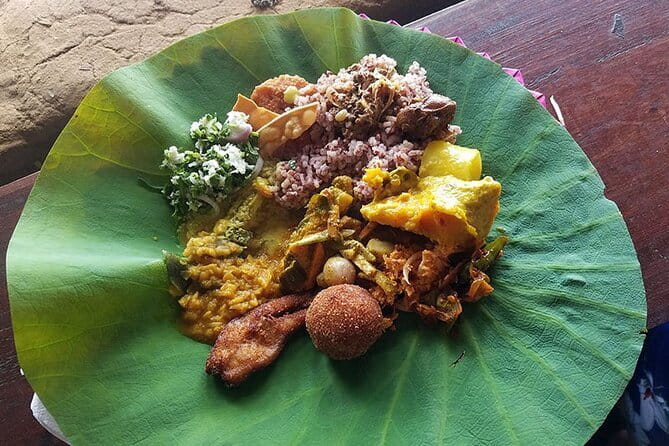
Reviewed · CITY TOURS
Colombo City Tour “The Fort without Walls”
Colombo clicks when someone reads the streets. This Fort without Walls tour knits together Fort, Galle Face Green, Pettah Bazaar and the temple stops, guided by Eranga and Suneth. I love how the route connects everyday neighborhoods with landmarks you would otherwise miss, and I love that you get a short 10-minute walk at Galle Face Green to reset your eyes and take photos without rushing. The main drawback to plan for is pace, it is a half-day in motion for about 4 to 5 hours, so comfy shoes matter.
You’ll get pickup, a private setup with only your group, and a drop off back at the start point. Admission tickets are listed as free on this experience, and the guide builds in time for lunch plus coffee, tea, snacks, and a shopping stop if you want it.
In This Review
- Key highlights if you like real Colombo
- Why this Fort without Walls route is smart for first timers
- From Fort through Galle Face Green, the city’s postcard edges
- Dutch Hospital and the Prison Cell of the Last King
- Wolfendhal Church, temple stops, and how Colombo’s faith shows up
- Pettah Bazaar, Slave Island vibes, and Beira Lake views
- Museums and memorials: National Museum, Independent Memorial Hall, BMICH
- Lotus Tower and Lotus Theater: the modern finishing touches
- Lunch, coffee, tea, snacks, and a smart shopping pause
- Price and what you truly get for $52 per person
- Who should book this private Colombo tour
- Should you book Fort without Walls in Colombo?
- FAQ
- How long is the Fort without Walls Colombo tour?
- What is the price per person?
- Is pickup included?
- Is this a private tour?
- Are admission tickets included?
- What are the available tour hours?
- What if the weather is poor or the minimum travelers is not met?
Key highlights if you like real Colombo
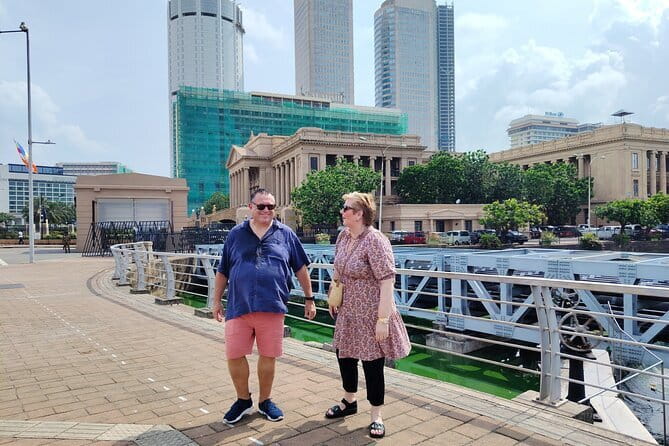
- Fort to Pettah in one loop: You get panorama views and neighborhood context, not just a checklist.
- A proper mix of sacred places: You’ll pass Christian sites, Buddhist temples, and a Hindu temple in the same outing.
- Dutch Hospital and the Prison Cell of the Last King: Colonial-era stories show up in very tangible spots.
- Galle Face Green walk time: A short break that makes the city feel less like a drive-by.
- Modern city landmarks: Lotus Tower and Lotus Theater help you see where Colombo is headed now.
- A guide who can translate daily life: The standout theme from reviews is how the guide shares subtle cultural nuance.
Why this Fort without Walls route is smart for first timers

Colombo can feel like several cities stacked on top of each other: trader lanes and colonial buildings, fast traffic and slow temple moments, office blocks beside markets. This tour works because it does not treat the city as one big sightseeing blur. Instead, you move through distinct areas that each explain a piece of the puzzle, from Fort and the seaside promenade to Pettah’s market atmosphere.
I also like that the tone is practical. You get panoramic viewpoints while still spending enough time at a few major stops to actually look around. The result is a route that helps you understand how Colombo’s cultural mix shows up in daily life, not just on postcards.
Finally, this is private, so you can ask questions without waiting for a whole group to catch up. The pace is still active, but it feels personal rather than assembly-line.
More City Tours in Colombo
- Colombo City Tour by Tuk Tuk Experience – All Inclusive
★ 4.9 · 848 reviews - Colombo Tuk Tuk City Tour -Sightseeing Entry Fees & Food Included
★ 5.0 · 678 reviews - Colombo Private Tuk-Tuk City Tour with All Entry Fees Included
★ 5.0 · 524 reviews
From Fort through Galle Face Green, the city’s postcard edges
The day starts with a welcome and panoramic sightseeing that begins around Fort. This is your orientation phase, and it is more useful than it sounds. Fort is where Colombo’s modern map makes sense, and the drive-by loop helps you track how neighborhoods relate to each other.
One of the best early moments is the brief time at Galle Face Green, with about a 10-minute walk built in. Even that small chunk of time helps. You can stretch your legs, feel the sea breeze area, and take photos without needing a full beach detour. If you tend to get temple fatigue or museum fatigue later, that quick reset is a lifesaver.
As you continue, the route passes key streets and landmarks like Old Parliament, Janadhipathi Mawatha, and York Street. You get a feel for how government and commerce sit alongside local life. It is also one of those stretches where a good guide can point out what looks similar from the road but feels different once you slow down.
Dutch Hospital and the Prison Cell of the Last King
A major payoff comes when you reach the Dutch Hospital area. Even if you are not a hardcore architecture person, it helps you see how European influence left long-lasting physical markers in Colombo. The buildings here act like a timeline you can walk past.
Right after that, the stop at the Prison Cell of the Last King adds real emotional weight. This is one of those places where the city’s layered power story stops being abstract. You are not just learning dates, you are standing in a spot tied to a specific historical figure and a specific kind of conflict.
What I like about this pairing is contrast. Dutch Hospital gives you the visual side of colonial impact, and the prison cell gives you the human side. Together, they help the whole tour feel cohesive, not random stops sprinkled across town.
Practical note: these heritage stops can involve standing and looking. If you are the type who needs constant seating, plan to take your breaks seriously later, including the lunch stop.
Wolfendhal Church, temple stops, and how Colombo’s faith shows up

Colombo’s multicultural identity is not only about trade routes and old empires. It shows up in worship spaces you pass, walk past, and pause at. This tour includes Wolfendhal Church, which is a useful counterpoint to the later Buddhist and Hindu sites.
Then you’ll visit Gangaramaya Buddhist Temple, one of the city’s major Buddhist landmarks. You will likely notice how the space is active and lived-in, not staged like a theme park. This is where having time with a guide matters. A good guide can point out what to look for, what people do there, and how symbolism feels practical, part of the rhythm of the neighborhood.
The itinerary also includes a Hindu Temple stop. That matters because it rounds out the religious mix rather than making the day feel one-dimensional. When you see Buddhist and Hindu spaces in one outing, the differences start to make sense faster.
If you plan your outfits, treat temple stops as serious. Cover shoulders and follow any posted guidelines. Even when the guide helps you interpret what is happening, you still want to show respect with what you wear.
Also, expect some sensory overload in busy temple and neighborhood areas. If you get overwhelmed easily, use your guide as a filter. Ask where to look first and how to move through without feeling lost.
A few more Colombo trips to line up
- Sri Lanka Personal Tour Driver in private vehicle
★ 5.0 · 747 reviews - Udawalawe National Park: Elephant Safari with Expert Guide
★ 4.9 · 641 reviews - 08 Nights in Magical Sri Lanka
★ 5.0 · 443 reviews - Colombo Local Food Tour by Tuk Tuk – All Inclusive
★ 4.9 · 261 reviews
Pettah Bazaar, Slave Island vibes, and Beira Lake views
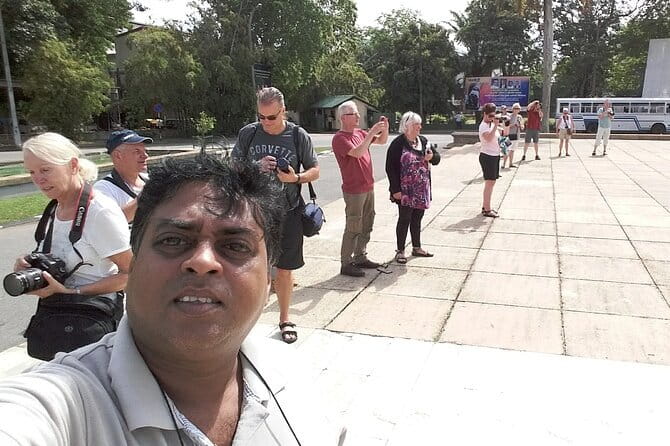
Some of the most memorable parts of Colombo are the in-between areas, the places you might bypass if you only stayed near the major sights. The drive and stops around Pettah Bazaar are key for this. Pettah is about markets, everyday goods, and the kind of street energy that makes you feel like you stepped into real life instead of just visiting monuments.
Then there is the route through Slave Island and past Baire Lake. Even if you do not get long time on foot at every exact point, the area names and the way the streets flow help you build a mental map. This is the part where the tour becomes more than sightseeing. It starts to become understanding.
I also like that the route includes streets like Pettah Bazar and Cinnamon Gardens along the way. You can feel how Colombo shifts from commercial intensity to more residential or leisure-like zones. That contrast helps you see the city as a whole system, not a set of isolated attractions.
Be aware of traffic and walking conditions around markets. You do not control crowds, and you do not control heat. The trick is to keep your goals simple: look, observe, take a few photos, and let your guide do the talking.
Museums and memorials: National Museum, Independent Memorial Hall, BMICH

After the more sensory neighborhood segments, the day turns toward culture and civic spaces. You’ll visit the National Museum, which is a strong stop when you want more context behind what you are seeing. A museum can feel like a pause button, but in Colombo, it often works well because it anchors all those street impressions in broader themes.
Next comes the Independent Memorial Hall and BMICH (Bandaranaike Memorial International Conference Hall). These stops help you understand how the city remembers itself, both in symbols and in prominent public buildings. Even if you skim through parts, you still benefit from seeing where major civic life happens.
You’ll also stop at the New Town Hall and get city landmark context that helps you connect the older parts of Colombo with how it functions today. That connection is hard to make on your own unless you already know where to look.
One practical tip: keep your “must-see” list short for museum-style stops. The more you try to consume in one sitting, the more you miss. Pick a few areas that match your interests, and let the rest be background.
Lotus Tower and Lotus Theater: the modern finishing touches

The last stretch leans modern, with Lotus Tower and Lotus Theater on the agenda. These stops are useful because they remind you that Colombo is not only preserved history. It is also a working, evolving city with contemporary landmarks that people actually use and visit.
This is also a good part of the tour for photos, especially if you like skyline views and signature architecture. Even if you are not planning a big photo session, these two stops give a clean visual ending to a day that started with forts and colonial-era layers.
By this stage, you will probably feel the half-day energy build up. That is normal. The key is to stay hydrated and keep your questions ready for the guide. You will get better answers when you are not rushing.
Lunch, coffee, tea, snacks, and a smart shopping pause
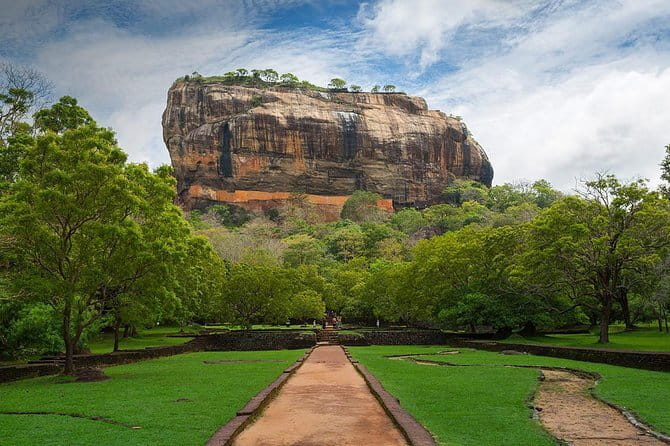
The itinerary builds in lunch, plus coffee, tea, and snacks, with a shopping stop available if you want to do it. That structure is good value because it keeps you from scrambling to find food between stops.
For me, the best part is the flexibility implied by that shopping stop. Markets and neighborhood areas are naturally tempting, but you do not need to turn the whole day into shopping. If you want souvenirs, you can handle it efficiently. If you do not, you can treat it as a stretch and a reset.
If you have dietary needs, plan to mention them to the guide in advance. The tour includes meals, so there is usually room to accommodate, but you should still communicate your preferences early.
Also, Colombo afternoons can feel warm. Since the tour length is around 4 to 5 hours, bringing water helps if your lunch break timing is a little later than you hoped. The guide and included stops should keep you comfortable, but it never hurts to be prepared.
Price and what you truly get for $52 per person
At $52 per person, this tour is priced like a solid half-day guided program rather than a bare-bones city drive. You are paying for three things: a guided route through multiple neighborhoods, time at several major landmarks and religious sites, and a guide who can explain the cultural context in a way that makes the city easier to read.
The value looks even better because admission tickets are listed as free for this experience. That matters because museum and heritage venues can add surprise costs when you plan independently. Here, the tour is set up to reduce friction.
The other strong value driver is privacy. If you are traveling with family, friends, or anyone who prefers a quieter experience, you avoid the typical large-group slowdown. It also makes it easier to stop for quick questions, especially at temple and heritage locations where small details make a difference.
My one caution is about expectations. This is not a slow wandering day. You will cover a lot of ground between stops like Galle Face Green, Dutch Hospital, prison cell heritage, multiple temples, museum and memorial sites, and then Lotus Tower and Lotus Theater. If you like very unstructured travel, you might find the pace a bit packed. If you like guided context, you will probably find it efficient.
Who should book this private Colombo tour
This tour fits best if you want a guided route that connects multiple Colombo identities in a single half-day. It is a good choice when you have limited time and want to make the most of the morning window.
It is also a great option if you care about cultural nuance. Reviews highlight that guides on this route share subtle context you would miss on your own, including how local spaces feel and how different communities coexist in the city.
I also think it is a strong pick for cruisers or short-stay visitors who want to see more than one neighborhood without hiring multiple separate guides. And since most travelers can participate and the tour includes pickup, it is easier to manage than a self-planned route.
Should you book Fort without Walls in Colombo?
If you want an efficient, locally guided way to connect Fort, seaside views, temples, markets, and modern landmarks, book it. The structure is sensible: orientation views first, then heritage and faith sites, then museums and memorials, and finishing with the modern Lotus area.
If you hate being on the move or you prefer long stays at fewer places, consider whether a 4 to 5 hour pace fits your style. You can still enjoy the highlights, but it will feel like a curated tour, not free-form roaming.
Finally, if you value a guide who can explain Colombo in plain language, this is the right kind of experience. The names that show up most in feedback, Eranga and Suneth, are associated with friendly guidance and strong local context, which is exactly what makes this kind of half-day tour work.
FAQ
How long is the Fort without Walls Colombo tour?
It runs about 4 to 5 hours.
What is the price per person?
The price is $52.00 per person.
Is pickup included?
Yes, pickup is offered.
Is this a private tour?
Yes. It is private, and only your group participates.
Are admission tickets included?
Admission tickets are listed as free.
What are the available tour hours?
Tours operate Monday through Sunday from 7:30 AM to 1:00 PM.
What if the weather is poor or the minimum travelers is not met?
The experience requires good weather. If it is canceled due to poor weather, you will be offered a different date or a full refund. It may also be canceled if a minimum number of travelers is not met, with a different date or a full refund.
Recent additions in Colombo
- Yala Safari All-Inclusive Package with Convenient Pick Up★ 4.4 · 3 reviews
- Wilpattu: Private Safari Day Trip with Lunch & Entry Fees★ 4.6 · 9 reviews
- Visit sri Lanka 7 Days Round Trip★ 5.0 · 18 reviews
- Tuk Tuk Tales of Colombo From Cruies★ 4.6 · 4 reviews
- Tuk Trip is Very Cheap in Colombo (All-inclusive ) city tour★ 4.5 · 5 reviews
- Tuk Trip is Very Cheap in Colombo (All-inclusive ) city tour★ 3.4 · 5 reviews
- Colombo Shore Excursion from Cruise Port – Private Small Group★ 5.0 · 6 reviews
- Yala National Park Full-Day Jeep Safari with Lunch★ 5.0 · 8 reviews
City Tours, compared.
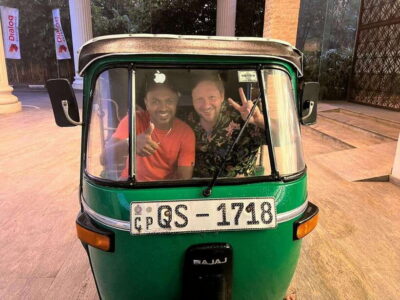
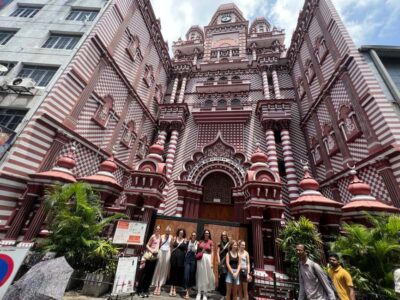
Colombo City Tour by Tuk Tuk Experience – All Inclusive
Read our review →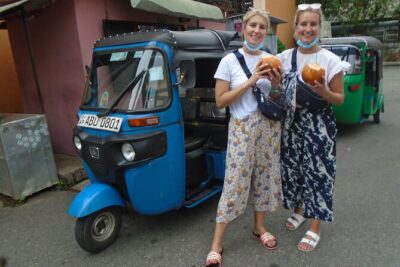
Colombo Tuk Tuk City Tour -Sightseeing Entry Fees & Food Included
Read our review →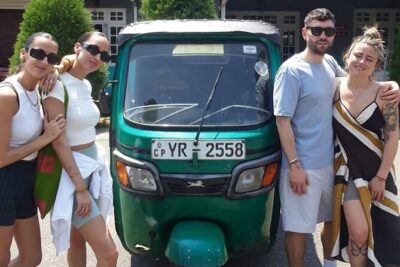
Colombo Private Tuk-Tuk City Tour with All Entry Fees Included
Read our review →
Kandy to Ambuluwawa & Kandy City Guided Tuk Tuk Day Tour
Read our review →
Browse the lists this tour appears in