Reviewed · COLOMBO TOURS
Best of Sri Lanka in two weeks
Two weeks, ten wonders, zero guesswork. This private, custom tour from Colombo strings together the island’s biggest names with a private driver-guide and air-conditioned vehicle for the long hops. If you like having someone keep the day moving and adjust details on the fly, the planning support from Menaka and guides like Hemantha is a big part of the appeal.
I also like the mix: big cultural sites (Sigiriya, Polonnaruwa, Dambulla) plus real nature time (Minneriya elephants, Yala leopards, and whale watching from Mirissa). You’ll get structured mornings with a daily plan, yet still have room to tweak what matters most to you, based on your pace and interests.
One consideration: this is not a bundle of everything. Hotel stays, meals, entry fees, safari jeeps, and train tickets cost extra, and some days are physically demanding, like the 5,000+ step push at Adam’s Peak.
In This Review
- Key highlights I’d plan around
- How the private Colombo start sets your pace
- Days 1 to 2: Sigiriya and Anuradhapura for big, meaningful ruins
- Sigiriya Rock Fortress: the hike with the wow-factor
- Anuradhapura stupas scenic point and Mihintale: sacred Sri Lanka on a hill
- Days 2 to 3: Polonnaruwa ruins and Minneriya’s elephant gathering
- Polonnaruwa: ruins you can still walk through
- Minneriya National Park: elephants, not postcards
- Day 4: Dambulla Cave Temple, Ranweli spice garden, and a Kandyan dance show
- Dambulla Cave Temple: rules you need to follow
- Ranweli Spice Garden: a free tour with a gift-shop vibe
- Kandy Lake Club Cultural Dance Show: movement and myth
- Days 5 to 6: Kandy’s sacred relic, botanical gardens, tea culture, then rafting and Adam’s Peak
- Temple of the Sacred Tooth Relic: the tooth at the center
- Royal Botanical Gardens: big grounds, plant stories
- Ceylon Tea Museum: tea in a historic factory
- Whitewater rafting at Kitulgala: the mid-trip adrenaline reset
- Adam’s Peak, Sri Pada: 5,000 steps and shared meaning across religions
- Days 7 to 8: Nuwara Eliya falls, Gregory Lake, and the famous train to Ella
- Gregory Lake and Nuwara Eliya: Little England and tea-country pacing
- The train ride from Nanu Oya to Ella: scenery you can ride
- Days 9 to 10: Little Adam’s Peak, Nine Arches Bridge, then Yala’s big cats
- Little Adam’s Peak: the easy climb with the big photo payoff
- Nine Arches Bridge: a railway masterpiece in mid-day light
- Ravana Ella Falls and Buduruwagala: waterfalls and rock carvings
- Yala National Park: leopards and serious wildlife time
- Days 11 to 12: Mirissa and Unawatuna beach time, whale watching, and stilt fishermen
- Mirissa and Parrot Rock: beach plus quick viewpoints
- Whale watching from Mirissa: a 6:00 AM start
- Stilt fishermen: the calm, patient side of the coast
- Days 13 to 14: Galle Fort, Madu Ganga, sea turtles, then Colombo by the sea
- Galle Fort: European and Asian architecture together
- Madu Ganga River safari: mangroves and small islands
- Kosgoda Sea Turtle Conservation Project: hatchery and head starting
- Colombo highlights: Galle Face Green and the city’s layered past
- Price and value check for a group of up to 6
- Who this 14-day Sri Lanka plan suits best
- Should you book this Best of Sri Lanka in Two Weeks tour?
- FAQ
- How long is the tour?
- What is the price and group size?
- Does the tour include hotel pickup and private transportation?
- What is included in the tour price?
- What costs extra?
- Are whale watching tours included?
- What time does the whale watching boat depart?
- What is the cancellation window for a full refund?
Key highlights I’d plan around
- Private driver-guide, AC transport, and daily itinerary so you’re not managing transfers or timing
- UNESCO-site guiding included, with local experts handling the heritage stops
- Wildlife with intent, from Minneriya elephant herds to Yala’s leopard odds
- Early-morning experiences, including a whale boat departure at 6:00 AM and Adam’s Peak starts
- Adventure in the middle of culture, with whitewater rafting at Kitulgala
- Beach finish in South Coast towns, then a historic Galle Fort finale
How the private Colombo start sets your pace
Your tour begins back at a set meeting point in Colombo area (Off2srilanka Tours on Francis Perera Mavatha, Piliyandala), with pickup offered so you start each day easily. The tour is private, meaning it’s only your group, up to 6 people, which makes a big difference when you want to move at your own speed or need to stop for a quick food break or photo moment.
You travel in a climate-controlled vehicle with a driver-guide. That matters in Sri Lanka because distances add up fast, and you’re doing multiple regions in two weeks. Knowing you’re not jumping between buses or sorting local transport day by day makes the whole plan feel calmer, even when the itinerary is packed.
A few more Colombo trips to line up
- Colombo City Tour by Tuk Tuk Experience – All Inclusive
★ 4.9 · 848 reviews - Sri Lanka Personal Tour Driver in private vehicle
★ 5.0 · 747 reviews - Colombo Tuk Tuk City Tour -Sightseeing Entry Fees & Food Included
★ 5.0 · 678 reviews
Days 1 to 2: Sigiriya and Anuradhapura for big, meaningful ruins
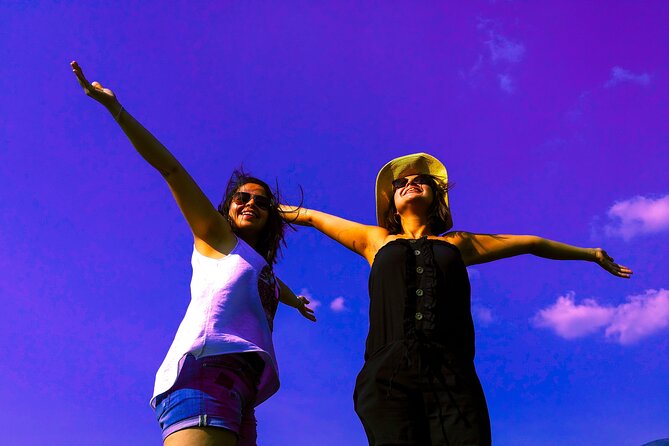
Sigiriya Rock Fortress: the hike with the wow-factor
On Day 1, you’ll start with Sigiriya, the ancient rock fortress built in the 5th century by King Kasyapa and recognized by UNESCO. What makes it special is not just the size of the rock, but the engineering that’s hard to wrap your head around, including irrigation systems described as far ahead of their time.
The experience is a mix of spectacle and detail. You’ll see water gardens, the Sigiriya Damsels frescos, the Mirror Wall graffiti, and the lion paws carved into the rock at the entrance before the final ascent. Admission ticket is not included, so budget for that, but it’s the kind of site you’ll remember even if your legs are already tired from travel.
Practical move: if you can choose your entry time, go earlier rather than later. Sigiriya is a stairs and sun situation.
Anuradhapura stupas scenic point and Mihintale: sacred Sri Lanka on a hill
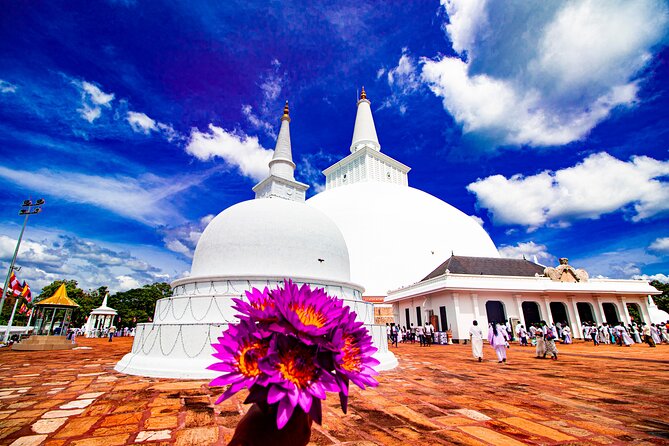
Day 2 leans spiritual and atmospheric at Anuradhapura, an ancient sacred city dating back around the 3rd century BC. It centers on religious significance tied to a cutting from Buddha’s fig tree, and it flourished for about 1,300 years before being abandoned after invasion in the late 10th century.
You then head to Mihintale, a mountain linked to the introduction of Buddhism to Sri Lanka through the meeting between monk Mahinda and King Devanampiyatissa. Expect pilgrimage energy, plus religious structures across and around the mountain, with many people visiting each year.
Why it works in the itinerary: starting the trip with two UNESCO heavyweight days helps you get your bearings quickly. You’ll learn the country’s rhythm, both cultural and physical, before the tour turns more wild and adventurous.
Within the same drive of Colombo, but a different sort of day:
- Udawalawe National Park: Elephant Safari with Expert Guide
★ 4.9 · 641 reviews - Colombo Private Tuk-Tuk City Tour with All Entry Fees Included
★ 5.0 · 524 reviews - 08 Nights in Magical Sri Lanka
★ 5.0 · 443 reviews - Colombo Local Food Tour by Tuk Tuk – All Inclusive
★ 4.9 · 261 reviews
Days 2 to 3: Polonnaruwa ruins and Minneriya’s elephant gathering
Polonnaruwa: ruins you can still walk through
On Day 3, Polonnaruwa delivers one of the island’s best-preserved sets of ruins from the 12th-century kingdom. You’ll start at the Archaeological Museum, then move through major highlights like the Royal Palace complex, with its audience hall, plus the Sacred Quadrangle.
Polonnaruwa feels like a city you can picture in motion: traders of exotic goods met worshippers across temples. Admission ticket is not included, so add it to your day budget.
Minneriya National Park: elephants, not postcards
You end the day at Minneriya National Park, famous for being the largest known meeting place of Asian elephants. The tour notes that herds can number up to around 300 elephants within a few square kilometers near the lake.
This is one of those stops where timing matters, because you’re watching animals do their own thing. Also, safari jeeps are listed as not included, which is important for budgeting. If you’re the sort of person who wants the best shot at seeing elephants up close, plan your safari logistics carefully.
Day 4: Dambulla Cave Temple, Ranweli spice garden, and a Kandyan dance show
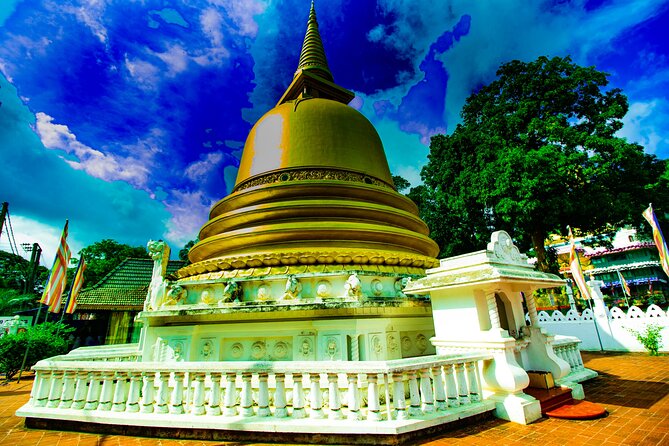
Dambulla Cave Temple: rules you need to follow
Dambulla Cave Temple is a sacred Buddhist site with more than 80 caves documented, but the famous five have statues and paintings. Some caves date back to prehistoric times when people lived in the area, and the site has a deep long timeline.
There’s a notable detail: entry is free on full moon days, but those days can get busy. Visitors also must cover shoulders and legs, and remove shoes before entering the caves. Admission is free on the days described, and even when it’s not full-moon day, it’s one of the places where you’re not just touring, you’re participating in local custom.
Ranweli Spice Garden: a free tour with a gift-shop vibe
Next you’ll stop at Ranweli Spice Garden. The tour description says the A9 road between Matale and Dambulla is lined with spice gardens, many offering free tours with an English-speaking guide who explains herbs and spices and their uses.
Here’s the catch: these tours are free, but you may hit a stronger sales push in the gift shop afterward. If you hate pressure, go in with the mindset of a lesson, not a shopping stop.
Kandy Lake Club Cultural Dance Show: movement and myth
Finally, you’ll see a Kandyan cultural dance show in Kandy town. This performance focuses on Kandyan dance forms tied to Sri Lankan culture and includes energetic acrobatics, plate-spinning, and a fire walk ending the show.
If you want culture that feels alive rather than purely museum-based, this is the kind of night activity that balances the heavy days earlier. Admission is not included, so factor that into your total trip costs.
Days 5 to 6: Kandy’s sacred relic, botanical gardens, tea culture, then rafting and Adam’s Peak
Temple of the Sacred Tooth Relic: the tooth at the center
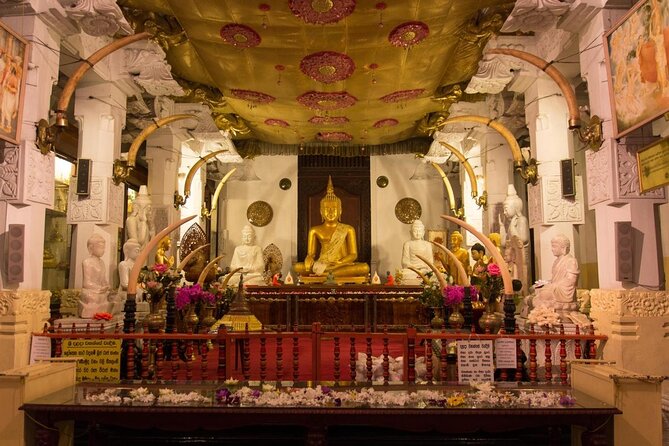
Day 5 starts with the Temple of the Sacred Tooth Relic, one of Sri Lanka’s most important religious sites. The temple houses a Buddha’s tooth relic, and the legend includes dramatic details about the tooth being smuggled from India.
There are twice daily pujas, and visitors can get a glimpse of the tooth within its casing. Admission is not included, but this is a great example of why the tour’s cultural stops feel more than scenic.
Royal Botanical Gardens: big grounds, plant stories
You then visit the Royal Botanical Gardens just outside Kandy, Sri Lanka’s largest landscaped gardens at about 60 hectares. While the origin dates back to the 14th century, the gardens were formally established in 1843 under British control, and plants were moved from various parts of the island, plus shipping from Kew Gardens in London.
Admission is not included. Even so, it’s an effective break from hard trekking days, and it gives you a chance to slow down with shade and walking paths.
Ceylon Tea Museum: tea in a historic factory
The Ceylon Tea Museum is based in the former Hanthana Tea Factory, built in 1925. It’s positioned as a way to understand how tea cultivation and production took off in Sri Lanka after coffee failed.
Admission is not included, but if tea is a real interest for you, it connects nicely to what you’ll do next in the hill country.
Whitewater rafting at Kitulgala: the mid-trip adrenaline reset
Day 6 swaps temples for action with whitewater rafting on the Kelani River near Kitulgala. The description says the route covers around 5 kilometers with 5 major rapids and 4 minor rapids.
You’ll get safety gear and a safety briefing from instructors, and the activity is for ages 10 and up. Admission ticket is not included. This is also a good contrast day: you’ll go from stairs and steep viewpoints to something loud, fast, and outdoorsy.
Adam’s Peak, Sri Pada: 5,000 steps and shared meaning across religions
Then comes Adam’s Peak, also called Sri Pada. At the top is a footprint cast in stone, shared across multiple religious traditions: Buddhists, Christians, and Hindus each connect the footprint to their own meaning.
The route involves a steep staircase with over 5,000 steps, with tea stalls along the way. Many climbers start around 2:30 AM to reach sunrise. December to April are described as the season, and off-season can be challenging. Admission is free as listed.
My honest take: this is not a casual add-on. If you’re even slightly unsure about stairs, early mornings, or endurance, consider whether you want to prioritize this or keep your trip focused on less demanding viewpoints.
Days 7 to 8: Nuwara Eliya falls, Gregory Lake, and the famous train to Ella
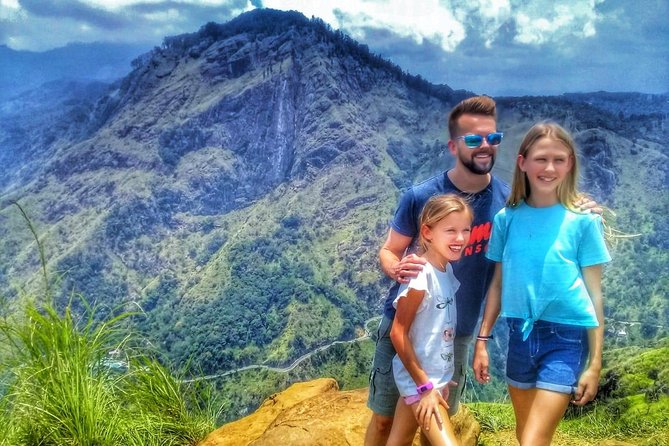
Gregory Lake and Nuwara Eliya: Little England and tea-country pacing
Day 7 includes Gregory Lake and a Nuwara Eliya city tour. Gregory Lake, or Gregory Reservoir, was constructed during British Governor Sir William Gregory’s period in 1873.
Then you’ll explore Nuwara Eliya, described as Sri Lanka’s tea production capital at about 1,900 meters elevation. It’s known as a retreat for British colonists, with the nickname Little England. The tour notes April as a good time to visit for blossoms and celebrations around Sri Lanka New Year, and it also mentions Laxapana waterfall as a sight.
St. Clair’s Falls and Devon Falls are quick stop add-ons, both listed as free. St. Clair’s Falls is called the Little Niagara of Sri Lanka, and Devon Falls is known as the Veil of the Valley.
The train ride from Nanu Oya to Ella: scenery you can ride
On Day 8 you’ll take the train from Nanu Oya to Ella, or the reverse. The trip is about 3 hours and is described as one of the most beautiful train journeys, passing lush tea plantations and mountain views.
The guidance is clear: buy tickets well in advance, and you can also purchase at train stations for your date. Admission ticket is listed as free because it’s not the same category as entry fees, but train tickets are not included in the overall tour costs.
Ella itself sits at around 1,041 meters and feels rural and original, while still handling tourist volumes during seasonal peaks. It’s a great place to absorb the hill country mood before you start climbing viewpoints again.
Days 9 to 10: Little Adam’s Peak, Nine Arches Bridge, then Yala’s big cats
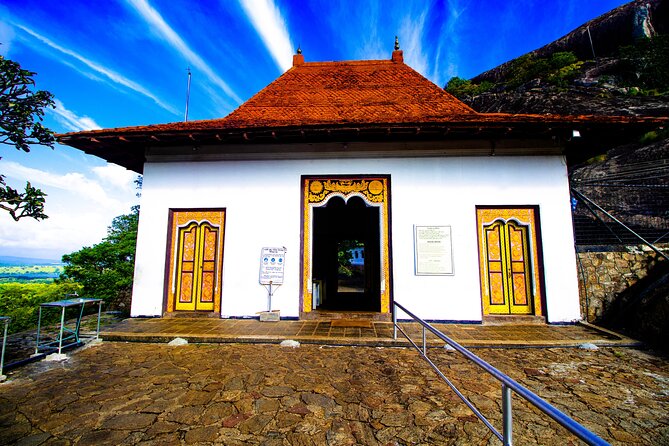
Little Adam’s Peak: the easy climb with the big photo payoff
Day 9 focuses on Little Adam’s Peak viewpoint and the Nine Arches Bridge. Little Adam’s Peak is described as a relatively easy climb, starting through a sloping tea field before you hit winding steps.
At the top you get wide views that can reach Ella Rock, the Ella gap, and on clear days even the south coast with the ocean on the horizon. Admission is free as listed.
Nine Arches Bridge: a railway masterpiece in mid-day light
Next comes Nine Arch Bridge, an iconic 19th-century railway structure that the tour dates to British colonial era engineering. Built in 1921, it rises about 30 meters and has dramatic arches.
Admission is listed as free. This stop works well because you can combine it with photo timing, and it doesn’t drain the day like a long hike can.
Ravana Ella Falls and Buduruwagala: waterfalls and rock carvings
Day 10 starts with Ravana Ella Falls, described as a place where people bathe in hot summer months, and where rainy season flow looks much more powerful. It also notes nearby cave complex legends and that monkeys can be around the roadside dining.
You then stop at Buduruwagala, with 8th-century rock carvings, including seven giant Buddhist figures on a 70-foot cliff and a colossal image of Lord Buddha around 50 feet tall. Admission is not included for Buduruwagala.
Yala National Park: leopards and serious wildlife time
Finally, Day 10 includes Yala National Park, described as having one of the highest density of leopards in the world. It also lists other animals you might spot like elephants, sloth bears, and crocodiles.
Yala is organized into five blocks, and the tour notes that some blocks were once zoned to hunters until the park became a national park. It also suggests making time for the visitor center at the entrance for useful displays. Admission is listed as free, but safari jeeps are not included, which is the key logistics piece.
Days 11 to 12: Mirissa and Unawatuna beach time, whale watching, and stilt fishermen
Mirissa and Parrot Rock: beach plus quick viewpoints
Day 11 has a South Coast beach break with Mirissa. The tour describes Mirissa as a long beach lined with palm trees and restaurants, with Parrot Rock just off the beach for views.
It also points out that Mirissa works as a base for day trips like whale watching, snorkeling, and surfing. Admission is listed as free for the stop itself.
Unawatuna follows, with a white-sand beach and snorkeling and diving tied to nearby coral reefs. The tour notes turtles and colorful fish as common sightings, plus plenty of dining along the beach.
Whale watching from Mirissa: a 6:00 AM start
Day 12 is whale watching out of Mirissa with Kumara. The boat departs at 6:00 AM and the tour runs about 3 to 5 hours depending on spotting and conditions.
Species listed include blue whales, Bryde’s whales, sperm whales, fin whales, and sometimes killer whales. You might also see multiple dolphin species, and turtles are mentioned as possible sightings.
Admission is not included for this experience. This is the kind of plan where I’d treat weather and seas seriously. It’s early, it’s outdoors, and you’re relying on animal behavior.
Stilt fishermen: the calm, patient side of the coast
You end the day with stilt fishermen, a Sri Lankan tradition. The description emphasizes the patience required, with fishermen waiting quietly while casting lines from elevated poles, often for small fish.
This is a nice contrast after the intensity of whale watching. It also gives you a glimpse of local food supply habits that exist outside the tourist machines.
Days 13 to 14: Galle Fort, Madu Ganga, sea turtles, then Colombo by the sea
Galle Fort: European and Asian architecture together
Day 13 begins at Galle Fort. The fort can feel like a mix of lanes, shops, and modern life, but the tour traces its roots to a Portuguese fort built after their landing in 1505.
The Dutch later seized control and made improvements, including the big sea wall that still lines the fort. Admission is listed as free, so you can wander without extra ticket stress.
Madu Ganga River safari: mangroves and small islands
Next is a safari on the Madu Ganga River, described as a coastal ecosystem of mangroves and islands. The tour highlights that it may be one of the last remaining tracts of pristine mangrove forest, with a boat trip as the best way to see it.
It also notes the river has around 64 islands, with examples ranging from tiny shrine sites to islands where families live and connect with footbridges. You might see monkeys, a water monitor lizard, and birds like cormorants, egrets, and kingfishers waiting along banks. Admission is not included.
Kosgoda Sea Turtle Conservation Project: hatchery and head starting
You finish with the Kosgoda Sea Turtle Conservation Project. The focus is monitoring nesting sites and helping eggs hatch safely through predator-free conditions.
The tour describes a hatchery where rescued eggs can hatch away from predators, then some hatchlings are kept briefly for head starting before being released into the sea. Admission is not included.
Colombo highlights: Galle Face Green and the city’s layered past
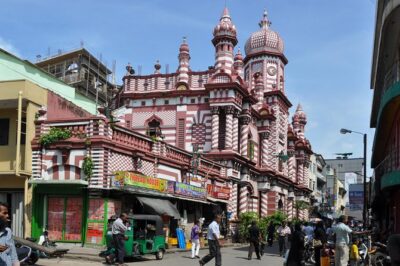
Day 14 returns you to Colombo for highlights. The tour lists a set of key stops including Galle Face Green, Barefoot, Viharamahadevi Park, the Dutch Period Museum, Dutch Hospital, Old City Hall, Arcade Independence Square, Seema Malakaya Meditation Centre, Jami-Ul-Alfar Mosque, Wolvendaal Church, St Anthony’s Church, Gangaramaya Temple, Independence Memorial Hall, and St Lucia’s Cathedral.
Then you’ll spend time at Galle Face Green, an ocean-side urban park stretching along the coast. It’s described at about 5 hectares and 500 meters long, with a promenade laid out in 1859 by Governor Sir Henry George Ward. The park has been used for everything from horse racing to cricket and rugby.
Why this ending makes sense: after temples, wild animals, and hill country climbs, Colombo brings you back to a lively city rhythm with choices for food and walking without a hard schedule.
Price and value check for a group of up to 6
The price is $1,200 per group for up to 6 people for about 14 days. That number looks simple, but the real value depends on what’s included.
What’s included: private transportation, air-conditioned vehicle, guides at UNESCO world heritage sites, all taxes and service charges, plus the driver-guide’s accommodation and food. That last point matters because it means you’re not quietly adding extra driver costs that come up on other DIY styles.
What’s not included: entry fees for attractions, hotels and accommodation, meals, safari jeeps, and train tickets. In practice, this means your daily budget will swing depending on what you choose to pay for at each stop. For example, Yala and elephant safaris often require jeep arrangements, and those are specifically called out as not included.
When it’s a strong deal: if you’re traveling as a family or a small group and you want private logistics without hotel planning from scratch, this is efficient. If you’re solo, the per-person cost climbs, and you might feel the missing pieces (hotel and meals, entry tickets) more strongly.
Who this 14-day Sri Lanka plan suits best
This tour fits you well if you want a private, structured run through Sri Lanka’s major regions without managing transfers. It also suits you if you like mixed days: heritage sites by morning, wildlife and adventure in the middle, and beaches at the end.
It’s less ideal if you know you will struggle with heavy stairs or early starts, because Adam’s Peak includes over 5,000 steps and many climbers start around 2:30 AM. It’s also not a fit if you strongly prefer that hotels and meals be included in the package, since those are excluded.
Should you book this Best of Sri Lanka in Two Weeks tour?
If your priority is maximum Sri Lanka coverage with private comfort, this is an easy yes to consider. The highlights hit the big UNESCO names, then keep going into wildlife and coast, with a planning team that’s described as responsive, patient, and flexible, and guides like Hemantha and others who adapt for families.
My advice is to book with eyes open: treat it as a guided itinerary plus transport, not an all-inclusive resort plan. If you budget for entry tickets, safaris, train tickets, and hotels, the flow feels smooth and the two-week arc makes sense.
If you’re ready for an active, packed, high-contrast trip, this one is worth serious consideration.
FAQ
How long is the tour?
It’s 14 days approximately.
What is the price and group size?
It’s $1,200 per group, up to 6 people.
Does the tour include hotel pickup and private transportation?
Pickup is offered each morning after hotel pickup, and the tour includes private transportation in an air-conditioned vehicle.
What is included in the tour price?
Included items are private transportation, air-conditioned vehicle, guides in UNESCO world heritage sites, all taxes and service charges, and the driver-guide’s accommodation and food.
What costs extra?
You pay entry fees for attractions, hotel accommodation and meals, and safari jeeps and train tickets.
Are whale watching tours included?
No, whale and dolphin watching in Mirissa is listed as not included.
What time does the whale watching boat depart?
The Mirissa boat leaves at 6:00 AM.
What is the cancellation window for a full refund?
You can cancel up to 3 days in advance for a full refund, as long as you cancel at least 3 full days before the experience’s start time. If you cancel less than 3 full days before, the amount paid is not refunded.
Recent additions in Colombo
- Yala Safari All-Inclusive Package with Convenient Pick Up★ 4.4 · 3 reviews
- Wilpattu: Private Safari Day Trip with Lunch & Entry Fees★ 4.6 · 9 reviews
- Visit sri Lanka 7 Days Round Trip★ 5.0 · 18 reviews
- Tuk Tuk Tales of Colombo From Cruies★ 4.6 · 4 reviews
- Tuk Trip is Very Cheap in Colombo (All-inclusive ) city tour★ 3.4 · 5 reviews
- Tuk Trip is Very Cheap in Colombo (All-inclusive ) city tour★ 4.5 · 5 reviews
- Colombo Shore Excursion from Cruise Port – Private Small Group★ 5.0 · 6 reviews
- Yala National Park Full-Day Jeep Safari with Lunch★ 5.0 · 8 reviews
Colombo Tours, compared.
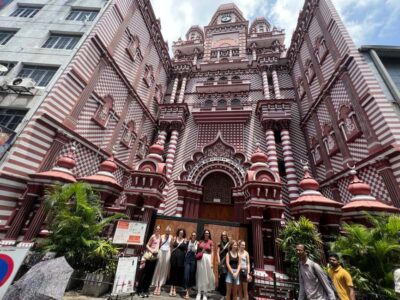
Colombo City Tour by Tuk Tuk Experience – All Inclusive
Read our review →
Colombo Tuk Tuk City Tour -Sightseeing Entry Fees & Food Included
Read our review →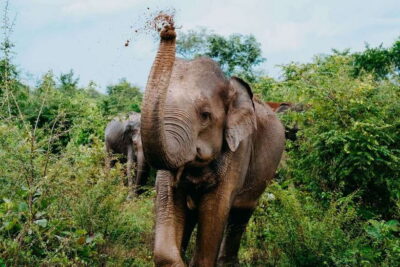
Udawalawe National Park: Elephant Safari with Expert Guide
Read our review →
Colombo Private Tuk-Tuk City Tour with All Entry Fees Included
Read our review →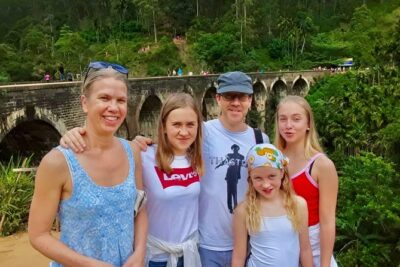
Colombo Local Food Tour by Tuk Tuk – All Inclusive
Read our review →