
Reviewed · NEGOMBO TOURS
12 Days 11 Nights Experience Nature Culture & Beauty Of Sri Lanka
Elephants, temples, and tea hills in one run. This 12-day private loop hits Sri Lanka’s big-ticket variety in a smart order, from Sigiriya to Galle, with plenty of time for villages, hikes, and ocean days. I like that it’s not just sightseeing on a clock, it’s a route that mixes nature, culture, and small “stop and look” moments.
Two things I really like: first, the driver-guide setup helps you move smoothly between regions without constant re-planning. Second, the day plan keeps changing flavors, like cave temples and ancient capitals early on, then tea country by train, then a proper safari before you land on the south coast beach scene. One consideration: most entry tickets are not included, so you’ll want to budget for admission fees as you go.
And because your group travels together, this itinerary works best when you’re okay with a packed schedule and some travel time in the car each day. If you prefer slow, single-area trips, you might find this one a bit ambitious.
In This Review
- Quick hits on this Sri Lanka route
- Negombo base, private-car comfort, and how value really works
- Day 1: Sigiriya Rock Fortress, Dambulla caves, and a village day that feels lived-in
- Day 2: Polonnaruwa ruins, Pidurangala views, and elephants at Minneriya
- Day 3: Spice gardens, the Temple of the Sacred Tooth, and Kandyan dance in Kandy
- Day 4: Kandy viewpoints, Royal Botanical Gardens, Ambuluwawa Tower, and Ramboda Falls to Nuwara Eliya
- Day 5: Ella by rail, Nine Arches Bridge, and the start of hiking country
- Day 6: Little Adam’s Peak, Nil Diya Pokuna, forest temples, and Ravana Ella Falls
- Day 7: Yala National Park safari plus Buddhist and Hindu crossover at Kataragama
- Day 8 and Day 9: Mirissa coastline, whale watching, and Coconut Tree Hill time
- Day 10: Galle lighthouse, Koggala lagoon, and Jungle Beach decompression
- Day 11: Galle Fort Dutch streets and Kosgoda sea turtle conservation
- Day 12: Colombo temples and parks to end on a calmer note
- Guides and pacing: what matters beyond the headline sights
- Who should book, and who should rethink it
- Should you book 12 Days 11 Nights Nature Culture & Beauty Of Sri Lanka?
- FAQ
- Where does the tour start?
- Is pickup offered?
- Is this a private tour?
- Are attraction tickets included?
- What’s included in the price besides the tour itself?
- Should I budget for tipping?
- What is the cancellation policy?
Quick hits on this Sri Lanka route
- Sigiriya plus Dambulla in the same early stretch, for maximum ancient-rock wow
- Minneriya National Park timed for the famous elephant gathering season vibe
- Kandy culture day with Temple of the Sacred Tooth Relic and Kandyan dance performance
- Ella by rail and iconic views from spots like Nine Arches Bridge and Little Adam’s Peak
- Yala National Park safari before you switch gears to beach time in Mirissa
- Galle Fort and sea turtles to close with old-town atmosphere and conservation-focused nature
Negombo base, private-car comfort, and how value really works
This tour is built around an air-conditioned vehicle, with fuel surcharge, parking fees, and passenger insurance handled in the package. Practically, that means you spend less mental energy figuring out transport and more energy paying attention to what you’re seeing. It’s also private, so it’s only your group, not a shared bus with a rotating crowd.
Value here comes from the sheer spread of “Sri Lanka in one trip” stops. You’re not only hitting famous temples and ruins, you’re also getting wildlife time at Minneriya and Yala, plus a tea-country rail experience, then settling into the southern coast. At $1,480, the price makes the most sense if you want one organized plan that stitches together a lot of distance.
That said, the budget is not truly all-inclusive. Many admissions are listed as not included, and tipping is expected. So do the math like this: the tour cost covers the vehicle, driver support, and the backbone of the route, while your biggest extra variable is tickets at major sites and temples.
A few more Negombo trips to line up
- AirPort CMB to Colombo (Private Taxi 24/7) Car, Van, Minibus
★ 5.0 · 604 reviews - 8 Days tour in Sri Lanka with privet driver and accommodations
★ 5.0 · 472 reviews - Negombo city tour by Tuk Tuk Hotel Pickup & Guide
★ 5.0 · 221 reviews
Day 1: Sigiriya Rock Fortress, Dambulla caves, and a village day that feels lived-in
Starting around Negombo, the first days pull you quickly into Sri Lanka’s ancient identity. Sigiriya is the headline: an ancient rock fortress and palace tied to King Kashyapa. The rock’s engineered stone work and the surviving wall arts are the kind of details that make you understand why this place has such a reputation. Even if you only spend part of the time soaking it in, the setting alone makes the climb feel worth it.
Then comes Dambulla, described as the largest and best-preserved cave temple complex in the country, with the rock rising around 160 meters above the plains. Cave temples can be uneven in how “wow” they feel depending on light and crowd levels, but Dambulla’s scale is hard to fake. It’s a strong follow-up to Sigiriya, because it shifts from royal fortress power to sacred, calm interior space.
What I like most on this first day stretch is the countryside village tour in the Sigiriya area. It’s not just a viewpoint stop. You get to see paddy fields, ride a bullock cart, and experience a traditional catamaran ride on a lake. You also visit a chena cultivation area and get involved in traditional cooking. That combination matters because Sri Lanka’s culture is not only inside temples, it’s also in how people farm and eat.
Possible drawback: early sightseeing like this can stack fatigue fast. If you’re not a “get up and go” traveler, plan for breaks and don’t treat every stop like a sprint.
Day 2: Polonnaruwa ruins, Pidurangala views, and elephants at Minneriya
Day 2 keeps the ancient theme going with Polonnaruwa, Sri Lanka’s second capital. You’re looking at monumental ruins that include Brahmanic monuments connected to Chola influence and the garden-city planning created under Parakramabahu. This is the sort of site where a few key context points from a guide make the stones easier to read.
Next is Pidurangala Rock, just north of Sigiriya. It’s tied historically to Sigiriya, and it’s often the better angle for wide views because you’re looking out over the landscape in a different way. Even if you know Sigiriya already, Pidurangala helps you see the area as a whole.
Then you shift from ruins to wildlife at Minneriya National Park. The highlight here is “The Gathering,” the elephant congregation on the reservoir banks during the dry season. The tour description notes that this is the largest grouping of wild Asian elephants at that reservoir, which is exactly why Minneriya is on so many Sri Lanka wildlife lists. You’re not guaranteed perfect sightings at any safari, but the whole point of Minneriya is that the elephants draw to the same water source when conditions tighten.
Consideration: wildlife days can be emotionally intense and logistically long. You’ll want patience and a willingness to wait for animals rather than expecting constant action.
Day 3: Spice gardens, the Temple of the Sacred Tooth, and Kandyan dance in Kandy
Kandy is where the route shifts from ancient sites into living culture. First you stop at Sirilak Spice & Herbal Garden, where the focus is on Sri Lanka’s famous spices such as Ceylon cinnamon, pepper, cloves, cardamom, nutmeg, mace, and vanilla. This kind of stop is valuable if you like practical context. It’s not just shopping, it’s a guided way to understand what makes Sri Lankan spices different and why people keep mentioning Ceylon.
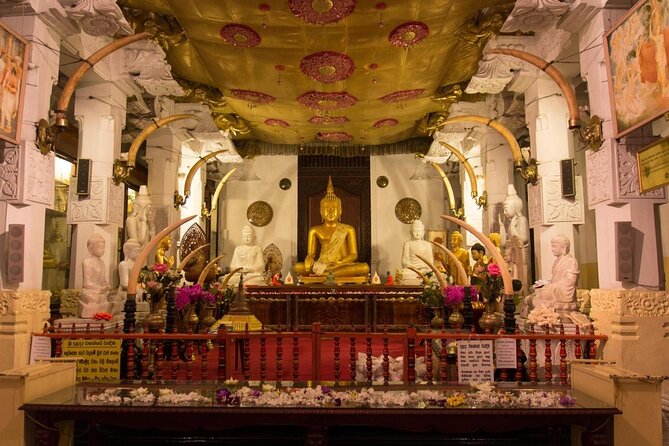
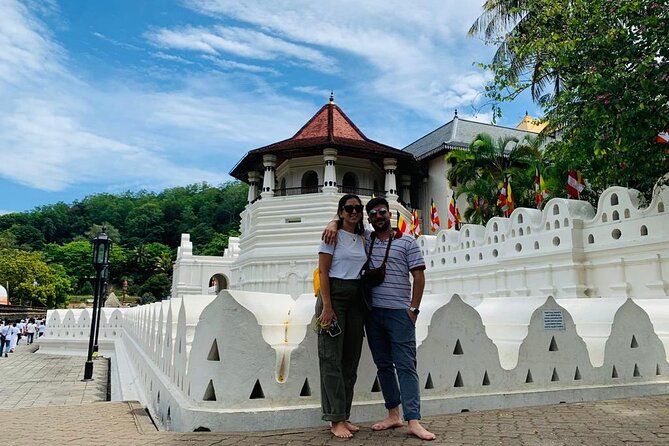
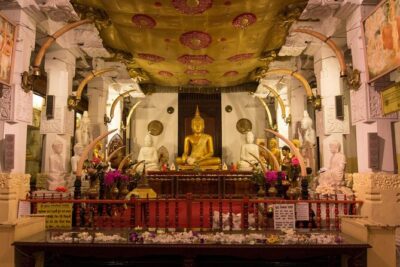
Then you head to the Temple of the Sacred Tooth Relic (Sri Dalada Maligawa). This temple is part of the royal palace complex of the former Kingdom of Kandy and houses the relic of the tooth of the Buddha. That mix of temple and palace setting matters because it makes the site feel like a center of both spiritual and political history.
After that, you get Kandyan dance through an Avanhala stop. Kandyan dance is described as popular in the Central Hills region, and it’s a good fit after the tooth temple because it gives the cultural “voice” to the area. A short Kandy Lake sightseeing segment in tuk-tuk style helps you reset your eyes after indoor temple time.
Possible drawback: these stops are all meaningful, but on a packed day they can start to blur together. If you want more time for photography or quiet, build in a few minutes of breathing space between major sights.
Within the same drive of Negombo, but a different sort of day:
- Private Car & Driver for 07 Days Tour In Sri Lanka
★ 5.0 · 199 reviews - Most Popular Round Tour in Sri Lanka
★ 5.0 · 161 reviews - Sri Lanka Private Tour 8 days-Driver/vehicle/accommodation H/B
★ 5.0 · 161 reviews - 7 Days Round Tour in Private Car/Van with Chauffer
★ 5.0 · 122 reviews
Day 4: Kandy viewpoints, Royal Botanical Gardens, Ambuluwawa Tower, and Ramboda Falls to Nuwara Eliya
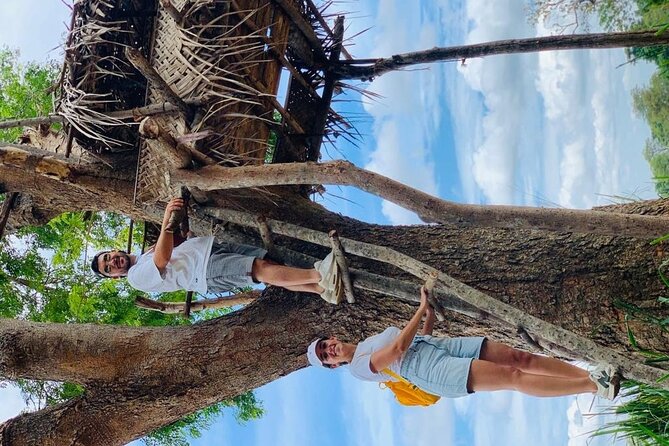
Day 4 is a scenery and plants-and-views day. You start at Arthur’s Seat viewpoint in Kandy, a spot above the city with panoramic views especially toward the lake. From there, the Royal Botanic Gardens in Peradeniya put you in a very different rhythm. These gardens are near the Mahaweli River and are a classic Kandy-area stop for people who love walking in shaded paths and watching how different plants grow in one place.
Next is Ambuluwawa Tower, located in the suburbs of Gampola. The key feature is the climb for the views, described as breathtaking from up high. It’s the kind of stop that refreshes your sense of geography, helping you connect where you are in Sri Lanka with what you’ve seen earlier.
Then the route moves to Ramboda Falls, a 109 meter waterfall formed by the Panna Oya. Waterfalls are one of the best “reset” moments in this kind of itinerary. They’re dramatic without asking you to spend hours inside.
By the end of the day you land in Nuwara Eliya, the tea country hills city. The tour description calls out Hakgala Botanical Gardens nearby (with roses, tree ferns, monkeys, and blue magpies), plus the Seetha Amman Temple and then Gregory Lake. The lake connects the story to British-era influences since it was constructed during Governor Sir William Gregory’s period in 1873.
Consideration: hill areas can feel colder and more changeable in weather than lowland Sri Lanka. That’s a general travel reality, so bring a light layer and plan for comfort.
Day 5: Ella by rail, Nine Arches Bridge, and the start of hiking country
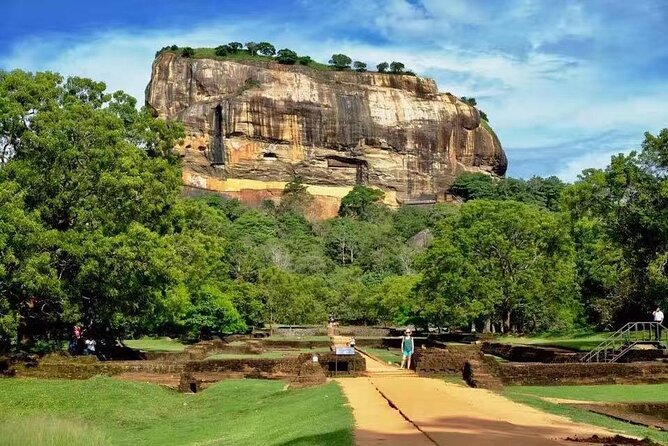
This is one of the itinerary’s smartest moves: getting you into Ella using train. The train segment runs from Colombo Fort Railway station, reaches Nanu Oya by 01:00, then arrives in Ella by 15:22, with the most scenic stretch described as Hatton to Haputale. That timing matters because the famous views tend to align with daylight windows, and this plan aims to place the best scenery in the right part of the day.
In Ella, you visit Nine Arches Bridge, also known as the Bridge in the Sky. It’s noted as a colonial-era railway viaduct and one of the standout examples of that kind of engineering in Sri Lanka. Even if you don’t care about construction history, the curve and the scale usually make people stop in place for a while.
Possible drawback: trains are amazing when everything runs on schedule. If you’re the kind of traveler who hates uncertainty, you’ll want to keep expectations flexible and allow buffer time.
Day 6: Little Adam’s Peak, Nil Diya Pokuna, forest temples, and Ravana Ella Falls
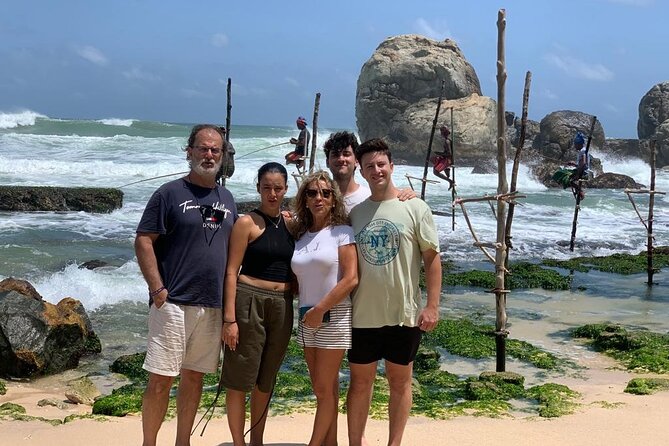
Day 6 is for views plus a few off-the-beaten-path style stops. You start at Little Adam’s Peak viewpoint, described as one of Ella’s top view moments, with tea plantations and mountain ranges in the background. This is where the word hike becomes practical, not theoretical, because you’ll be walking and spending time outside.
Then you go to Nil Diya Pokuna, described as an underwater pond in a cave or tunnel complex, believed tied to King Ravana’s legend. The pond lies about 80 meters deep inside a mountain cave. Even if you’re not into myth, that depth detail is exactly why people remember this stop.
Next is Rakkhiththa Kanda Aranya Senasanaya (Rakkiththa Kanda Rajamaha Viharaya), a Buddhist temple near the evergreen forest Galbokka Forest Reserve. It’s a quieter kind of stop than a big ruin or a big viewpoint, and it works as a counterweight to the more obvious scenery.
Finally, you visit Ravana Ella Falls, connected in local legend to the story of Ravana hiding Sita in caves behind the waterfall. Short nature stops like this are great on a day where you also have walking and caves.
Consideration: some of these sights involve uneven paths and cave-like areas. Wear shoes that you trust on rock and stairs, and plan on slow steps.
Day 7: Yala National Park safari plus Buddhist and Hindu crossover at Kataragama
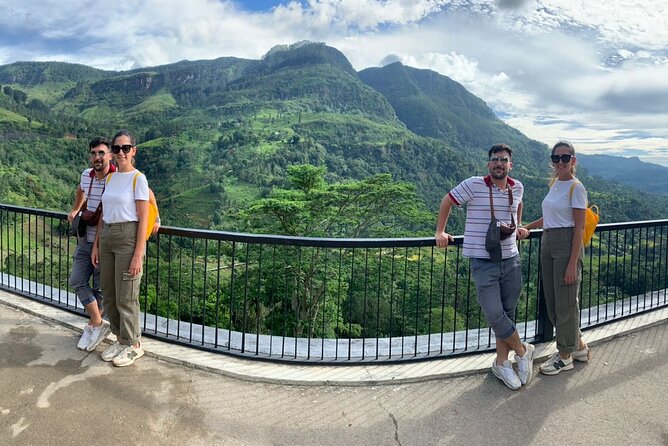
Day 7 is the wildlife crescendo at Yala National Park, described as the most visited and second-largest national park in Sri Lanka. The park’s value is in its variety of ecosystems, from moist monsoon forests to freshwater and marine wetlands. That variety is why Yala often feels different from a one-note safari.
After the safari, you visit Buduruwagala Temple, an ancient Buddhist site with seven statues dating back to the 10th century, plus a gigantic Buddha statue with traces of its original paint. Stops like this add cultural grounding after the excitement of the park.
Then you visit Tissa Wewa, described as a reservoir in Tissamaharama constructed in the 3rd century BC, either by Mahanaga of Ruhuna or Yatala Tissa. It’s a reminder that Sri Lanka’s big historical achievements often tied back to water engineering.
The day’s final spiritual stop is Kataragama Temple, dedicated to the Buddhist guardian deity Kataragama deviyo and the Hindu war god Murugan. It’s noted as one of the few sites venerated by both Buddhists and Hindus. For many people, this is the moment where the tour feels less like “sights” and more like a living picture of how faith shows up in daily life.
Possible drawback: mixing safari, a few historical sites, and a religious complex can mean long days and shifting moods. I’d treat this day as mentally active and pace yourself.
Day 8 and Day 9: Mirissa coastline, whale watching, and Coconut Tree Hill time
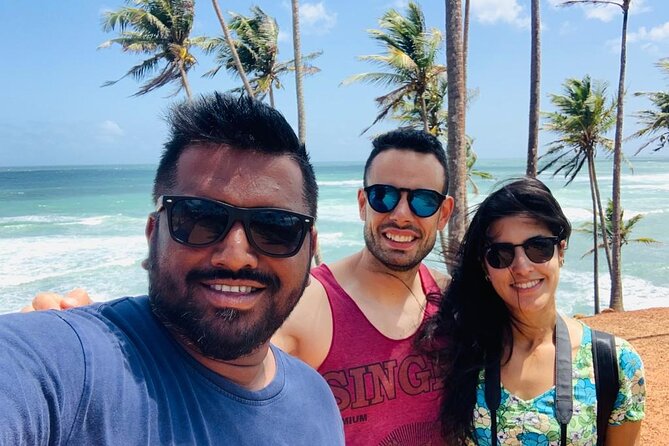
Now the tour shifts to ocean time. In Mirissa, you start at Coconut Tree Hill, a headland by the Indian Ocean with coconut plantations. It’s popular, and you’ll usually see why once you’re up at the viewpoint. Then you move to Mirissa Beach for a longer beach reset.
The big activity is whale watching in Mirissa, described as one of the most exciting water activities, with whales and dolphins often spotted there. The description specifically calls out blue whales as the biggest animals in the world and states Mirissa is one of the best places for whale and dolphin watching. I like including this here because it breaks up the temple and ruin days with something that feels like pure nature.
Day 9 brings another Coconut Tree Hill segment, but with a longer stop duration marked as free admission. Practically, this gives you a second chance at timing and photos, or just the chance to slow down and enjoy the area rather than rushing through it.
Consideration: whale watching depends on conditions and luck, so keep plans flexible and don’t treat it as guaranteed. Dress for sun and salt, and bring patience for boat schedules that can shift.
Day 10: Galle lighthouse, Koggala lagoon, and Jungle Beach decompression
Day 10 leans into coastal variety rather than only beaches. You start with Galle Lighthouse (Pointe de Galle Light), noted as Sri Lanka’s oldest light station and operated by the Sri Lanka Ports Authority. Lighthouses might sound niche, but in places like Galle they’re often the quickest way to understand maritime history.
Then it’s to Koggala Lake, a lagoon-edge coastal town with a reef boundary. After that, you get to Jungle Beach, described as a compact sand beach with a tiki-style beach bar and seafood spot. The name says it all: this is your “put your brain down for a while” stop.
Possible drawback: if you’re hoping for a full day of pure beach lounging, this is a lighter beach day mixed with sightseeing. Still, Jungle Beach is exactly the kind of place that turns a schedule into a vacation.
Day 11: Galle Fort Dutch streets and Kosgoda sea turtle conservation
On Day 11 you get Galle Dutch Fort, a fortified old city founded by Portuguese colonists in the 16th century, with later Dutch expansion. The key feel here is the walled, car-free streets and the mix of architecture styles reflecting Portuguese and Dutch influence, with sea walls that frame views.
Then you visit Kosgoda Sea Turtle Conservation Project. The description focuses on the importance of protecting turtles and the idea that the sea turtle resource faces threats. This kind of stop adds meaning to your nature time, because it’s not just watching animals, it’s learning about why conservation matters.
I like this pairing at the end of the trip because it balances romance (old fort streets and sea walls) with reality (how environmental pressures affect species).
Consideration: conservation centers can have rules about where you can go and how you can behave. Bring a respectful, quiet mindset, even if the setting looks relaxed.
Day 12: Colombo temples and parks to end on a calmer note
The tour finishes in Colombo with three classic city stops. First is Gangaramaya Buddhist Temple, described as an important temple in Colombo with a mix of modern architecture and cultural essence, completed in the late 19th century and located on Beira Lake.
Then you walk the Galle Face Green, a 5 hectare ocean-side urban park with a promenade that stretches along the coast and was laid out in 1859 by Governor George Arthur. Finally, Viharamahadevi Park in Cinnamon Gardens ties it together. It’s described as the oldest and largest park of Colombo, built by the British colonial administration, and located in front of the colonial-era Town Hall.
This end matters because it’s not one last “rush” stop. It gives you a slower pace after days of caves, hills, and wildlife.
Guides and pacing: what matters beyond the headline sights
The backbone of this tour is a certified driver-guide system, and the names Asa, Shan, Prasa, and Asantha show up in past feedback for running trips with care, confidence, and organization. A theme in that kind of praise is adaptability, meaning the plan can shift to keep you comfortable rather than forcing one rigid pace.
That matters because this route is ambitious. You’re changing regions, moving from indoor temples to outdoor viewpoints, and ending on ocean time. A good driver-guide is what keeps the trip smooth, including smart timing between stops and clear explanations so you know what you’re looking at.
Still, you should set expectations: this is a private tour with a full itinerary, so you are not on “vacation drift” mode. It’s more like a guided highlight reel with enough freedom for your group to enjoy it.
Who should book, and who should rethink it
You’ll likely love this tour if you:
- want a first-time Sri Lanka overview that still includes real nature moments
- care about both wildlife and culture, not just temples
- like private, driver-led travel where logistics are handled for you
- enjoy a packed route when the stops stay varied
You might want to rethink it if you:
- want slow travel with lots of downtime in one place
- hate paying separate admission fees at most stops
- prefer fewer long driving days between regions
Should you book 12 Days 11 Nights Nature Culture & Beauty Of Sri Lanka?
If your goal is to see a lot of Sri Lanka without building the plan yourself, this one has strong value. The tour is built around variety: ancient rock and cave temples, a Kandy culture day, tea-country rail and views, wildlife at Minneriya and Yala, then a south coast finish in Mirissa and Galle. The private-car format plus the organized guide approach is the glue that holds it together.
Book it if you’re okay with a full schedule and extra spending on admission tickets. Skip it only if you’re craving a calmer, single-region vacation style.
FAQ
Where does the tour start?
The tour is located in Negombo, Sri Lanka.
Is pickup offered?
Yes, pickup is offered.
Is this a private tour?
Yes. It’s described as a private tour/activity, with only your group participating.
Are attraction tickets included?
Most admission tickets are not included. Some stops are marked as free admission in the day details, but you should plan to pay for many major sights separately.
What’s included in the price besides the tour itself?
The package includes an air-conditioned vehicle, fuel surcharge, parking fees, passenger insurance, and the driver’s meals and accommodation. It also notes unlimited mileage per day.
Should I budget for tipping?
Yes, tipping is expected for guides, restaurants, and hotel lobby.
What is the cancellation policy?
Free cancellation is available up to 24 hours in advance for a full refund. If you cancel less than 24 hours before the experience starts, the amount paid is not refunded.
Recent additions in Negombo
- Visit sri Lanka 7 Days Round Trip★ 5.0 · 7 reviews
- Travel Srilanka WITH Shanaka★ 5.0 · 8 reviews
- Pinnawala private day trip from colombo or negombo★ 5.0 · 4 reviews
- Wonderful Srilankan 14 Days Tours★ 5.0 · 6 reviews
- Tailor-made Multi-day Private Tour Packages in Sri Lanka★ 5.0 · 19 reviews
- 9 Days Guided Tour Through Sri Lanka★ 5.0 · 4 reviews
- The Most popular Personalized round Tour In Sri Lanka-Day Charged★ 5.0 · 6 reviews
- Transfer between Colombo (CMB) Airport and Galle Face Hotel★ 5.0 · 4 reviews
Negombo Tours, compared.
8 Days tour in Sri Lanka with privet driver and accommodations
Read our review →Negombo city tour by Tuk Tuk Hotel Pickup & Guide
Read our review →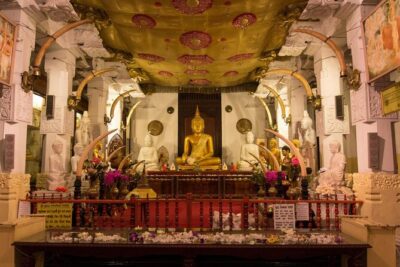
Private Car & Driver for 07 Days Tour In Sri Lanka
Read our review →
Sri Lanka Private Tour 8 days-Driver/vehicle/accommodation H/B
Read our review →
7 Days Round Tour in Private Car/Van with Chauffer
Read our review →
Wilpattu National Park Jeep Safari from Negombo / Waikkal (All Inclusive)
Read our review →
Browse the lists this tour appears in